


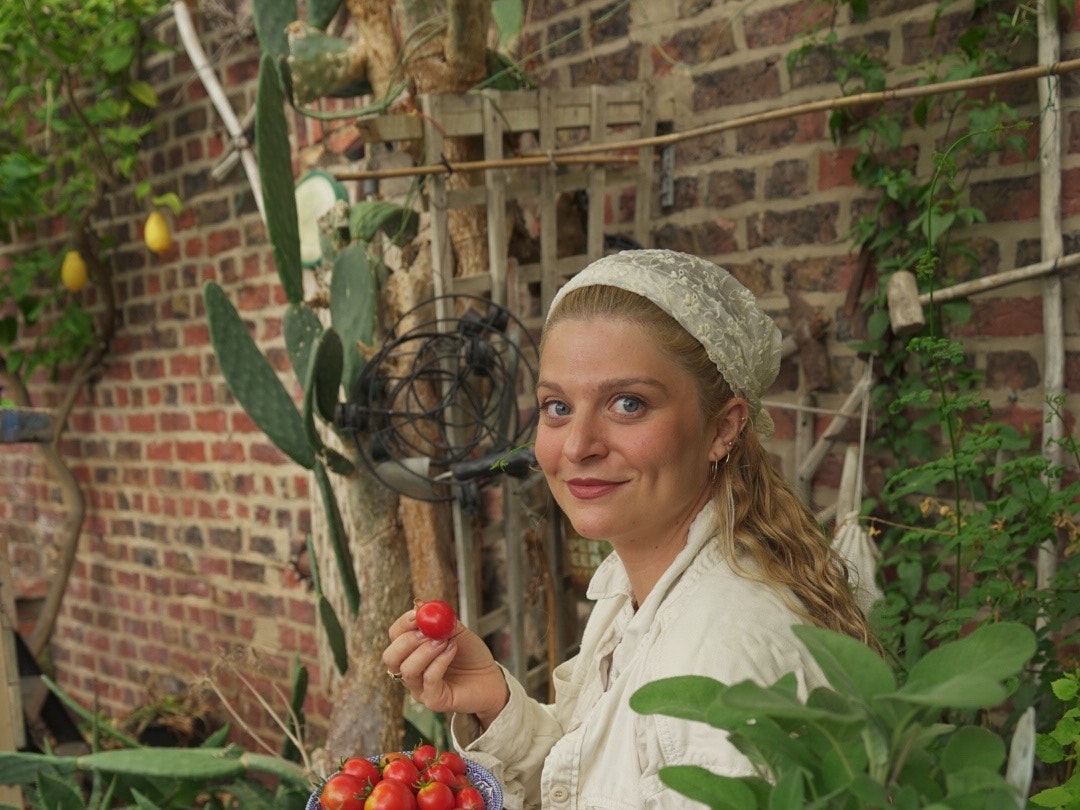

Interview with Lydia Mantella
Jun 8, 2026
‘Healthy soil is the foundation of everything I do.’
Working with the land has been a lifelong relationship for Lydia Mantella - a medicinal herbalist, smallholder, and storyteller whose work sits at the intersection of soil, plants, and wellbeing. In this conversation on Save Soil News, we explore how Lydia’s lifelong involvement with soil – shaped by growing up on a smallholding and deepened through the practice of herbalism – has shaped her perspective on everything from wellbeing, to creativity, and sustainability. We delved into what it really means to work with plants rather than extract from them, and why reconnecting people to the land is such an important step toward caring for it.


You’ve said gardening has been a part of your life since you could walk – how do you think growing up on a smallholding shaped your relationship with soil?
Growing up on a smallholding meant that soil was never an abstract thing to me – it was never just ‘dirt’ or ‘mud’. It was a living thing and an important part of the Earth. It was under my nails, on my knees and present in my life before I even knew what hands were. Growing up, we relied on it to grow our food – something that we were an active part of from the moment we could walk.
Can you tell us about your journey into herbalism – what first sparked your interest, and how did it become a part of your life? How did your relationship with plants evolve from gardening into herbalism?
My parents had always used herbal medicine, alongside conventional medicine, when I was growing up. It was always an integral part of my life. But in 2018 my local herbalist store and natural health practice was due to close after nearly 100 years after being founded. I couldn’t let that happen so my husband and I moved home from London to take over its management. It was then that I started formal training to become a Medical Herbalist – which takes a minimum of four years (full time) in the UK. Over those years my curiosity for herbalism grew into a whole new relationship with plants. Gardening had taught me how to grow plants; herbalism asked me to meet them at a different threshold.
The transition from gardening into herbalism also changed how I listened. In the garden, the question is often, ‘What does this plant need to thrive?’ In herbalism, the question becomes, ‘What is this plant offering?’ That shift required humility and restraint – learning when to harvest and when to leave, how to prepare plants in ways that honoured their integrity, and how to work with them rather than extract from them.
Over time, herbalism became woven into my daily life, not as an alternative system but as an extension of the relationship. Plants stopped being divided into categories (i.e. food, medicine, ornament) and instead became whole beings with multiple roles. Gardening gave me roots; herbalism gave me depth.


There’s growing awareness that contact with soil and nature is directly supportive for our emotional/mental health - how has living this close to the land shaped or evolved your own sense of wellbeing?
Emotionally, the land has given me perspective and companionship. When things feel heavy, I’m reminded that I’m part of something vast and ongoing, not isolated inside my own experience. There’s comfort in tending living things that are indifferent to your inner narrative but responsive to your care.
Physical contact with soil and nature keeps me grounded. There’s growing research showing that direct contact with soil and plants isn’t just metaphorically grounding, it has measurable physical effects. Studies have found that regular gardening activities can reduce stress and symptoms of anxiety and depression and improve psychological wellbeing more broadly. It has certainly been the case for me.
How do seasons – listening to the cyclical systems of the natural world, rather than following our own schedules – guide your work and creativity? Can you share some of the patterns, rhythms or daily habits that shape your life now on the smallholding?
Living by the seasons completely dictates my sense of time. On the smallholding, time isn’t something we manage or optimise; it’s something we listen to. The seasons always signal what’s possible and what’s not, and we choose to let those signals lead. Not only is my work and creativity more honest but life is simply easier when you choose not to battle Nature.
For example, Spring is expansive and outward-moving, so it is a great time to start sowing, planning and starting new chapters. Summer is about tending and responding. The work is consistent, physical and creativity comes easily. Autumn brings the harvesting and preserving. But it’s also when I take stock of what has worked, what hasn’t, and what needs to be carried forward. Then Winter is the quiet teacher. It pares everything back and insists on rest, reflection, and deep internal work.
Daily habits on the smallholding are shaped by these rhythms too. Mornings begin with a quiet check-in with the land: noticing the light, the weather and what’s changed overnight. Physical tasks tend to happen earlier and the gentler work later. Evenings tend toward slowing down, preparing food, writing or reflecting.
What the seasons have taught me most is trust. Trust that rest is productive, that waiting is active, that not everything needs to happen now. By aligning my life with cyclical systems rather than linear schedules, my work has gained depth and my creativity has gained patience. I’m no longer trying to outrun time – I’m learning how to walk alongside it.

When soil is healthy, what does that look like in your day-to-day experience, and how does that influence the whole system above ground, and your work?
The first thing you notice is that healthy soil is alive and full of life. It’s not static, it’s full of movement, worms, beetles, fine roots and threads of mycelium with everything working in relationship. Also, seeds germinate evenly, plants establish themselves without fuss and water sinks in rather than running off.
That vitality below ground shapes everything above it. Plants grown in living soil don’t just grow faster; they grow in balance with it. Their leaves are a deeper green, their stems are sturdier and they are more resilient when the weather turns or pests arrive. When soil biology is thriving, the garden becomes less about control and more about observation. I spend less time reacting to deficiencies and more time supporting a process that is already underway. Mulching, composting and gentle cultivation are all acts of conversation within my own garden. Healthy soil is the foundation of everything I do.
As an advocate of no-dig gardening, what changes did you notice in your soil once you stopped disturbing it?
The first thing I noticed was the dramatic increase in earth worms. Then, rainwater absorbed more evenly rather than pooling in patches or running off and on the drier days the ground stayed cooler and more evenly moist. Over time, above the ground, I noticed that the plants were establishing faster and my harvest yields increased.
How important do you think it is for people to feel a connection to the land before they’re asked to protect it and think about climate responsibility? How do you see creativity (through your poems, or creating videos for your page etc) as a way of helping people reconnect with soil and the natural world? What can art capture about the land that words or statistics can’t?
I think it can be hard to feel responsible for something you don’t feel in relationship with. When the land is reduced to an abstract concept (like carbon figures, targets and losses) it can easily become overwhelming or distant, it becomes something to worry about rather than something to love. But when people have felt soil in their hands, noticed how light changes across a field, or grown even one plant themselves, a sense of care arises naturally. Protection becomes an instinct rather than an obligation.
That’s why my work is centred around inspiring people to garden, connect with nature or finding additional ways to let plants and nature into our lives. Creativity has been one of the most meaningful ways of inviting that connection. Through poetry, film, and simple storytelling, I try to slow people down enough for them to notice what’s already around them.

The Save Soil movement emphasises that large-scale awareness and policy change is the priority when it comes to soil as a climate solution. From your lived experience, what do you think is missing from high-level sustainability conversations?
From my lived experience, what often feels missing in high-level sustainability conversations is relationship. The language is usually urgent, strategic, and abstract – which is necessary but feels incomplete. Soil suddenly becomes a unit of measurement or a resource to be managed. And while those framings matter at scale, they rarely speak to how soil is actually encountered or cared for in our daily life.
What’s missing is that felt reality of soil as a living system, not just a solution. Policy discussions tend to focus on outcomes without enough attention to the cultural and emotional conditions that make long-term stewardship possible. From the ground, soil health isn’t something you impose through directives alone; it’s something that emerges through patience, observation, and continuity of care. Those qualities are difficult to legislate, but they’re essential.
There’s also a natural gap between scale and intimacy. Large-scale approaches often overlook the quiet, cumulative power of small, place-based relationships with land. When people feel disconnected from where their food comes from or what healthy soil even looks like, policies can feel distant or imposed. In my experience, real change happens when people are invited in to understand. I don’t see this as an argument against awareness campaigns or policy change because those are vital. But I do think they need to be paired with narratives that restore meaning to people on a local scale too.
If someone watching your videos or reading this article felt inspired to reconnect with the soil or land in some small way, what would you invite them to try first?
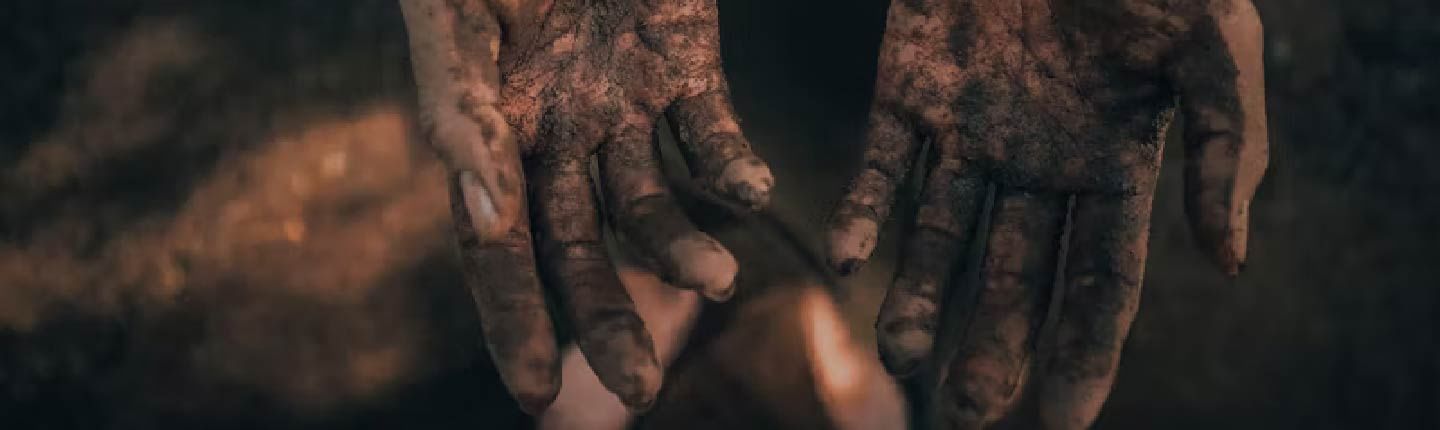
Begin by noticing. Kneel, sit, or even just touch the soil with your fingertips. Feel its texture, its temperature, its weight. Smell it after rain. From there, trying planting something small would be a natural next step. Try a single herb or a few seeds in the garden. If you don’t have a garden, observe the same plant on your daily walk. Make it something that allows you to witness growth, decay, and transformation. Water it or observe it and notice what the soil does as the weather changes. Let yourself be curious about the life beneath the surface: the worms, roots, fungi, tiny insects.
Finally, start noticing the small moments of joy within Nature. They might be moments of wonder as the birds sing, of connection as you feel a handful of moist earth or of creative curiosity as you turn over a rock to admire or draw the ants below. Start small, notice deeply, and trust that even tiny actions accumulate.


Is there a plant you have a special fondness for — one that tells a story or has a particular personal significance for you?
If I had to choose one, it would be rose. There’s something about it that feels timeless and tender – a plant that carries beauty, memory, and a quiet resilience all at once. It’s a herb of the heart, bringing tenderness and resilience entwined. The thorns protect, but they also signal strength, and the blossoms reward those who take the time to notice.
There’s a generosity to roses that mirrors the land itself: they give freely and ask only for respect and gentle tending in return.
Each time I work with them, whether pressing petals, making tinctures, or just inhaling their scent, I feel connected to the cycles of the garden and that patient rhythm of herbalism. They remind me that care is an act of love and that resilience can be tender.
Is there a lesson soil has taught you that applies far beyond the garden?
Absolutely - soil has taught me lessons about patience, humility, and trust in unseen processes. Perhaps the most profound is that growth cannot be forced. You can’t rush fertility, you can’t demand a harvest before its time, and you can’t control all the factors that shape life. You can only prepare, nurture, and show up consistently. And then you must wait often in quiet uncertainty, trusting that the work you’ve done will eventually bear fruit.
These aren’t simply gardening principles - they’re life principles. And practicing them in the garden makes it easier to carry them into the wider world.


LET US MAKE IT HAPPEN!