
>
Save Soil Regenerative Revolution>
Blogs>
Human Impact Stories>
Amarnath's ₹5 Lakh Banana Harvest: A Natural Farming Success Story
Share
Amarnath's ₹5 Lakh Banana Harvest: A Natural Farming Success Story
Human Impact Stories

04 May 2026

04:31 am
How a shift from costly chemical methods to a self-sustaining natural system helped one farmer dramatically increase his income while reducing labor and environmental impact.
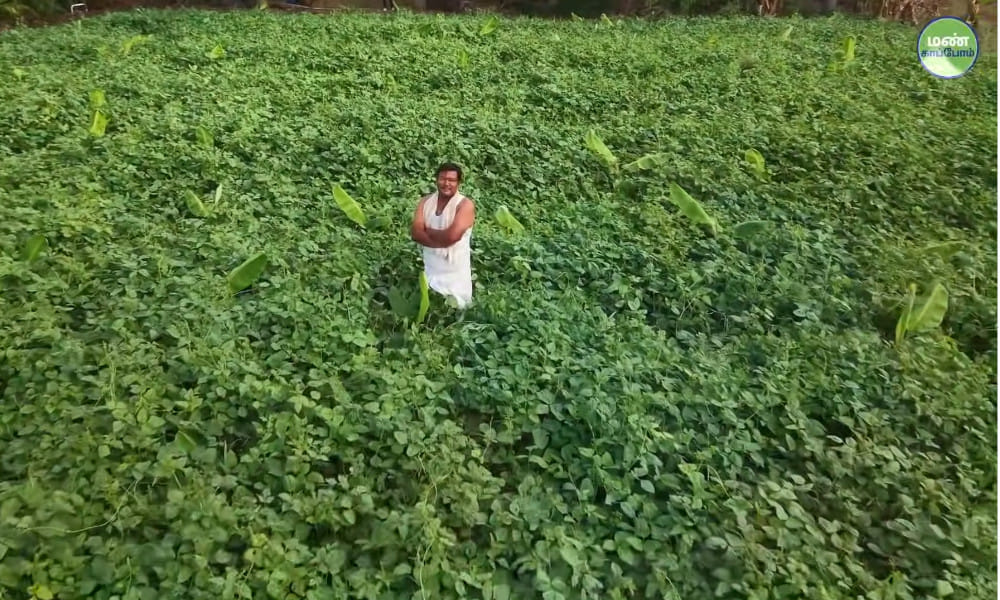
My name is Amarnath, and I am from Vellakalpatti in Namakkal district. Through natural farming, I have transformed my family's seven-acre farm into a profitable and self-sustaining ecosystem. From a single banana bunch, I earned ₹600. From 900 such bunches, my income was nearly ₹5 lakhs. Beyond the profit, the expenses and labor involved in natural farming are significantly lower compared to chemical farming. For me, there were no major marketing hurdles. The local traders, knowing that people ask for this fruit, continued to buy from me at a steady rate of ₹25 until the very end.
My Journey from Chemical to Natural Farming

This success stands in stark contrast to my experience 15 years ago. In 2005, in this very same orchard, I practiced chemical farming. Today, nearly 20 years later, my expenses remain the same as they were back then, but with natural farming, my profit has multiplied four to five times over. I come from a farming family and have been passionately involved in agriculture since I was 15. Though I have a B.E. in Computer Science and work in a private company, farming has always been my calling. My interest in farming was solidified during my childhood. In the 1995s, our area was drought-prone. While some neighboring orchards were lush and green, our land was dry. We cultivated onions and bananas using conventional methods, but the work was strenuous, the mental satisfaction was low, and our profits were declining. The turning point came through my aunt, who first told me about something called natural farming around 2010. My conviction grew after reading Masanobu Fukuoka's "The One-Straw Revolution," and learning from the works of Nammalvar and a workshop by Subhash Palekar, organized by Isha in 2017. These resources provided me with the knowledge and confidence to fully embrace natural farming in 2015.
The Transformative Power of Mulching
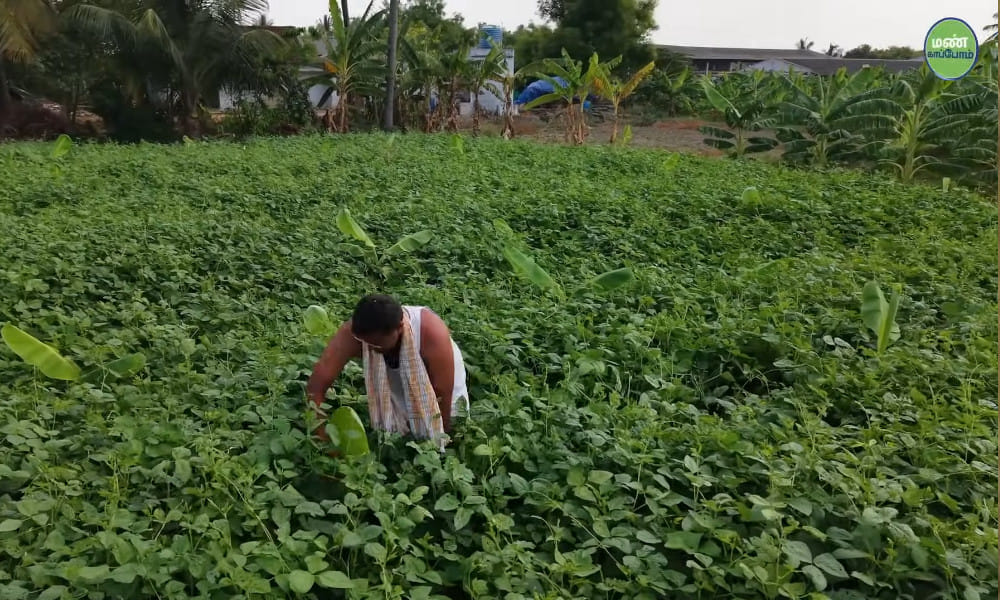
I realized I needed to optimize my farming methods, especially to manage weeds. This led me to explore mulching. Initially, I experimented with dry leaf mulch but found it to be very expensive. My focus then shifted to live mulch, where dicotyledonous plants like nari payiru (jack bean) and thattai payiru (cowpea) became essential to my success. The benefits of live mulch were immediate and profound. It controlled about 80-90% of the weeds, which automatically eliminated the high cost of weeding. This also meant we didn't have to use herbicides, ensuring our food was clean and avoiding the associated health issues. Beyond weed control, the live mulch serves as a complete nutrition management system. The roots of the cowpea and jack bean penetrate at least two feet into the soil, aerating it. As the plants shed leaves or decompose, they enrich the soil and foster a thriving ecosystem of microbes essential for the main crop. The cowpea, with its root nodules, fixes atmospheric nitrogen directly into the soil. This provides a steady supply of nutrients to the banana plants, making external fertilizers unnecessary. The mulch also helps retain moisture, so watering once every 10 to 15 days is sufficient. In essence, natural farming is simply not possible without mulching.
A Self-Sustaining Banana Orchard
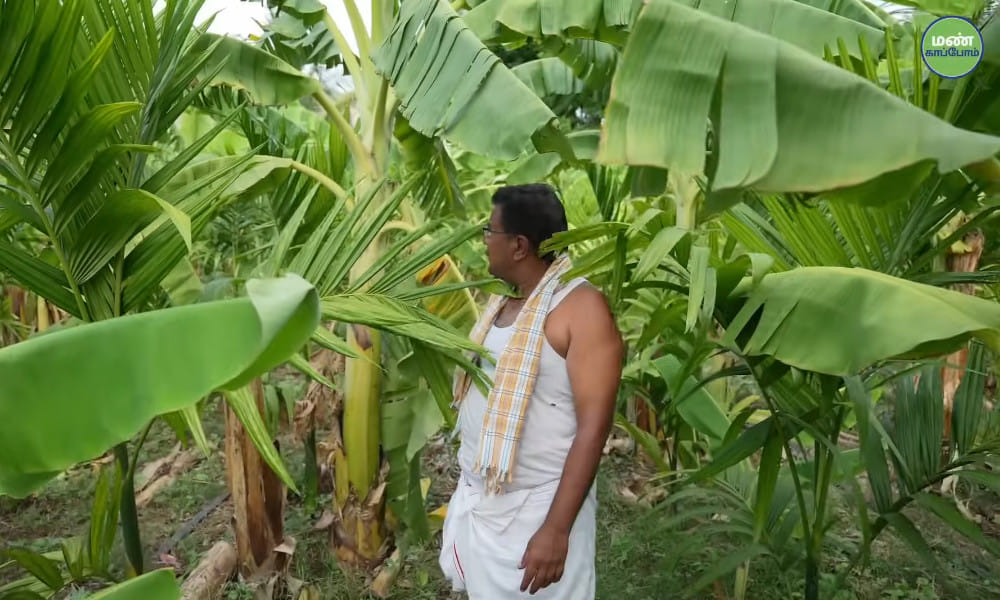
My experience with banana cultivation demonstrates the effectiveness of these methods. After preparing the soil with a multi-grain crop that was tilled back in after three months, I planted the banana saplings. Fifteen days later, I sowed nari payiru seeds at a rate of 25 kg per acre. I used a triangular planting method with a 7x6 feet spacing, orienting the rows from north to south to maximize sunlight exposure. In the triangular method, the distance between any two plants is uniform, ensuring even growth. Within three months, the nari payiru had formed a dense carpet across the entire orchard. When the first crop of nari payiru naturally dried up, its seeds fell and sprouted again, giving me a second cycle of live mulch without any additional cost or effort. This process enriched the soil tremendously. For the first six months, the banana plants grew normally, but after that, their growth was phenomenal. The natural ecosystem created by the mulch also kept pests, like mealybugs, under control without any need for pesticides. The results were a significant reduction in labor and costs. We didn't have to weed, apply fertilizer, or even prop up the banana plants with supports. The farm took care of itself. In this thriving ecosystem, we also intercropped 800 areca nut palms. Even during a severe drought last year, when the mortality rate in the region was 50%, our farm lost only about 10 palms.
From Financial Loss to Market Success
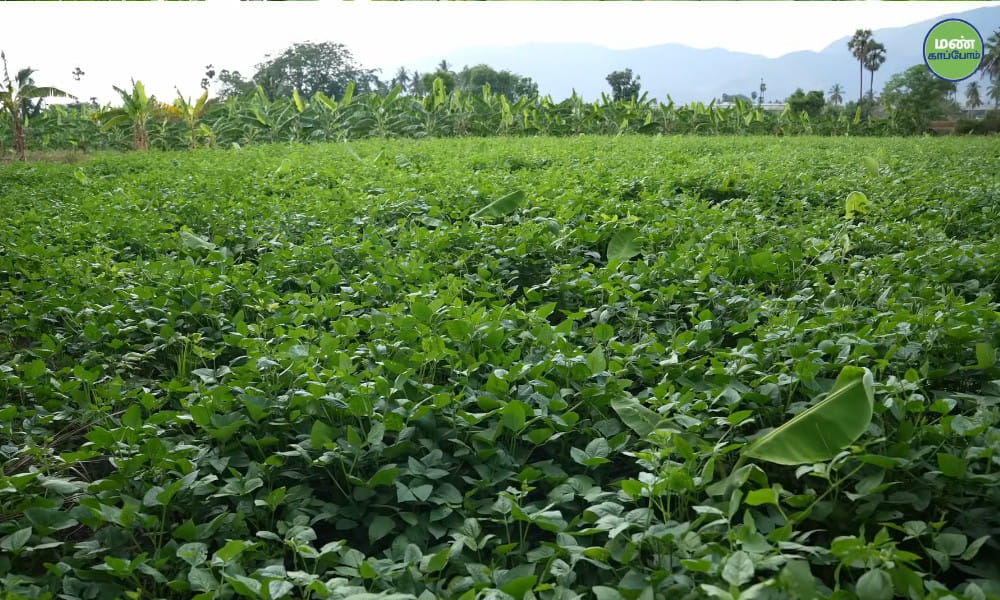
The economic turnaround has been remarkable. A single banana plant yields an average of 24 kg, and last year I sold it for ₹25 per kg. This translated to an income of ₹600 per bunch and a total of ₹5 lakhs from 900 bunches. The cost per plant in my natural system is less than ₹50, compared to over ₹150 in chemical farming. This is a world away from my experience in 2005. Back then, using chemical methods, the same banana orchard was plagued by leaf spot disease, and I suffered a major financial loss. Traders were unwilling to buy the poor-quality produce. Today, the quality is so high that traders compete to buy my bananas. I don't even need to market them as "natural", the product speaks for itself. Inspired by this success, I am now expanding. I have planted another 2000 banana saplings, this time using a no-till method directly in a harvested paddy field, with cowpea as the live mulch and a rain hose system for efficient irrigation. Natural farming is simple. If you love your soil and the life within it and provide it with food in the form of mulch, it will give you everything you need in return. This is where the true freedom of farming lies, creating a path toward a self-reliant agricultural community.
Keep In Touch
Get the latest updates on blog and happenings at Save Soil Regenerative Revolution and on the rest of Isha's social work — delivered to your inbox.