
>
Save Soil Regenerative Revolution>
Blogs>
Field Stories>
From Chemical Farming to Natural Abundance: A Success Story from Palladam
Share
From Chemical Farming to Natural Abundance: A Success Story from Palladam
Field Stories

17 Nov 2026

05:42 am
How Mr. Kumarasamy transformed his five-acre farm, reduced costs, and increased his daily income fourfold in just eight months.
A Successful Transition to Natural Farming
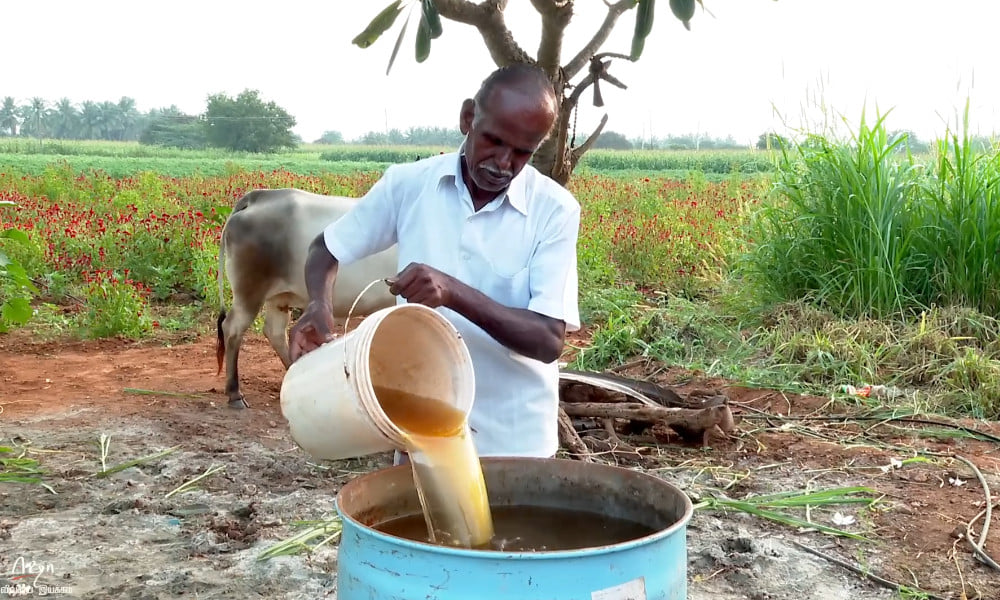
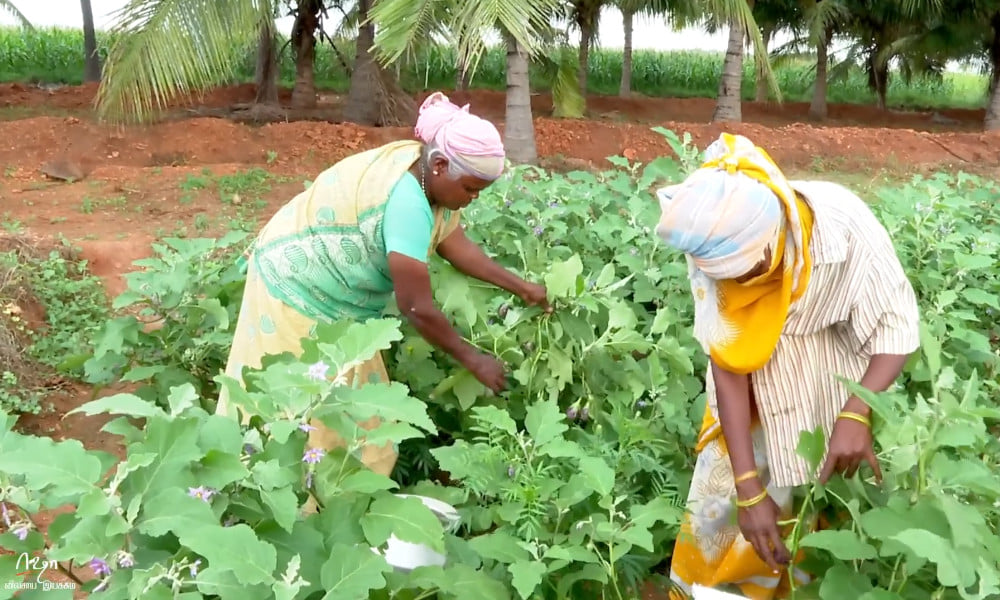
We continue to meet natural farmers who have undergone training through the Save Soil Movement and are successfully practicing natural agriculture. Today, we visit Mr. Kumarasamy in Kethanpalayam village, within the Palladam circle. His farm spans five acres. The cultivation includes one acre of coconut trees, half an acre of brinjal, and crops like cockscomb flowers and maize on 40 cents of land. Additionally, chili is cultivated on half an acre. They are achieving excellent results using natural methods, and we explore their experiences below.
The Shift from Chemical to Natural Methods
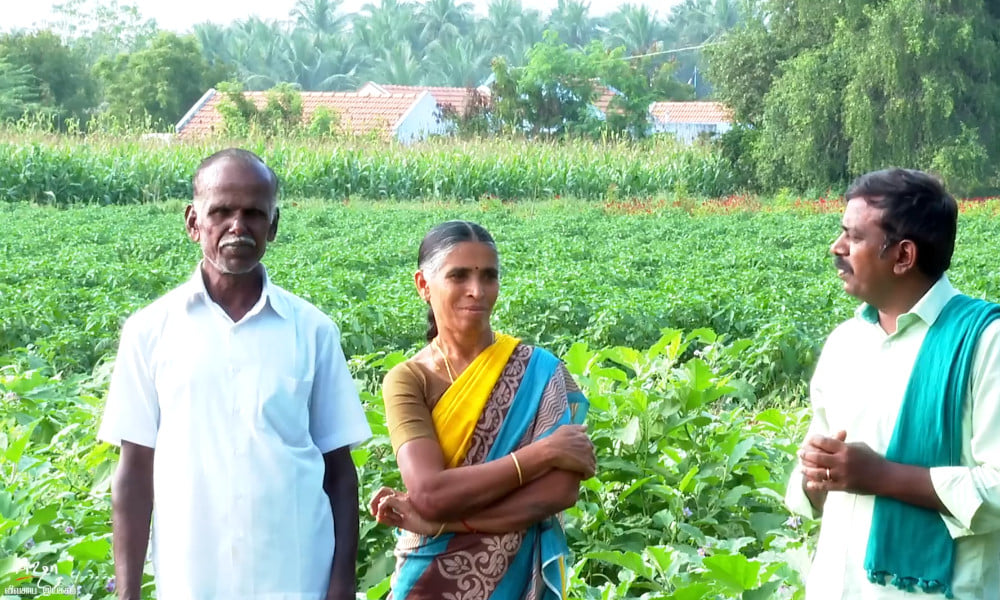
I am currently farming on five acres using natural methods. The decision to switch arose about a year ago because of my sons-in-law. They insisted that we must provide poison-free food for the children. They told us that even if we consumed chemically grown food, we should ensure the vegetables we provide for the family are free from toxins.
Prior to this change, I attended a training session conducted by Mr. Subhash Palekar in Trichy in February, organized by the Save Soil Movement. My son-in-law and I participated in this ten-day program. That training gave us the knowledge we needed about natural farming. We have now been practicing these methods for the last six months.
A Significant Reduction in Costs
There is a distinct difference between our previous chemical farming methods and our current practices. When we used chemicals, the expenses were very high. Now, the costs have come down significantly. We no longer spray chemical pesticides or purchase fertilizers. Since we own native cows, we prepare all the necessary fertilizers and pest repellents ourselves using their byproducts. This results in substantial savings.
Natural Inputs and Weed Management
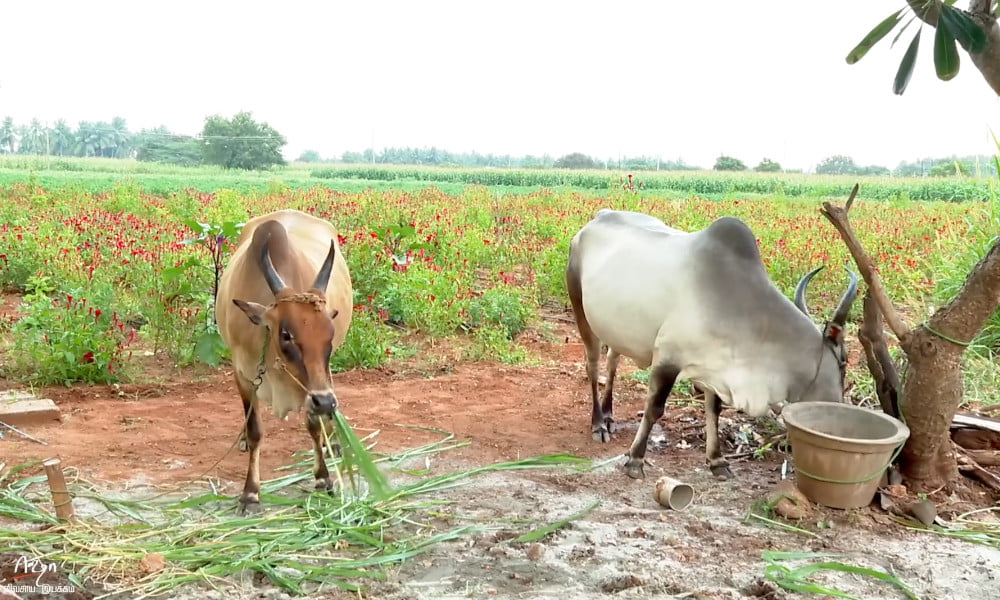
We utilize Jeevamrutham prepared from native cows. Before planting seeds, we treated the soil with Ghanajeevamrutham. To manage pest and disease attacks, I use Neemasthiram and Agniasthiram. Additionally, I mix an asafoetida solution and spray it once a week.
Weed management has also changed. In chemical farming, we relied on weedicides. In natural farming, we cannot use those chemicals. Instead, we initially cut the weeds once, and subsequently, we manage them by hand-pulling.
Effective Pest Control Without Chemicals
Controlling borers and worms in brinjal crops is often considered difficult, even in chemical farming. However, we have found that natural methods are superior. We follow the guidance of Mr. Subhash Palekar and prepare our own repellents like Agniasthiram.
In chemical farming, spending 1,500 to 2,000 rupees on a single pesticide spray often failed to kill the worms; they would simply reappear the next day. With natural sprays, the pest infestation is minimal.
Preparing Agniasthiram costs almost nothing. The ingredients include cow urine, two kilograms of neem leaves, half a kilogram of garlic, and half a kilogram of spicy chilies. We also add half a kilogram of tobacco. We grind these ingredients, mix them well, and let the solution sit for two days. After that, we filter it and spray it on the crops.
Increased Yield and Income
The yield has increased threefold compared to our previous methods. In the past, harvesting 50 kilograms was standard; today, we harvest 200 kilograms from the same field. Consequently, our daily income has risen from 2,000 rupees to 8,000 rupees.
The plants grow healthier, and the fruit setting is significantly better, leading to higher production. For instance, the chili plants have grown well and show promise for a good yield. Although we faced water shortages for the maize crop and could only apply Jeevamrutham once, the crop is thriving on rainfall alone.
Improvements in Soil Quality
There is a visible difference in the soil. Unlike chemical farming, the application of Jeevamrutham makes the earth loose and porous. I first tested this on my coconut trees. After applying Jeevamrutham, I dug into the soil after some time and found native earthworms on the surface, exactly as Mr. Subhash Palekar had predicted. Seeing the earthworms gave me the confidence to switch to natural farming completely.
Ecological Pest Management Techniques
We have placed T-shaped sticks throughout the garden. These serve as perches for birds and dragonflies, which visit the farm after 5 PM to eat insects and worms. We have also planted border crops to manage pests naturally. Castor plants and African marigolds are planted along the edges of the brinjal garden, and cowpeas are grown as an intercrop with the maize.
Market Reception and Future Outlook
The taste of the produce is excellent. Chemically grown vegetables often smell of medicine when eaten, but natural produce does not. Buyers in the market appreciate the quality; the vegetables are shiny and tasty. Customers who buy one kilogram often return the next day to buy four kilograms.
Neighboring farmers have noticed our healthy crops and often ask what medicines we are spraying. When we explain that we use native cow urine and Jeevamrutham, they express interest in attending training and switching to natural farming themselves.
Conclusion: I farmed using chemicals for 50 years, starting in 1969. I have only been practicing natural farming for the last eight months. The expenses are lower, and the income is four times higher. We are confident that we can continue to farm successfully using these methods. To other farmers, I say that natural farming reduces costs, increases income, and produces food that people buy willingly because of its superior taste.
Keep In Touch
Get the latest updates on blog and happenings at Save Soil Regenerative Revolution and on the rest of Isha's social work — delivered to your inbox.