
>
Save Soil Regenerative Revolution>
Blogs>
Human Impact Stories>
From Corporate Life to Natural Fields: The Thamira Farmers Producer Group Story
Share
From Corporate Life to Natural Fields: The Thamira Farmers Producer Group Story
Human Impact Stories

24 Mar 2026

07:06 am
How a chance encounter with Nammalvar Ayya sparked a movement for poison-free food and empowered over 350 farmers in Southern Tamil Nadu.
A New Understanding of Food
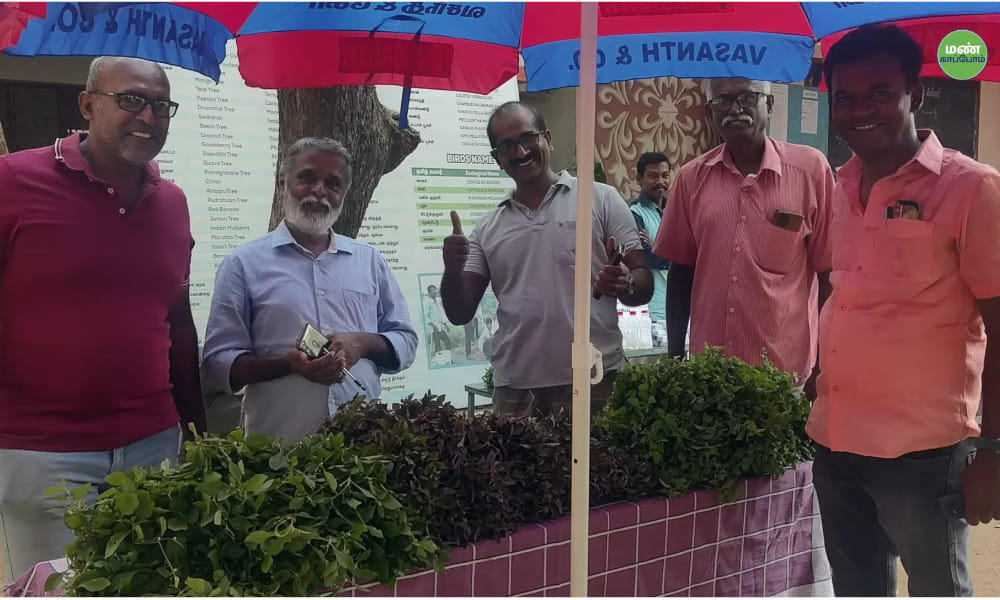
My name is Subramanian, and I am from Tirunelveli. My journey into Natural farming began profoundly in 2007 when I met Nammalvar Ayya. That moment created a huge understanding about food within me, specifically concerning poison-free food versus food consumed with poisons. Before meeting Ayya, I had no understanding of agriculture, having spent 10-15 years in the corporate world. After spending 10 days with him, his travels for natural farming planted a deep seed within us, illuminating the path for us to transition from corporate professionals to farmers focused on agriculture.
Embracing Natural Farming and Overcoming Challenges
Initially, natural farming was an entirely new experience. Our main motivation was to eat and provide others with poison-free food. We started on a small scale, growing vegetables for our own needs and establishing a mango orchard, which is our specialty. We also started growing some vegetables for our home. However, vegetable production presented a huge challenge. We bought local seeds, but they didn't yield much. We struggled even to produce enough for our own consumption. These difficulties manifested as saplings falling victim to disease, and we didn't know the remedies. That's when we began visiting various farms to learn from their experiences.
The Power of Collective Action
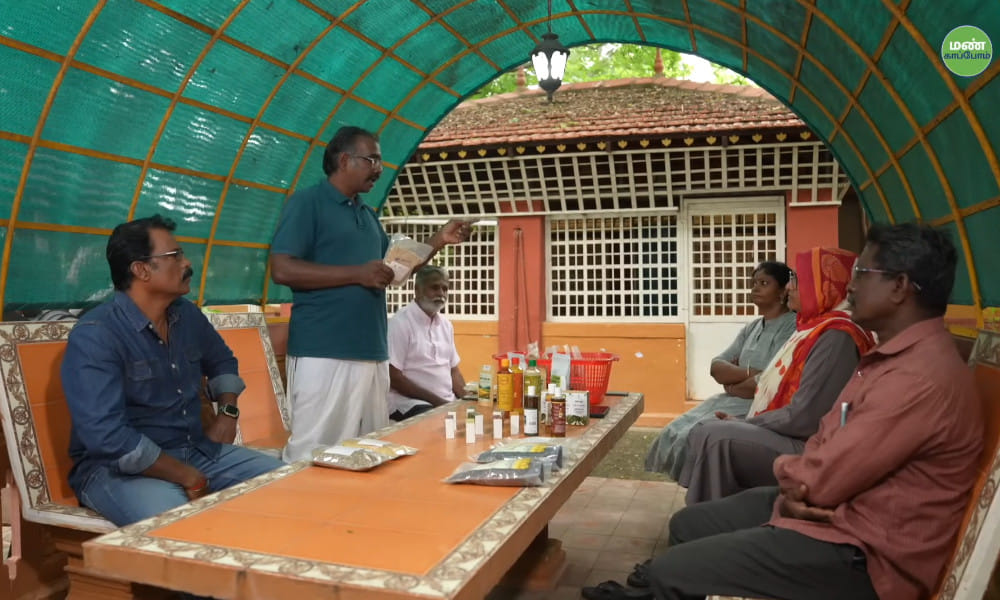
In this situation, we started visiting like-minded individuals at different farms, discussing their farming methods and understanding. We met about 20 farmers in the Tirunelveli region who shared our goal: to practice natural farming, provide poison-free food to people, and eat poison-free food ourselves. This common goal created a small connection among us. We started holding frequent meetings to discuss other possibilities within natural farming. Many of us included individuals earning a lakh rupees, and one person even returned from America. We had a diverse group of young people.
About four years ago, I had an opportunity to associate with the Tirunelveli Organic Farmers' Association. Through this association, I was able to source value-added products like cold-pressed sesame oil, groundnut oil, coconut oil, and millet-based products directly from natural farmers. This helped me identify who was doing what directly and gave me a clear understanding of how I could benefit Natural farmers and effectively use their produce. This confidence led us to decide to hold a meeting once a month to discuss any problems.
Impact of Save Soil Training and Palekar Ayya's Teachings
This confidence also led us to a Subhash Palekar class conducted by Isha in 2017. Twelve of us from our team attended the class in Palladam together. This training not only brought immense clarity but also strengthened our camaraderie. The Isha training program, which lasted seven days, was beyond imagination, conducted for 1200 people with great skill and precision. We owe a huge debt of gratitude to Isha for that. The Natural farming training, now called "Zero Budget Natural Farming," was directly learned by our team members from Subhash Palekar Sir, and they came back and taught us. From that, we understood what we had done so far and what new things we could implement. The highlight was the "Five Layer Method," which Mutukumar Sir from Isha’s Save Soil Movement gave us a training on, held in Viluseri, Kanyakumari district.
The training sessions given by Palekar Ayya for those seven days had a huge impact. We learned what agriculture is, how it was, and how it got converted. Secondly, Ayya taught us how a single native cow could cultivate 30 acres, and we absorbed these ideas deeply. With this deep understanding, everyone in Tirunelveli began farming with renewed vigor. Those without native cows bought them, and we made arrangements to produce our own inputs.
Transitioning to Natural Methods and Value Addition
Previously, farmers were hesitant to switch from chemical farming to natural farming. In chemical farming, urea immediately turns crops green, and chemical pesticides quickly handle pests. People are only now beginning to understand how much that poison turns into a toxin in the crop and accumulates in the bodies of those who consume it. We taught them how to prepare EM (Effective Microorganisms) beforehand. Many people have learned this and are now using EM in their farming. Previously, a bottle of EM would cost 700-800 rupees per liter; now, they've been taught to prepare it for about 50 rupees, which is very useful for farming.
All of us natural farmers wanted to market our produce directly, without middlemen. Our noble pursuit of producing poison-free food for people, combined with buyers' intentions, resulted in good prices, acceptance, and recognition. Selling directly ensures all benefits go to the farmers, connecting good products with people who seek them. The farmer profits, and consumers get the good products they need. I also gained the opportunity to make my produce useful and benefit farmers. I could increase the profit on my products and provide good products to the people. Instead of selling rice at an MSP of 20 rupees, I started selling varieties like Mappillai Samba at a range of 100 rupees, increasing my income. This attracted other farmers to Natural farming due to the increased income.
The Container Shop: A Marketing Success
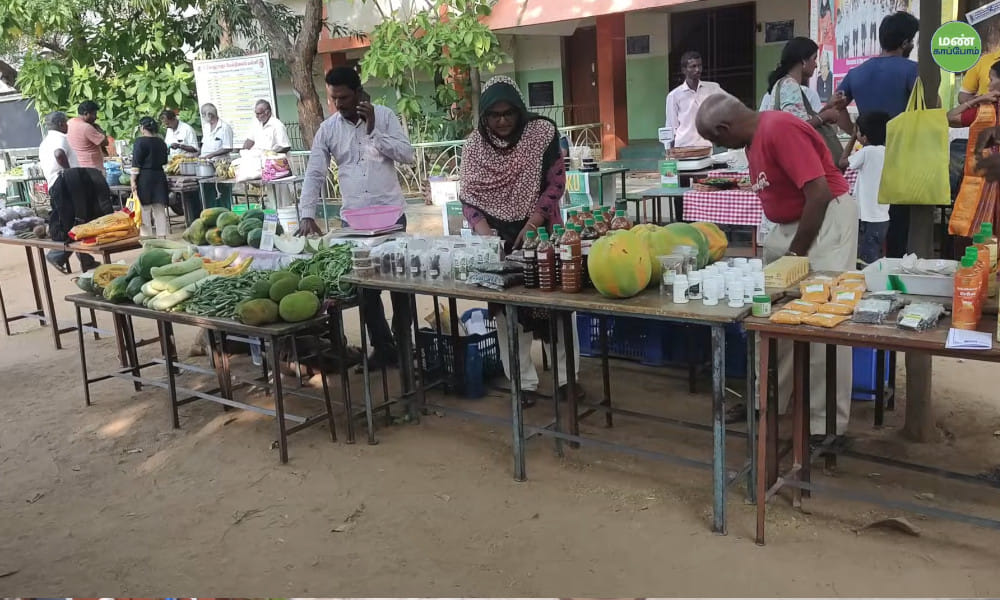
We also have the satisfaction of delivering a good product to consumers. Furthermore, we can purchase and market the products of our fellow farmers, providing them with income. So, in 2017, with the intention of creating our own market, about 12 friends who had attended the training invested a little bit each and created a container shop. This container shop was located in Maharaja Nagar, Tirunelveli, an area with a farmers' market where a large number of people already come for their food needs. We chose that location, rented a spot, and created a container shop. This brought a huge success opportunity into our lives. On Sundays, vegetables and greens alone would sell for 20,000 to 25,000 rupees worth. The shop's strength, buying products directly from farmers, also started to increase our customer base. We had the satisfaction of providing poison-free products directly to the people. This initiative received a strong reception because people wanted to buy directly from farmers and support them.
We transformed it into a container shop where we introduced ourselves as organic farmers. We started with about 15 people who would gather every Sunday, bringing their farm products to sell. I would bring greens, papayas, rice, and my millet-based nutritional products. It was a great platform for us to directly interact with people and understand their needs. Currently, with the association managing vegetable sales, sales are around 2,000-3,000 rupees weekly. Even with a transportation cost of around 1,000 rupees to Tirunelveli, it appears to be profitable. Selling through this federation makes it easy to take my products to consumers, benefiting both me and my consumers.
Collective Strength and Expanding Reach
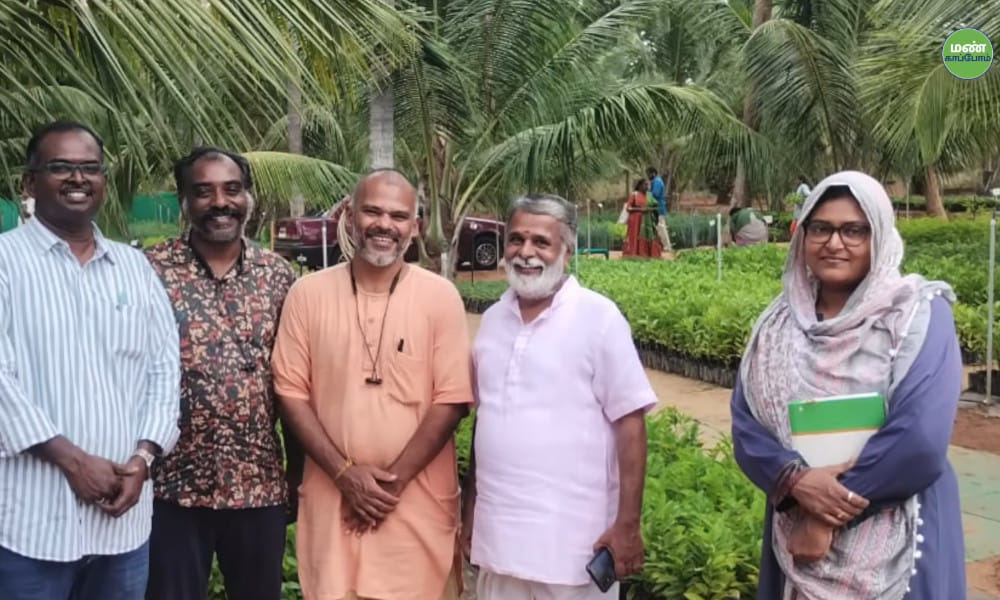
The greatest strength of our farmers was their diverse backgrounds. Muralidharan, who came from the US, had a farm near Mukoodal. Karthikeyan was doing organic farming in Munnar. There were many diverse and educated individuals like Raisa Fathima. When we all came together, we felt immense strength. We opened this shop with the then District Collector, Mr. Karunagaran, which generated media publicity and quickly reached the public in 2017.
We faced many challenges initially, as we only had 10-15 farmers in production. We needed to meet many more farmers, fearing reliance on traders again when our aim was direct marketing. So, we formed teams of three or four people to meet good farmers in Tirunelveli. After meeting 30-40 farmers, we gained immense confidence.
Running the shop as a collective offered a good platform to sell all our products, but it had both advantages and disadvantages. While it increased the chance of products selling quickly, some products sold better than others. To address this, we sit together every week or two to discuss how to help those lagging. For example, we helped Senthilkumar with his moringa farm, sharing knowledge for moringa leaf soup, moringa leaf tea, packaging, and exploring other shops. Being a collective ensures no one feels discouraged and that we can grow together, even increasing revenue for those with lower initial sales.
Through the Tirunelveli Organic Farmers' Federation, we visited many farms and gathered information about authentic natural product sellers. This was crucial because for value addition, if we have four products, we might need to source two externally. Only authentically natural products provide the expected nutritional value. As a team, we were able to network and source these products.
Continuous Learning and Value-Added Products
Since 15 friends joined, we occasionally took everyone to training sessions. We organized three or four training sessions in Tirunelveli in collaboration with organizations like Isha and the Tirunelveli Organic Farmers Association. Through these, everyone progressed to the next stage of development. We gradually started making value-added products as part of our shop. While this created a small understanding for everyone, when many products arrived, it also created difficulty in selling them.
Our people started attending many training sessions to value-add their products. We studied how to produce value-added products at research centers like the food processing unit in Thanjavur, Pudukottai research centers, and MABIF centers in Madurai. These training sessions helped us determine product feasibility. We also attended standard universities and branches of Tamil Nadu Agricultural University, such as Periyakulam Horticulture in Theni district, and the Killikulam Agribusiness Incubation Forum. Learning these things in-depth allowed us to understand nutritional facts and market dynamics. This collective learning was a big highlight, helping us decide what products suited us and how to value-add them.
Year-Round Vegetable Production and the Thamira Brand
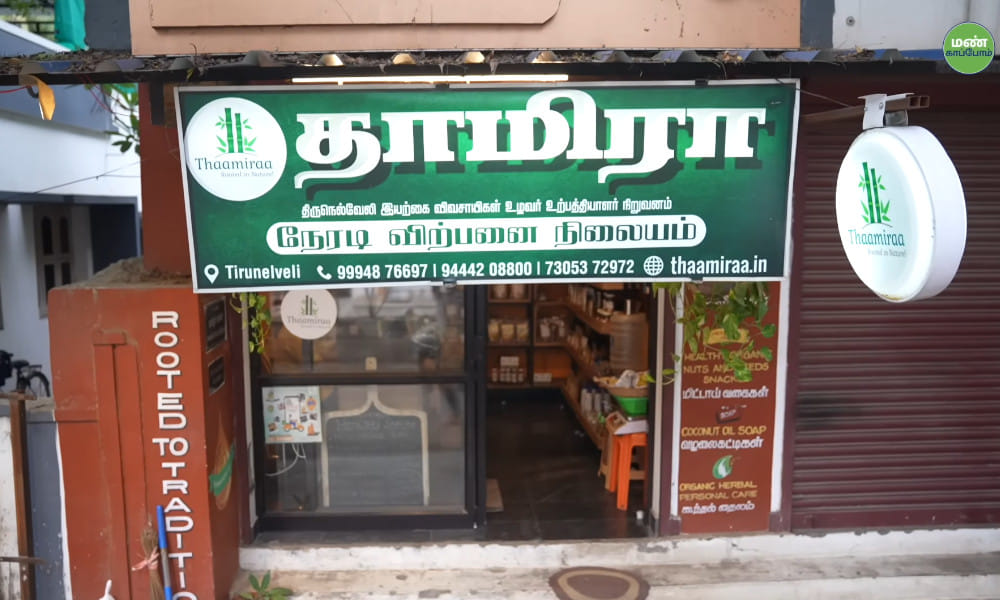
In 2019, we moved the shop to another location. It was then we realized vegetable farming plays a huge role in everyday products. While 10 of us were involved in vegetable production, we could supply vegetables for three months, followed by a long break. So, in 2019, we met Mr. Kumaraswamy Ayya in Sathanahalli, Karnataka, about 130 kilometers from Bengaluru. He had a unique year-round vegetable production model, having also studied under Subhash Palekar. After meeting him, we gained immense confidence that we could provide vegetables daily. We understood that an organic farm shop needs vegetable-related products for significant public acceptance. Five or six friends went to learn his principle of growing 16-15 types of vegetables and 10 types of greens systematically, three times a year. With this idea, Senthilkumar from Sathanakulam and others tried it on 50 cents of their farms, gaining confidence in vegetable self-sufficiency.
We now have over 200 farmers working together to produce value-added products. From my side, I make moringa soup powder, moringa leaf powder, and moringa honey. To enhance marketing, all natural farmers have come together under a common name, "Thamira." With almost 140-145 products, we can easily provide all necessary items for a family. We created about 150 products from all the farmers under the "Thamira" brand and now have opportunities to market not only in Tirunelveli but also in Chennai and online throughout Tamil Nadu.
Empowering Farmers and Expanding Markets
The main objective behind starting the Thamira Farmers Producer Group was to unite all organic farmers in Tirunelveli district and market their products. What started with 10 or 12 people has now grown to 350 farmers from Tirunelveli, Thoothukudi, and Tenkasi districts. Through this, we address farmer problems, such as rectifying boron deficiency in tomatoes, which improves quality. Another aspect is pricing: we fix a price higher than the market price for farmers, motivating them. For example, two or three members trained with "Tomato Raman Sir " and now offer guidance to our tomato farmers, ensuring quality local products and reducing the need to source from other districts. Our main vegetables are now coming this way, alongside grains, millets, rice, and pulses, which already have good demand and increasing sales.
I alone could not meet the demand for rice, nor could one or two of my fellow farmers. We need to increase production. Many farmers, hearing about us, wish to join our federation. We are including them to meet consumer needs. A single farmer cannot produce four varieties; only a federation of four farmers can satisfy consumers. Natural farmers operating as a federation will bring self-sufficiency, happiness, and income to both consumers and Natural farmers.
When we promote farmers' products under a single banner like Thamira, the market expands. Our sales team ensures that as farmers provide their produce, their livelihood grows. For traditional rice, we provide paddy seeds in advance and buy back the paddy. If a farmer sells outside for 15 or 20 rupees, we fix a minimum price of 30 rupees, giving them 10 rupees more than a normal farmer. When a farmer produces 1000 kg of paddy, they get an additional income of 10,000 rupees. Similarly, when they value-add, and we market their products more widely, their income increases further.
Growth and Future Vision
When we first started the market, our sales were only a few thousand rupees. Now, our store does two to three lakhs of business, and our Chennai operations do three to four lakhs. With a monthly turnover of seven to eight lakhs, we provide a good income to farmers. Where a farmer used to get 10,000 rupees, we now provide 15,000 rupees. We have also started online marketing. If we meet 1000 people and they buy at least 1000 rupees worth of products, we can achieve a monthly turnover of 10 lakh rupees. Doing business of one to two crores annually, we can provide more than double the income to our dependent farmers.
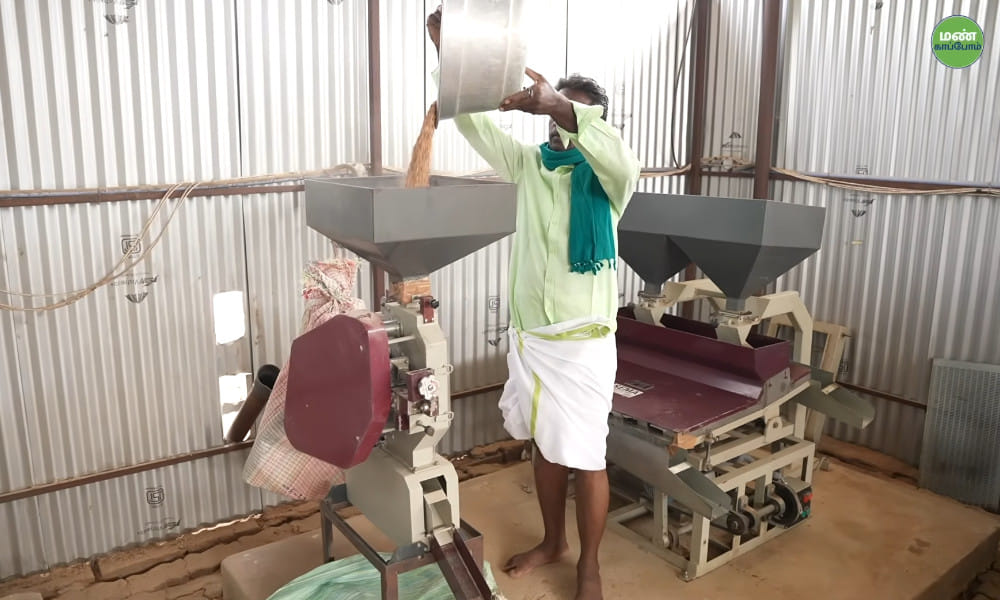
The struggle of a paddy farmer, who produces in four months and typically gives it to a trader for immediate money, leaving them with no rice to eat at home, is addressed. They need that 25,000 rupee investment for the next crop. When they sell to me, they get an additional 10,000 or 15,000 rupees. They can also buy poison-free food from us at a reduced price, as we have a concession for farmers at our store. This strengthens them, improving their standard of living and ensuring they eat poison-free food. Our store's income is doing better than expected. As we unite more farmers and expand our online market to cities like Chennai, our business can increase from one crore to two crores, continually increasing farmer income.
As a FPO, we have action plans. As Nammalvar said, "Seeds are the ultimate weapon," we aim to have a seed bank where all seeds belong to us. Today, seed quality is a huge business issue, with many seeds yielding poorly. By having a lab and producing our own seeds, we can generate revenue and protect our traditional seeds, such as 15-20 varieties of paddy. We can make all kinds of seeds for various grains available, simplifying the process for farmers interested in value addition.
After production, goods need cold storage. Whether vegetables or flowers, safely storing them until a large market opportunity arises leads to higher prices. Providing storage facilities gives farmers a chance for better income. Similarly, a training center. When farmers train and stay at our center, they gain understanding. They can improve by utilizing all these things. Only when such federations emerge in many places can we easily empower a farmer and save this land. Providing good, fertile land for the future generation will strengthen that generation in succession.
Keep In Touch
Get the latest updates on blog and happenings at Save Soil Regenerative Revolution and on the rest of Isha's social work — delivered to your inbox.