
>
Save Soil Regenerative Revolution>
Blogs>
Human Impact Stories>
From Dentistry to Dairy: Sampath's 12-Year Journey in Zero-Budget Natural Farming
Share
From Dentistry to Dairy: Sampath's 12-Year Journey in Zero-Budget Natural Farming
Human Impact Stories

10 Mar 2026

06:38 am
A former dentist shares how he transformed barren land into a thriving natural farm, advocating for native cattle, sustainable practices, and a return to holistic living.
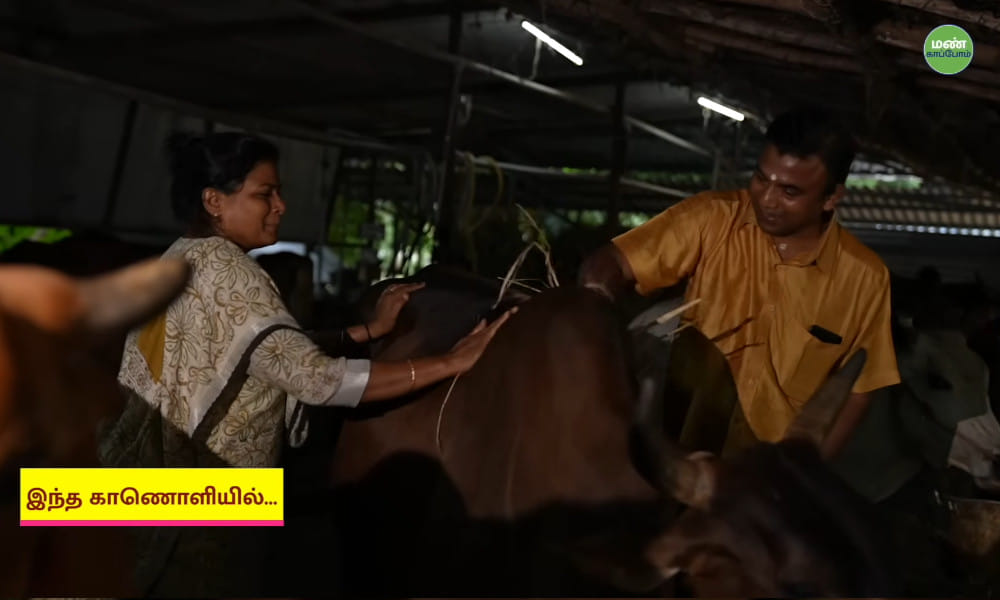
An Introduction to Bhairavi Organics
Greetings. My name is Sampath. I operate this integrated farm, Bhairavi Organics, located in Uchiman Solai, between Pillur and Kandithapattu in the Thanjavur district. We have been practicing integrated natural farming here since 2013. The core of our operations revolves around cattle and their feed. Our primary market products derived from the cattle are milk, curd, butter, ghee, and Jeevamrutham.
The Significance of Native Cattle Breeds
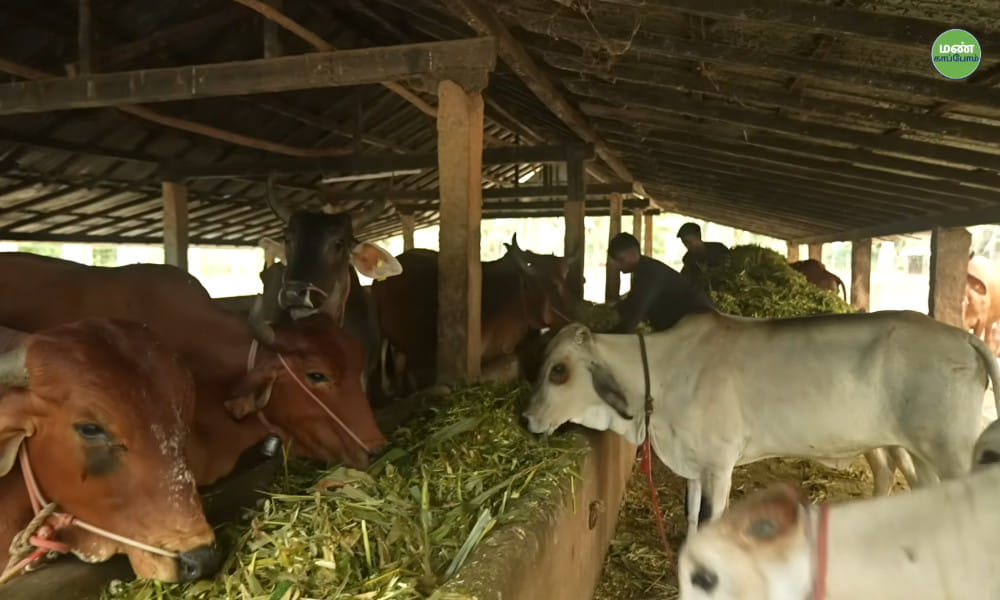
The question of "why cows" is central to our philosophy. Our traditional cattle breeds are unfortunately in decline. It is imperative that these breeds are preserved. Furthermore, the milk and other dairy products from these indigenous breeds are uniquely capable of providing complete health and bolstering immunity in the human body. Our traditional cow breeds, specifically, belong to the Bos Indicus type. In contrast, cross-bred cows such as HF Jersey are classified as Bos Taurus.
The distinction between Bos Indicus and Bos Taurus is notable: Bos Indicus possesses a prominent hump, its horns point skyward, and the rear portion of its udder is characteristically folded. These are emotionally intelligent animals that readily interact with humans and remain close to them. It is this unique disposition that led me to choose them. I have been raising them at Bhairavi Organics for the past 12 years.
The Genesis of a Natural Farming Philosophy
There is a personal story behind my transition to cattle rearing. Nammalvar Ayya, a relative of mine, introduced me to natural farming when I was just in the 11th standard, around 1991. His words sparked an inexplicable attraction within me. I observed at that time that a vast number of people in our country-children, teenagers, youth, and elders alike-were afflicted by various illnesses and significant health deficiencies. He enlightened me that the primary, fundamental reason for this widespread ill-health was the deteriorating quality of our food.
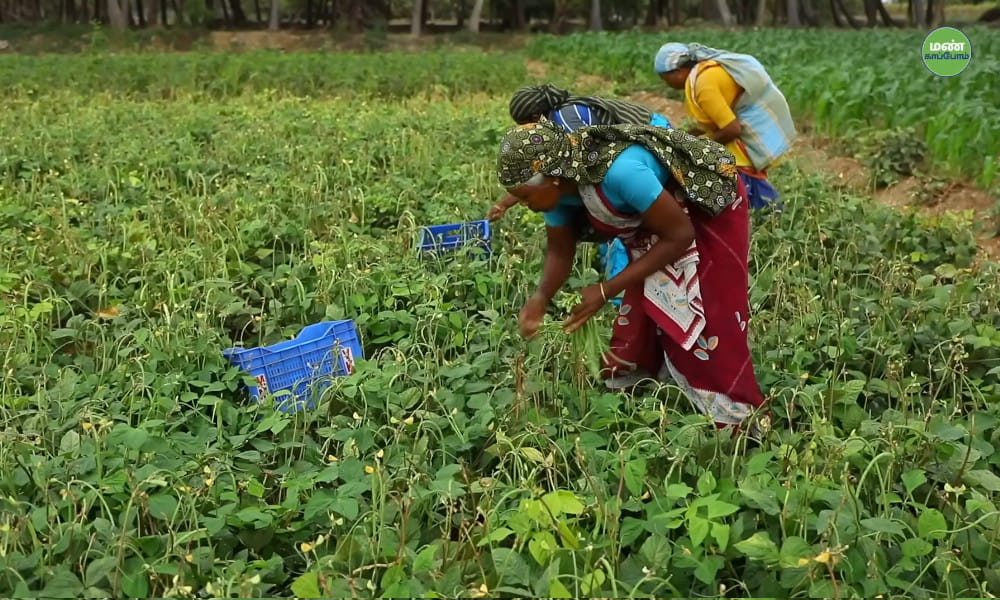
The decline in food quality, he explained, was a direct consequence of the Green Revolution and the White Revolution, both of which severely compromised the purity and nutritional value of our food. The underlying cause for this, in turn, was our collective neglect of the soil. Soil health, he emphasized, is intrinsically linked to the presence of cattle; good soil supports good human health. Yet, today, approximately 80% of farmers do not keep cows, citing the difficulty of their maintenance. This contrasts sharply with 50 years ago, when nearly every household possessed cattle, and their maintenance was not perceived as a burden. Their focus was firmly on the family's well-being, and they produced all their milk, eggs, and other necessities right at home.
Now, with every family producing their own eggs, milk, and vegetables, their health is carefully safeguarded. Moreover, engaging in activities like raising a cow, chickens, goats, or cultivating plants allows for productive time allocation. Conversely, without these activities, screen time on televisions and mobile phones increases significantly, leading to numerous attention deficit issues. This phenomenon can be seen as a form of societal decay today, with people consuming endless, often unnecessary, content, which ultimately diminishes their ability to focus on substantive matters.
Establishing Bhairavi Organics
A farm of this nature does not necessarily demand extensive land. Even a small house on a 2400 square-foot plot can accommodate a cow, a few chickens, and some plants, enabling the production of essential food items. This approach not only safeguards physical health but also contributes to mental well-being.

As a qualified dentist, I have observed a troubling trend in human development. Among the patients I encounter, particularly children and adolescents, their natural development is often stunted. Developmental deficiencies are alarmingly high, and a significant contributing factor is the food we consume. The degradation of food quality stems directly from our impoverished soil. Fifty years ago, an apple or any fruit contained far more calories and nutrients than it does today; currently, only one-third of that nutritional value remains. The root cause, once again, is the soil. Our ancestors cultivated this land for at least 15,000 years, maintaining its fertility, a legacy we have squandered in just 50 years. I recall my childhood, when rivers flowed with clean sand, water surged in canals, and the soil exuded a distinct aroma, teeming with life-all of which have now vanished. The Green Revolution and White Revolution bear primary responsibility for this decline.
If we aspire to restore these environmental elements and foster a strong, prosperous India for future generations, natural farming is the only viable path. Our farm, Bhairavi Organics, was established to serve as a model for this vision, inspired by Nammazhvar Ayya and nurtured by Sadhguru's grace. When I acquired this four-acre plot in 2013, it was predominantly barren red soil, devoid of organic content or humus, where even a single blade of grass struggled to grow. Our initial aspiration was to cultivate all necessary non-toxic vegetables for 100 families, leading to the creation of a large vegetable garden.
Transitioning to Cattle and Dairy
However, in pursuing vegetable cultivation, I continually faced challenges related to human resources and marketing, resulting in significant financial losses and mental distress. Deciding to halt these operations, I initially had three or four cows, primarily for agricultural purposes. It was then that some of my vegetable customers remarked on the excellent quality of our milk and expressed their desire to purchase it regularly. This positive feedback, coupled with my growing fondness for animal husbandry, led me to embrace cattle rearing. In addition to cows, I also kept chickens and dogs, finding immense joy in these activities. We then began cultivating grass for the cattle and gradually expanded our herd. Reflecting on cattle rearing, especially in the context of modern agriculture, cows are rarely used for plowing or other field-related tasks. Consequently, we opted for traditional milk-producing breeds. Historically, North Indian cows were the primary milk producers. Among these, I specifically selected Gir, Tharparkar, and Sahiwal, giving prominence to the Gir breed. My rationale for choosing Gir cows is rooted in their origin: they roamed the Gir forests, where they had to survive by confronting lions. Such an environment necessitated robust physical strength and acute intelligence. By raising such a resilient breed and providing their milk, we believe these inherent qualities will be passed on to those who consume it. With this principle in mind, we commenced large-scale breeding and conservation of Gir cattle. Presently, my farm predominantly comprises Gir cows, alongside a smaller number of Sahiwal, Tharparkar, and Kangayam breeds.
Native vs. European Breeds: A Crucial Distinction
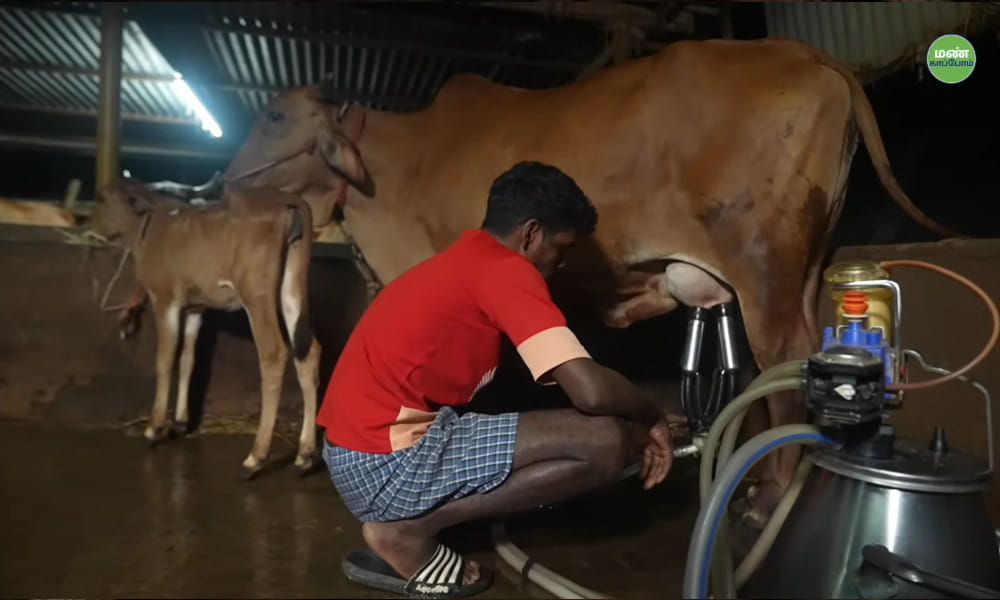
Many argue that only local breeds are superior. However, this is not entirely accurate; North Indian breeds also belong to the Bos Indicus type. Breeds such as Umblachery and Kangayam, prevalent in our region, are primarily working animals and yield less milk. Our South Indian populace often consumes non-vegetarian food, whereas North Indians tend to consume less. Thus, North Indian breeds were historically selected for higher milk production, while our local breeds were focused on labor. In today's changed economic landscape, where agricultural practices and the role of cattle have evolved, the contribution of cattle in farming has diminished. Consequently, we now prioritize milk-producing breeds.
Our societal needs and lifestyles have undergone significant changes. Urban-centric living, dominated by professions in software, medicine, engineering, and service industries, has become the norm. Manufacturing has declined, while the service sector has expanded. This shift has altered dietary requirements. To meet the demand for protein-rich, complete, and nutritious food, focusing on milk-producing breeds is appropriate. This was the rationale behind our selection.
Economic Viability and Health Benefits
Beyond milk, curd, butter, and ghee, the manure generated by cows holds immense value. A single Gir cow, for instance, produces a minimum of 20 liters of cow urine and 20 kg of cow dung daily. This amounts to at least 40 liters of slurry. Even if this slurry is sold at a minimal rate of 7 rupees after being converted into Jeevamrutham, it yields 280 rupees per day. This income from manure alone, without accounting for milk products, demonstrates significant profitability. For a capital investment of 70,000 to 80,000 rupees for a first-calving Gir cow, the return on investment from manure alone is substantial. If a cow produces five or six calves over its lifespan of five to six years, the daily income from manure alone covers a significant portion of the initial investment.
Today, there is growing awareness and interest in quality milk and dairy products. I have been supplying milk for the past decade, and my customers for milk and ghee rarely seek products elsewhere due to the superior quality. From a business perspective, cattle rearing offers significant strength to a family. It negates concerns about global market fluctuations or international trade policies. The quality of our products is unparalleled, ensuring customer loyalty. Therefore, competition is not a factor in this business.
However, sustained success requires immense commitment and continuous effort, 365 days a year. While the work may seem strenuous, it falls under what is known as "sweet stress"-a fulfilling endeavor that enhances mental well-being and physical vitality. Despite common perceptions of loss, genuine labor in this field ensures profitability.
The price of milk itself varies. While we sell it for 80 rupees in Thanjavur, milk of comparable quality fetches 100 to 120 rupees in metropolitan areas, indicating strong demand. Similarly, our ghee, priced at 2000 rupees, is sold for up to 3000 rupees in other markets. Some may question this pricing, given that market ghee can be found for 800 to 900 rupees. However, producing one liter of ghee through traditional methods, which involves boiling down 30 to 32 liters of milk, curdling it, extracting butter, and then simmering it, makes 2000 rupees a very reasonable price. In fact, 3000 rupees would be a more accurate reflection of its value. We maintain our current pricing to ensure wider accessibility, driven by a desire for people to experience its benefits. Yet, those who seek superior quality are prepared to pay a higher price. Awareness about food quality is steadily increasing, and as this awareness grows, natural farmers will thrive. The prosperity of our nation hinges on the success of natural farming.
Consumers should actively seek out farms practicing natural farming and observe their methods firsthand. Understanding the origin of one's food is paramount. Just as one carefully chooses a doctor or a clothing store, the same diligence should apply to food. The food we consume forms the very foundation of our existence. While one can manage without doctors, engineers, or others, life without food producers-farmers-is unimaginable. Yet, paradoxically, many are now abandoning farming. If this trend persists, within 5 to 10 years, the current working generation will face severe food shortages in their old age.
While modern agricultural innovations like hydroponic, vertical, and polyhouse farming exist and I have witnessed them, the food they produce lacks the taste, aroma, and nutritional value of naturally grown produce. These methods may yield visually appealing food, but they are devoid of genuine flavor and nutrients. Only food cultivated in fertile soil, nurtured through natural processes, possesses the authentic aroma, taste, and comprehensive nutritional profile.
If we aspire to healthy food, consumers must actively seek out sources of quality produce. This conscious effort will contribute significantly to both physical and mental well-being. Today, many young individuals, including those from major cities like Chennai, are visiting our farm, expressing a desire to establish similar ventures. It is crucial that more people embrace this path to ensure the widespread availability of quality food. While differing opinions and confusions may exist, we must recognize that assessing everything by foreign standards (European or American) is not always appropriate.
Consider the historical example of Brazil, where, around the 1800s, the Maharaja of Baroda gifted Gir cattle to the Brazilian people. Today, Gir cattle constitute the predominant breed throughout Brazil, and their milk production relies heavily on this breed. Even in America, they have developed a magnificent bull called 'Brahman,' a breed created by combining Gir and Sahiwal genetics. Yet, ironically, we are importing European breeds like HF Jersey. The primary issue with these European breeds is their excessively high milk production, which is driven by elevated levels of oxytocin.
When we consume milk with such high oxytocin levels, it affects our endocrine system. This contributes to issues like excessive hair growth and early puberty in women, and osteoporosis (bone density loss) in their joints. Similarly, for men, there is osteoporosis, joint bone loss. These are just some of the many problems. Diabetes is also a major reason for this. All of these are due to genetically modified animals. HF Jersey is not their original breed. All of these are genetically modified organisms. So, the food that comes from them is of the same nature. Whereas food from our traditional breeds not only serves as food for the body but also acts as medicine.
Addressing Modern Challenges and Promoting Holistic Health
Comparing HF Jersey milk to native cow milk reveals a stark difference. HF Jersey milk, in essence, is not true milk. It is a whitish liquid but lacks the inherent properties of milk. Native cow milk, however, is a complete food. There is no doubt about that. Consuming native cow milk not only nourishes the body but also acts as a medicine, which is its fundamental importance. This understanding is not recent but has been passed down for thousands of years by our ancestors, who recognized it as a superior food. Therefore, there should be no hesitation or doubt about consuming it.
In our canals or ponds, there used to be various types of fish. There were various types of insects. If you went out at night, fireflies would hang like garlands around every tree. Now, there is nothing. Insects are gone. Fish are gone. Snails are gone. Earthworms are gone. Birds are gone. As far as our farm is concerned, disease management is not a very difficult or intricate matter. Since we raise them naturally in a specific area, the incidence of disease is very, very low.
I have breeding bulls on my farm. I have Gir breed bulls, Sahiwal breed bulls, and Tharparkar breed bulls. When a cow comes into heat, these four or five bulls won't have the ability to mate with all of them. Our native cattle breeds have very, very low medical expenses. It is a very wonderful profession that brings mental satisfaction, and it is not just a profession, it is a way of life.
Raising cattle, that is, starting a farm or doing any business, for young people who think about this, cattle rearing is a wonderful profession. There is no second opinion on that. In the past, when we were young, our teachers used to say, "If you don't study well, you are only fit to graze cows." By repeating this, we lost this wonderful technology. In the past, every house had a cow. We lost all that, and the idea of raising cows and clearing dung became something that we were told was lowly, and we lost that wonderful technology. Now, the time for this technology is here. The central government has withdrawn subsidies for chemical fertilizers. Subsidies for pesticides have also been withdrawn. Chemical fertilizers and pesticides have now greatly affected our environment. The consequences are evident today in the many hospitals, and many organisms.
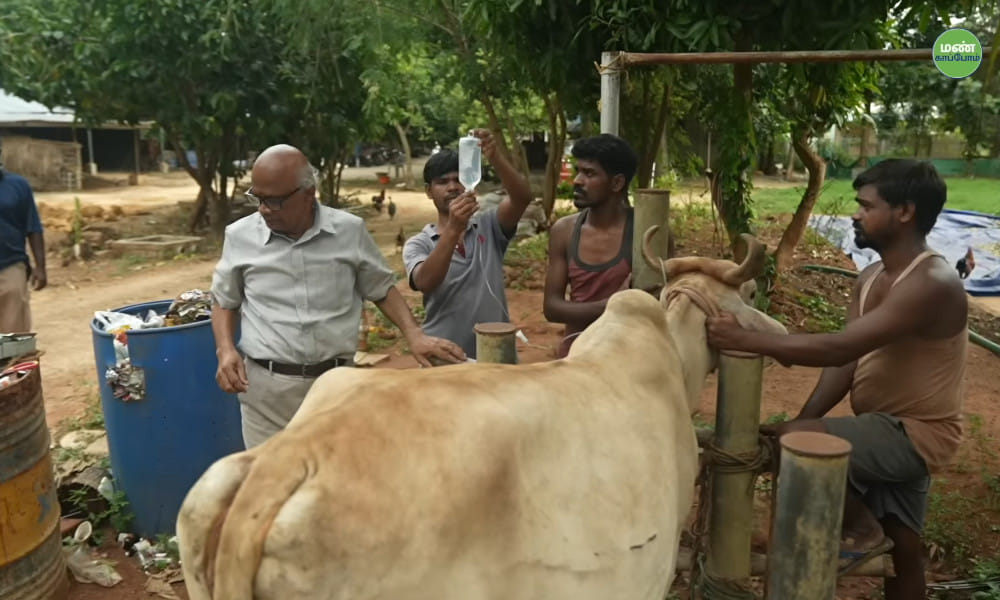
As for our farm, disease management is not overly complicated or intricate. Since we raise our cattle naturally in a confined area, disease incidence is very low. Initially, I avoided vaccinations, but veterinary doctors later advised them, so I reluctantly complied. Even then, I refrained from major vaccinations like Foot-and-Mouth or Lumpy Skin Disease. Now, even with veterinary experts administering vaccines, I've observed no adverse effects, and conversely, no issues when cows were unvaccinated. Disease management can incorporate both traditional, genetically-based treatments and allopathic medicine. In cases of severe illness, such as persistent fever during continuous rain when cows are in muddy conditions, both approaches can be utilized. However, in large-scale operations, relying solely on genetically-based treatments can be challenging due to the need for continuous monitoring. Thus, a balanced approach combining both methods, where allopathic treatment is used sparingly, is practical. Ultimately, disease management is not inherently difficult; with practice, it becomes manageable. Simple issues like fever, diarrhea, or mastitis can often be addressed with on-farm resources, eliminating the need for excessive worry about costs.
Fodder Management and Self-Sufficiency
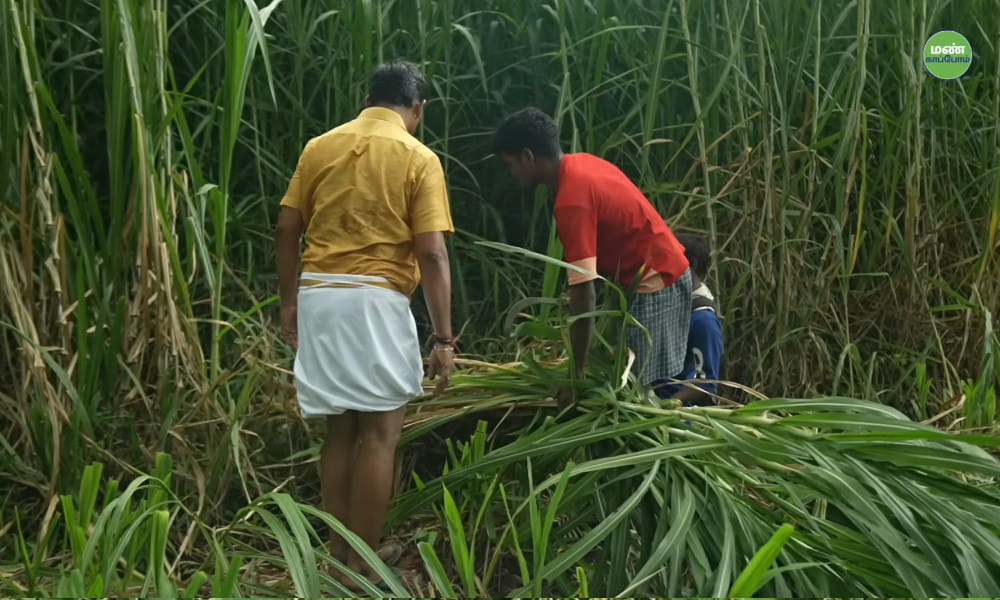
I cultivate Super Napier grass on 1.25 acres of our four-acre land. While typically recommended to change slips every three years, I have maintained the same slips for six years. This 1.25 acres yields 150 tons of grass annually, providing sufficient fodder for my cows. Additionally, our relatives from villages who practice natural farming supply us with straw, meeting our needs. For concentrated feed, I avoid commercial feeds due to their unclear economic viability. My calculation shows that commercial feeds priced at 28-30 rupees per kilogram are expensive when the cheapest grain, paddy, costs 22 rupees per kilogram. The added costs of processing, branding, and distribution make me question their true value. Instead, I formulate my own feed using a custom blend of corn flour, millet flour, ground cotton seeds, green gram husk, black gram husk, chickpea husk, pigeon pea husk, wheat bran, rice bran, paddy bran, salt, and jaggery. This feed, costing 30 rupees per kilogram (including transport), ensures excellent milk quality without chemical additives.
Daily Operations and Diversified Products
At our farm, we consistently milk about 25 cows, yielding approximately 180 liters of milk daily. Of this, 100 liters are sold as liquid milk to 130 customer families, while the remaining 80 liters are processed into ghee. We also produce paneer upon customer request. Our ghee production ranges from 1.5 to 2 liters daily, varying by season. We maintain long-term customer relationships, with many ordering by phone, and we even ship worldwide. Our ghee's superior quality means that those who taste it find market-bought ghee unappealing. Furthermore, nothing goes to waste here; we also sell cow urine, panchagavya, and vermicompost.
The Spiritual and Cultural Connection to Cows
Historical records, even from the Harappan Civilization, indicate cattle rearing. Lord Shiva himself is depicted on a bull, signifying the ancient reverence for cattle. No one can determine how many thousands of years ago this worship began. Modern vegan philosophies, which question the necessity of milk, contradict our inherent genetic and spiritual traditions, which trace back millennia. Milk is inherently digestible and a complete food. A morning glass of well-boiled milk with palm jaggery, turmeric, and pepper can sustain one until noon, negating the need for other food. Obtaining pure food is exceedingly difficult today. Milk should be consumed separately; combining it with other foods can alter its properties. Certain ingredients like turmeric, pepper, and rock candy can be added to milk without causing curdling, especially when lukewarm. This ensures complete nutritional absorption. The key is understanding which milk might cause issues, as native cow milk stands as a complete, wholesome food.
This native cow milk not only nourishes but also possesses medicinal properties, a fundamental aspect of its importance rooted in thousands of years of ancestral wisdom. Therefore, there should be no hesitation or doubt about its consumption. If you have a cow at home and consume its freshly milked product, it provides superior nutrition. Utilizing its dung in your garden attracts beneficial organisms. A historical account from the Neyveli Lignite Corporation, where German engineers observed villagers sprinkling diluted cow dung and later confirmed its beneficial microbial content, underscores this ancient wisdom. This practice, understood by our ancestors, enriches the environment.
Modern medicine now acknowledges cow urine's significance, with extracts like 'ark' being used in pharmaceuticals. While some educated individuals might scoff at such traditional practices, traditional medicine is indeed valuable, as evidenced by our ancestors' emphasis on it. For families, owning a cow facilitates income generation from dung products like sambrani cups, and cow urine can serve as a natural pesticide and plant growth enhancer for terrace gardens. This empowers women, fostering independence. The docile nature of these cows makes them easy to manage, bringing mental happiness, confidence, and fulfillment to those who interact with them. Thus, a farm becomes a collaborative venture that strengthens family bonds.
Keep In Touch
Get the latest updates on blog and happenings at Save Soil Regenerative Revolution and on the rest of Isha's social work — delivered to your inbox.