
>
Save Soil Regenerative Revolution>
Blogs>
Dhanapal's Natural Farming: A Decade of High-Yield Sugarcane and Rice
Share
Dhanapal's Natural Farming: A Decade of High-Yield Sugarcane and Rice

28 Apr 2026

05:59 am
From Kanchipuram, Dhanapal shares his journey into sustainable agriculture, showcasing profitable yields and reduced costs through traditional practices and innovative methods like duck weeding.
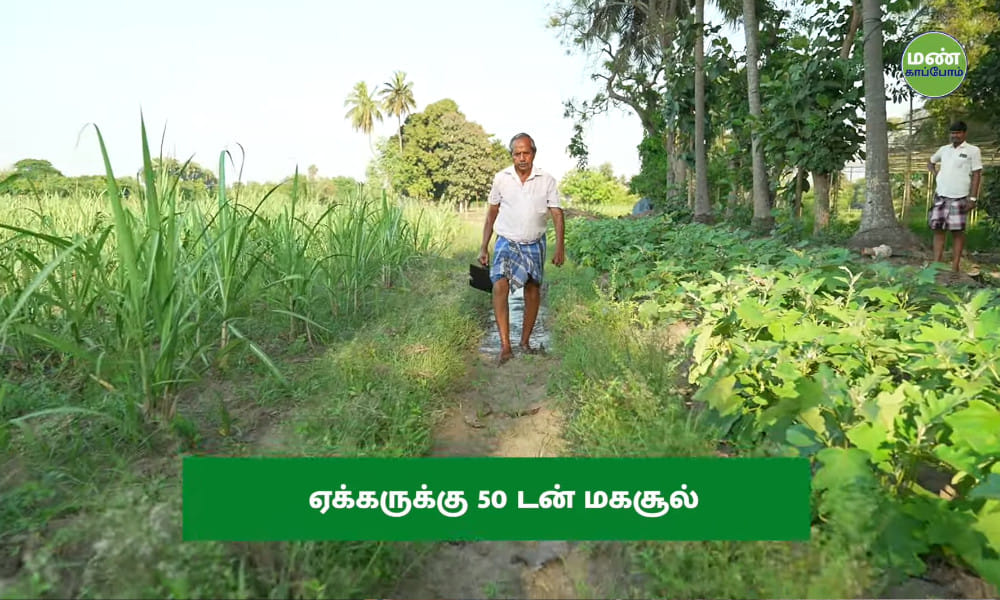
My Journey to Natural Farming
I am Dhanapal, from Satancheri village, Kanchipuram district. I wish to share my reasons for transitioning to natural farming. After being inspired by the teachings of Nammalvar and introduced to Dr. Solaiappan in Chengalpattu, I shifted from chemical farming, a practice I had maintained until 2006. Since then, I have continuously practiced natural farming, an endeavor further fueled by the awareness campaigns of Isha's Save Soil Movement.
Diverse Crops and Sugarcane: My Main Focus
In my natural farming practice, I cultivate a variety of crops including sesame, black gram, green gram, groundnut, turmeric, various vegetables, and chilies. Among these, sugarcane is my primary crop.
Understanding Plantain and Ratoon Sugarcane
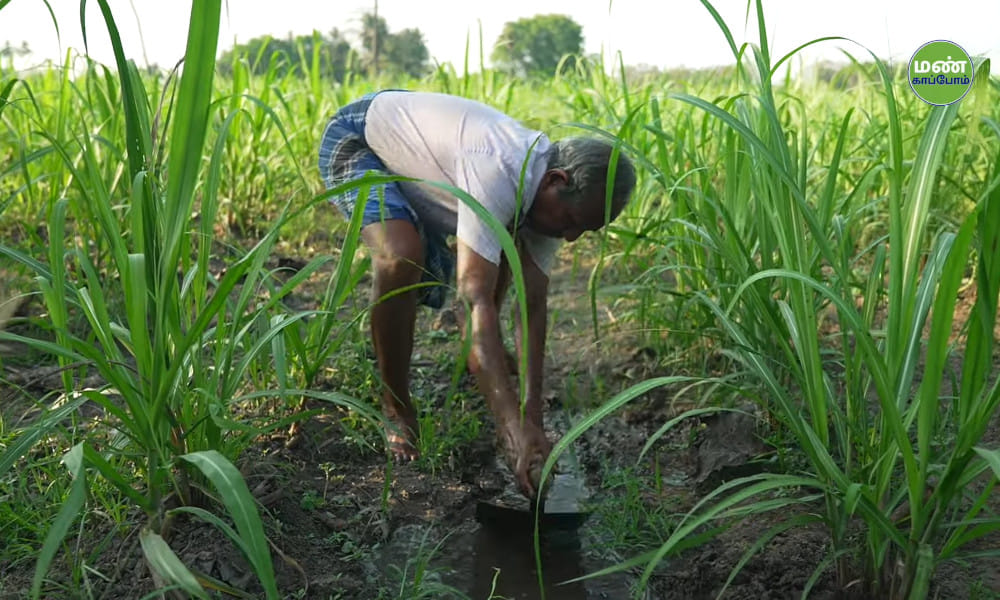
We distinguish between plantain sugarcane and ratoon sugarcane. Plantain sugarcane typically takes 25 to 30 days to germinate. The first weeding is crucial at 25 days, as uncontrolled weeds can reduce the yield by 40%. This method is sometimes referred to as a non-weeding crop or a foot crop, with weeding being a vital management technique. Ratoon sugarcane, on the other hand, sprouts from the cut stumps of a harvested plantain cane. It exhibits faster growth, emerging within 10 days and requiring inter-cultivation by 15 days. This rapid growth allows for earlier weeding compared to plantain cane, making weed management more efficient.
Inputs and Soil Enrichment in Natural Sugarcane Farming
In contrast to conventional farming schedules that dictate input application at 30, 60, and 90 days, my natural farming approach is different. For both stubble and plantain cane, basal fertilizers, such as neem cake and well-rotted manure (like cow dung), are applied. These are either spread between the rows for ratoon cane or incorporated during the final ploughing for plantain cane, enriching the soil.
The Role of Mulching and Sugarcane's Value
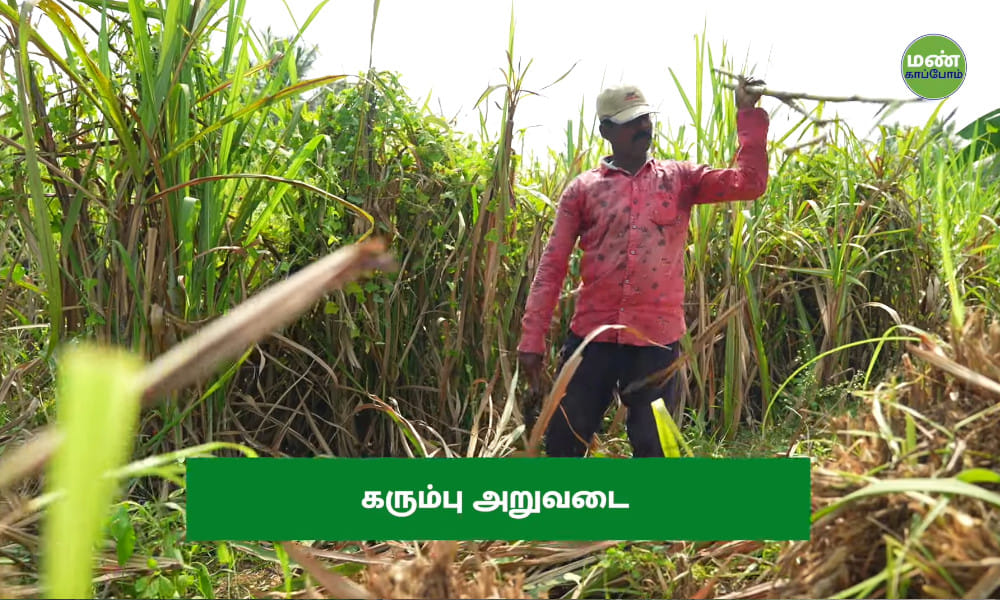
An important technique in my cultivation is mulching with sugarcane trash. Sugarcane, much like coconut, palm, and banana, is revered as a "Kalpavriksha" (wish-fulfilling tree) because every part of it is useful. Sugarcane trash is an excellent natural input that significantly enriches the soil and enhances yield.
Growth Cycle and Pest Management: The Leaf Stripping Technique
Sugarcane develops nodes within three months. I employ a leaf stripping technique, which I consider a "panacea" for various diseases and sap-sucking pests, including the internode borer. By ensuring adequate sunlight and aeration through proper maintenance, the sugarcane grows robustly and produces a good yield.
Harvesting Sugarcane: Varieties and Optimal Timing
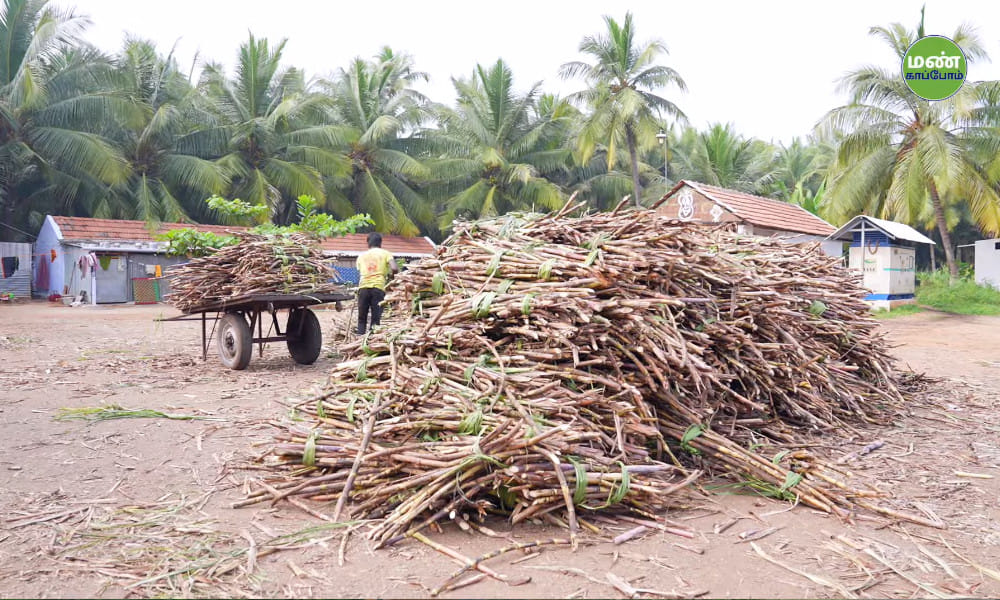
My own plantain sugarcane, planted by me, is harvested in the 11th month. Generally, sugarcane varieties are harvested between 8 and 12 months, depending on the specific type. Plantain cane is typically harvested at 12 months, or sometimes as early as 11 months for a good yield. Ratoon cane can be harvested even earlier, in 10 months, usually a month before plantain cane. This earlier harvest for ratoon cane is due to its faster sugar maturity, which benefits both the sugar mill with higher sugar content and the farmer with increased yield.
Maximizing Profit Through Value Addition
Instead of solely sending sugarcane to the mill, value-added selling is a crucial technique for maximizing profit. Organizations like Isha's Save Soil Movement and various scientists advocate for value addition, such as producing jaggery from sugarcane, as a more profitable endeavor.
Yield Differences: Plantain vs. Ratoon Cane
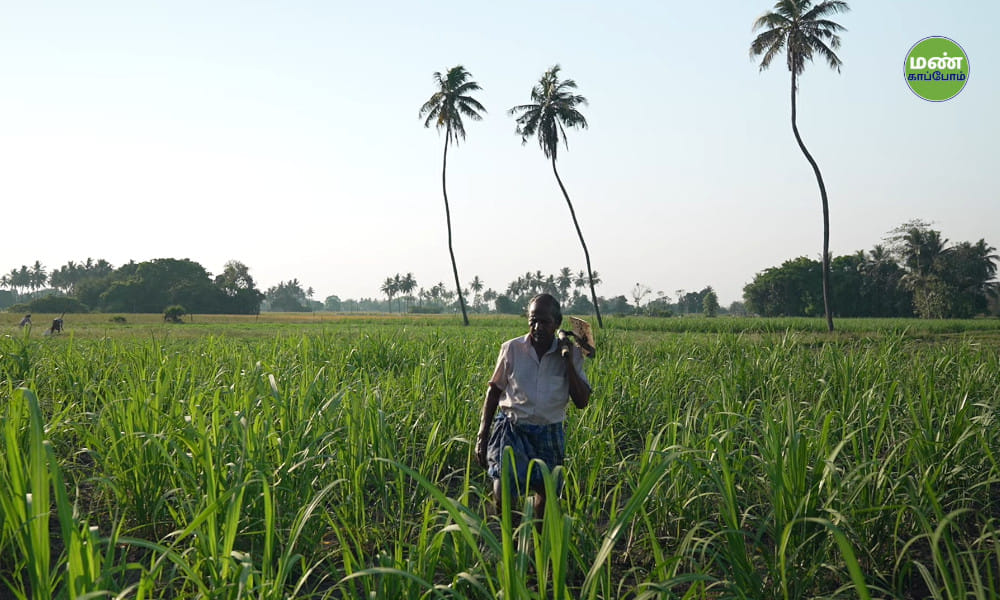
When comparing yields, plantain cane typically produces 60 to 80 tons per acre, with some instances reaching up to 100 tons, depending on soil conditions. While scientists suggest ratoon cane yields comparably, my 50 to 55 years of experience indicate that ratoon cane yields 3 to 5 tons less than plantain cane.
Automated Harvesting: Efficiency and Benefits
The advent of labor shortages has led to the government introducing numerous sugarcane harvesting machines. Sugar mills, including the Madurantakam Cooperative Sugar Mill in my area, now utilize these machines. This mechanized harvesting offers several advantages over manual labor: it resolves labor shortages, cuts the cane uniformly at ground level (unlike manual cutting, which often leaves 0.75 to 1 foot of cane, leading to sugar content loss for both farmer and mill), promotes more sprouting and branching from ground-level cuts, prevents the cane from falling over and becoming "dead canes," spreads trash uniformly for mulching, cuts the cane into pieces for immediate transport to the mill (avoiding field drying), and facilitates faster processing and payment (up to 3-4 loads per day).
Economic Success of My Natural Farming
Through my natural farming methods, my plantain cane yielded 50 tons. This contrasts with the village average for chemical farming, which is typically 40 to 45 tons, though sometimes reaching 60 tons in some soils. The average sugar mill yield is 26 tons, whereas my area's average is 40 to 45 tons. With a sugarcane price of ₹3124 per ton, a 50-ton yield generates approximately ₹1.5 lakhs in income. Even after accounting for all expenses, I achieve a profit of at least ₹50,000 when selling to the mill. However, selling value-added products like jaggery significantly increases profit. For example, the expenses for a 75 kg sack of paddy (including bag, loading, transport, and milling) amount to ₹700 to ₹750. From each sack, I obtain 42-43 kg of rice and about 3 kg of bran, totaling 47 kg of produce. I sell 1 kg of rice for ₹77-₹80 (compared to broken rice at ₹40-₹50, polished rice at ₹50). Approximately, even if ₹1000 is spent per sack, I make a profit of ₹3000. For 47 sacks, my net profit reaches almost ₹1 lakh. This is after accounting for expenses from seeds, ploughing, transplanting labor, transportation, and rice mill charges. Even if ₹30,000 is spent, I get a net profit of ₹60,000 to ₹70,000 from one acre of paddy. Next, the straw is also my net profit. The cattle that eat that straw do not waste it. Since the straw has no chemicals, no fertilizers, the cattle do not waste it. They eat it completely. When they eat it, the cattle are healthy. They provide 5 to 10 kg of manure daily on average. That is my biggest organic fertilizer production. I get enough. This is worth ₹10,000 at least. Because if you buy natural mushrooms now, you pay ₹10,000 to ₹20,000. It's naturally grown. Since there are no chemicals or pesticides, mushroom production is higher, so there's demand for it. We market it, or we use it for our cattle's needs. Even if that's ₹10,000, and this is ₹70,000, then ₹80,000 is the net profit. Will all varieties yield this? No. Only Athur Kichili Samba yields a higher profit. It's compulsory to sow diverse crops and use green manure; that's beneficial for the yield. The yield will increase. If you improve the soil, you won't get pests. You must definitely do intercropping. If you do border cropping, it will be a bit difficult. Farming is already difficult. If you ask if intercropping should be done, it should be done. Only then will you not have pest problems. Only if you don't have pest problems, the yield will increase. Only if the yield increases, you will profit. If you don't know the basics, please don't engage in farming; it's not possible for me. I've studied medicine, but I don't give injections. I don't practice medicine. It's like saying I use people to examine. Farming is a science. It's more important than everything else. I know the basics, I'm handling it. But I don't agree.
Knowledge Sharing and Environmental Stewardship
Isha's Save Soil Movement conducts training programs on value addition for traditional rice, grains, millets, and jaggery from naturally grown sugarcane. I participated in a training in Tiruvannamalai on natural sugarcane cultivation and value addition. My involvement stems from an eagerness to learn unknown aspects of sugarcane cultivation and value addition, which I believe contribute to environmental protection. I express gratitude to Isha's Save Soil Movement for their efforts in raising awareness about environmental preservation.
Tags
Keep In Touch
Get the latest updates on blog and happenings at Save Soil Regenerative Revolution and on the rest of Isha's social work — delivered to your inbox.