
>
Save Soil Regenerative Revolution>
Blogs>
Field Stories>
The Elavambadi Thorny Brinjal, Born Again: A Farmer’s Tribute to Ancient Farming
Share
The Elavambadi Thorny Brinjal, Born Again: A Farmer’s Tribute to Ancient Farming
Field Stories

15 Sept 2026

04:59 am
An engineer trades city life for ancestral seeds and Isha-trained methods bring back Elavambadi’s star crop.
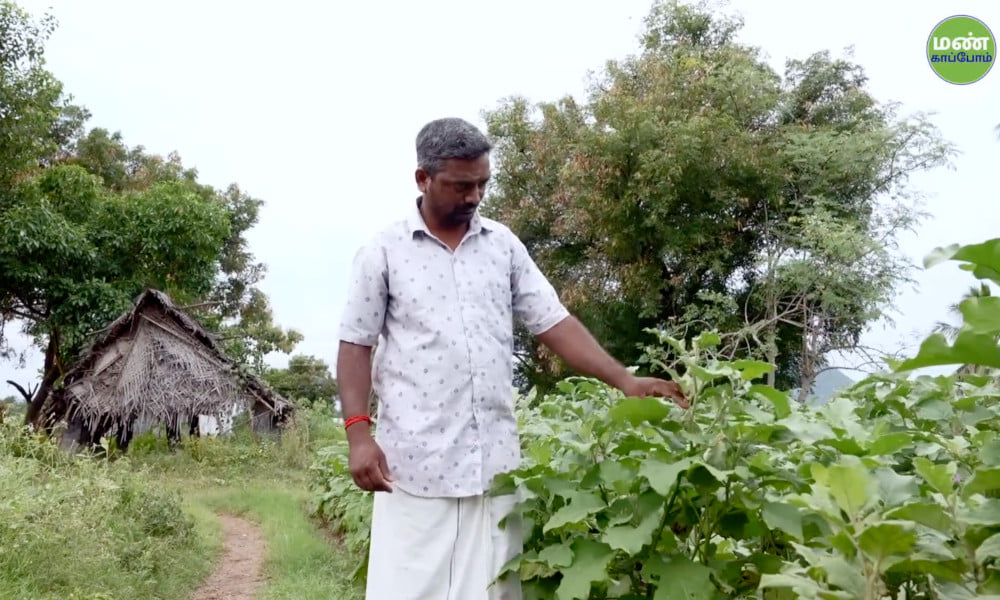
Welcome to the life-changing story of the legendary Elavambadi Thorny Brinjal, synonymous with unmatched taste, and the farmer who made his ancestors proud by bringing its heritage back. Let’s dive into his remarkable efforts in his own words.
Namaskaram, My name is Ramesh, from Elavambadi village in Anaicut Taluk, Vellore District. I studied for a Diploma in Mechanical Engineering and used to work in Chennai for a company associated with car showrooms. My family has always been into agriculture, though my father relied on chemical fertilizers. However, I wanted to farm naturally to stay healthy, driven by my own health challenges. For five years now, I have embraced this path, inspired by many who urged me to cultivate our village’s famous brinjal, a crop with a rich history, once enjoyed even by prominent figures. The turning point came during an eight-day training program in Palladam by Isha’s Save Soil Movement. That experience transformed my understanding of soil and natural farming. They taught us what soil should be like, what a plant needs, and what agriculture truly means. It was only after that I started doing natural farming fully.
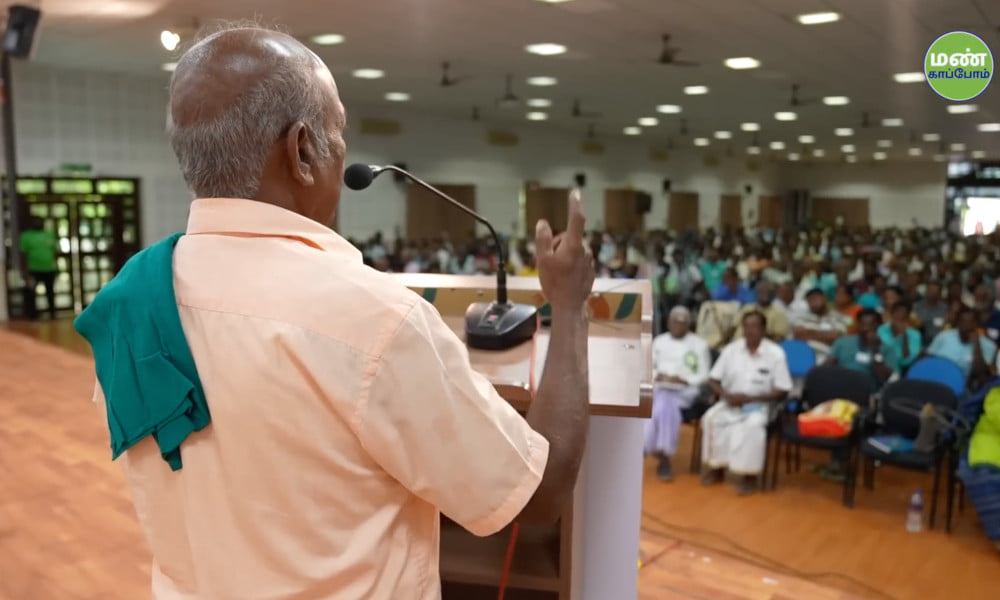
When I began natural farming, I could only find hybrid seeds, which are genetically modified. I planted them, which gave poor yields. While planting whatever was available, I searched for better seeds. When I bought millets and traditional rice, added value to them, and sold them, people would ask which village I was from. When I said Elavambadi, they immediately asked if they could get our village’s brinjal seeds. But I did not have the seeds then. Once upon a time, we cultivated those brinjal’s widely in our village. Our grandfathers grew it widely here, but it faded away, beacuse people stopped, and the brinjal disappeared. Only hybrids were available, which lacked taste. Many people motivated me to take up this specific cultivation. Four years passed without any luck. Then, about two years ago, a friend helped me get it from a person in Kaveripakkam. That person had bought the seeds from Elavambadi 12 years ago and had preserved them. I bought the seeds from him, brought them back, and have been planting them since last year. And now, I am distributing the seeds all over Tamil Nadu.
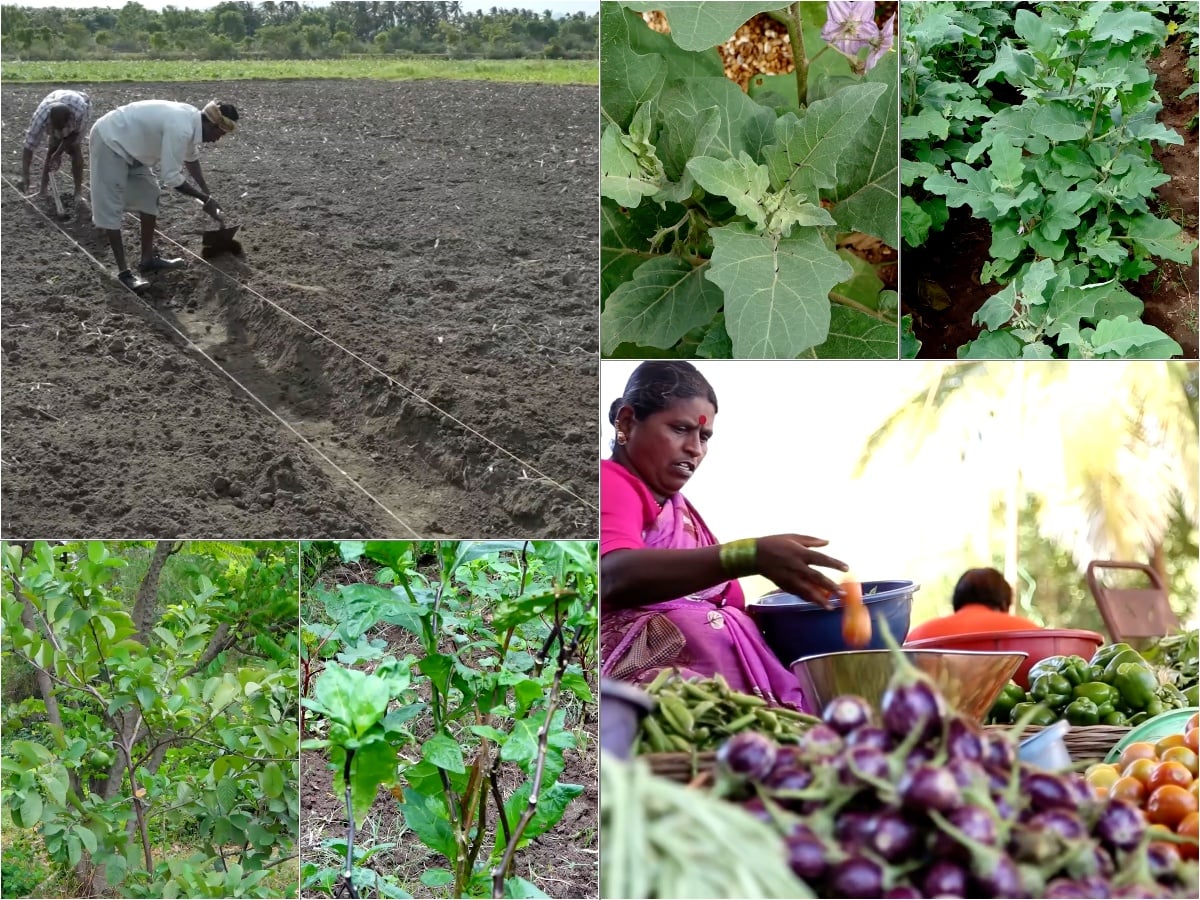
This variety stands out for its exceptional taste, you can instantly tell the difference between this and other vegetables. If you look at our village, Elavambadi, the soil has high limestone content, giving the brinjals a unique taste like no other. This is a method passed down from our ancestors.
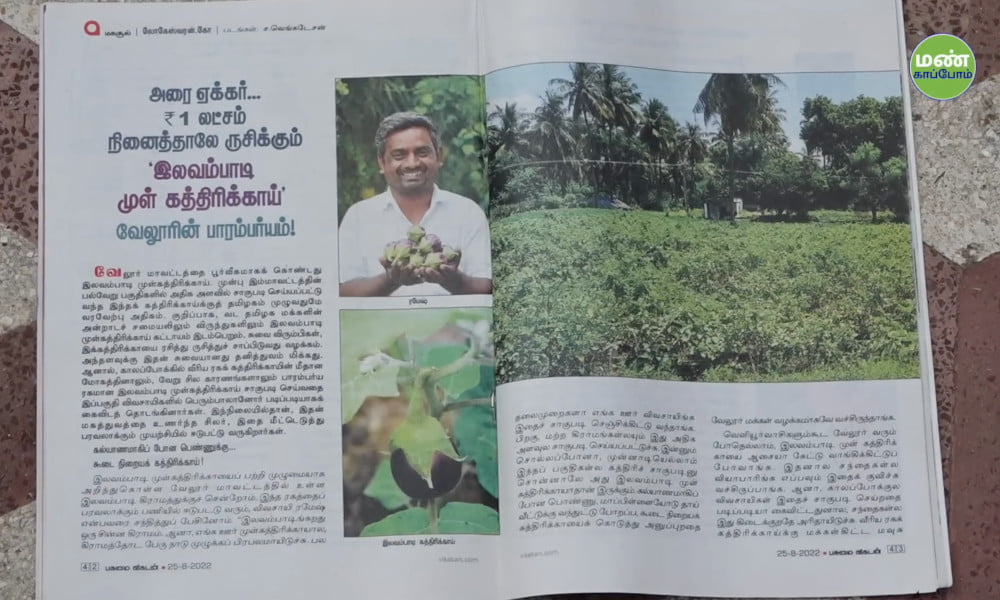
Marketing is an important matter for brinjals, so we sell them directly through Nam Sandhai Sunday Market or some organic shops. I haven’t written down exact accounts for the yield, but I can tell you the total for a year. We get about 3 tons. On average, we sell it for anywhere between ₹30 to ₹60, sometimes even up to ₹100 per kilogram. Let’s assume an average of ₹40. For 3 tons at ₹40 per kg, it comes to ₹1,20,000. Even if we deduct expenses, we get a profit of around ₹1,00,000, which is for one year. It yields for more than a year. If we maintain it well, it will yield even longer. We also sell seeds. Last year alone, we sold seeds worth ₹10,000. This time too, I have planted it primarily for seeds. We harvest the vegetables for sale only once a week. We produce seeds and give them to many people. Since Pasumai Vikatan published a small piece about it, seeds became popular amoung people. This variety is tasty and famous. It is said that in the past, prominent figures including artists and even the former President Venkataraman used to have this brinjal shipped from here to Delhi. It became famous because of that history.
There is a Sunday market called Nam Sandhai where we sell our produce. There is also a store at CMC Hospital college, where we supply. Mostly, people come here to buy. Many come searching for us. We sell directly. At most, we don’t sell to middlemen or traders who undervalue natural produce. Since we farm naturally, they ask for a lower price. So, we sell as much as possible and leave the rest for seeds. Because the taste is so good, people even come from Chennai to buy it. Many organic shops in Chennai ask for it. But we cannot go and deliver it because this is a very challenging crop. If we don’t watch it for even one day, despite all our precautionary measures, we cannot control pest and disease attacks. Since our time goes into cultivating the crop, we only go for sales once a week.
Regarding the cultivation method, seed treatment is important. We use Panchagavya made from native cow dung or just a cow dung solution. For 50 cents to one acre, we soak about 100 grams of seeds in cow dung milk for just half an hour, dry them in the shade, and then use a raised bed nursery. We make two beds of 10x10 size. We don’t use pro-trays or nurseries. We do it the way our ancestors did-sowing in beds and covering them. We cover it with coconut fronds for a week. On the seventh day, it starts sprouting. Then we remove the fronds and water it and apply Jeevamrutham and Panchagavya, plus bio-fertilizers like Pseudomonas and Trichoderma viride to prevent root disease. After this process, we transplant the seeds between 30 to 45 days, with flowering happening by 60 to 90 days and first harvest soon after.
The taste shines in traditional preparations. Grandmothers cooked it in earthen pots over firewood stoves using sesame oil or homemade castor oil, crushing small castor seeds from field borders, boiling in an iron ladle to extract oil for seasoning with masala. Roasted directly on the stove and made into thogayal chutney, it’s even more delicious.
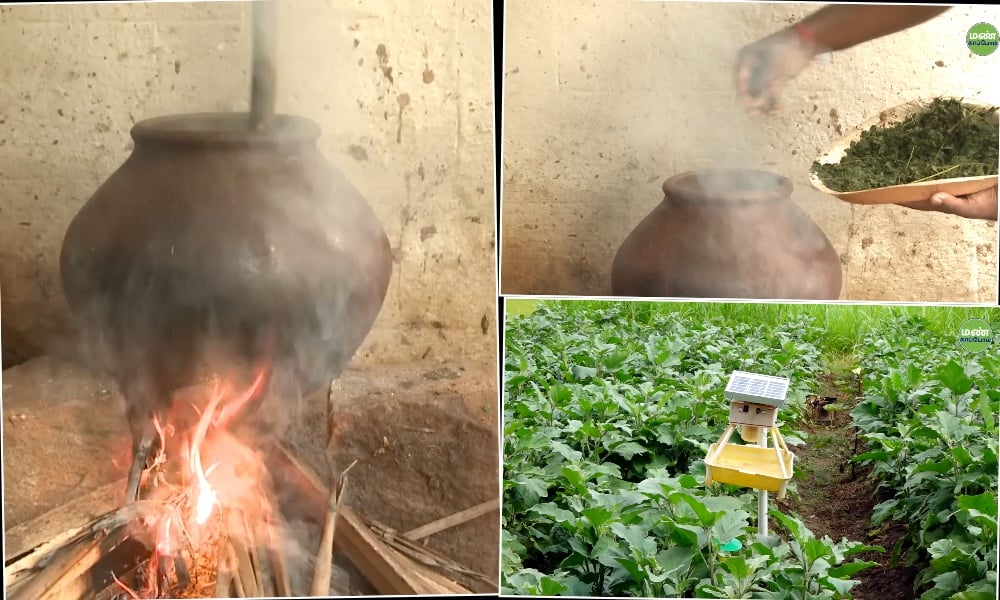
For soil health, we apply Ghanajeevamrutham before planting and Jeevamrutham twice monthly. Initially, we used to apply a lot but after the training from Isha’s Save Soil Movement, we have enhanced the soil quality, now twice a month is enough. Pest control relies on weekly ten-leaf extract, essential Agniasthram for stem and fruit borers, we cannot cultivate brinjal without Agniasthram, buttermilk solution or fish amino acid every two days, and light traps like solar or emergency lights over water for 50% insect control. Groundnut shell mulch this season absorbs nitrogen, decomposes into manure, and suits our organic certification. During the rainy season, flood irrigation replaces sprinklers, and improved soil now teems with earthworms, staying friable with minimal inputs. People don’t understand what ‘organic’ means, it means using leaf litter and waste available to us. In simple words, Natural Farming is all about the soil.
We intercropped with multi-branched cluster beans, three red okra varieties, Hat Brinjal, long snake gourd, bitter gourd, turmeric, native small onions, sweet lime, and guava trees in a five-layer model on 30 cents for home use, sales, and seeds. We also grow Ratha Sali rice, a rare fine red variety with medicinal benefits, after shifting from unsellable hybrids like 43 and 45 even if done naturally. Sourced to meet demand at our CMC shop supplying it to patients and works very well for the body, it’s a 110-day crop on 50 cents nursery this year. Our quest from the very beginning was all about our health. If every farmer embraced natural farming like this, we could all stay healthy and rarely need hospitals. That’s exactly why we’re doing it.
Keep In Touch
Get the latest updates on blog and happenings at Save Soil Regenerative Revolution and on the rest of Isha's social work — delivered to your inbox.