
>
Save Soil Regenerative Revolution>
Blogs>
Field Stories>
High-Yield Natural Tomato Cultivation at Isha Semmedu Farm
Share
High-Yield Natural Tomato Cultivation at Isha Semmedu Farm
Field Stories

28 Jul 2026

05:41 am
Achieving 12 tons of harvest through soil health, live mulching, and intercropping.
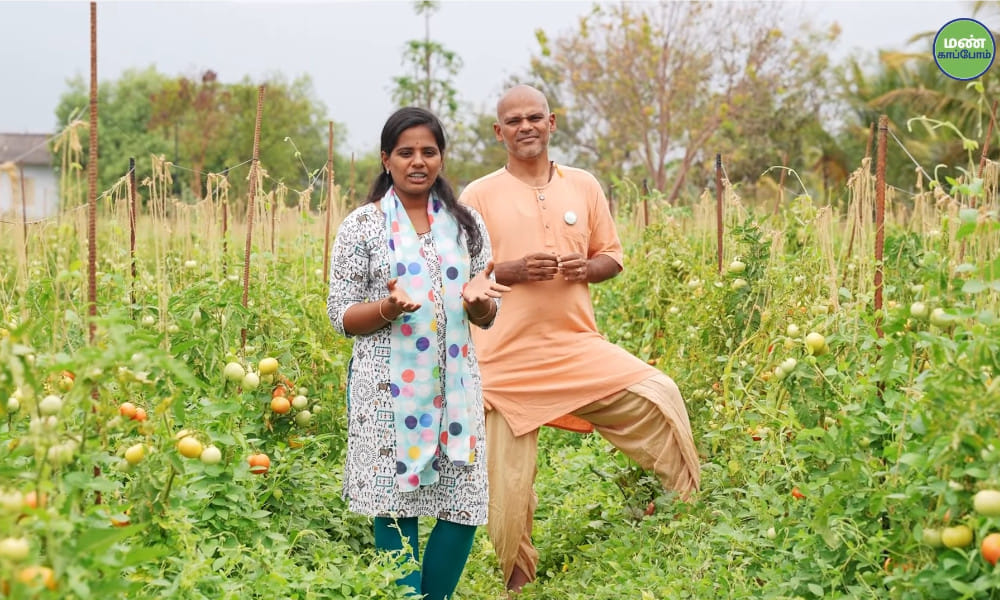
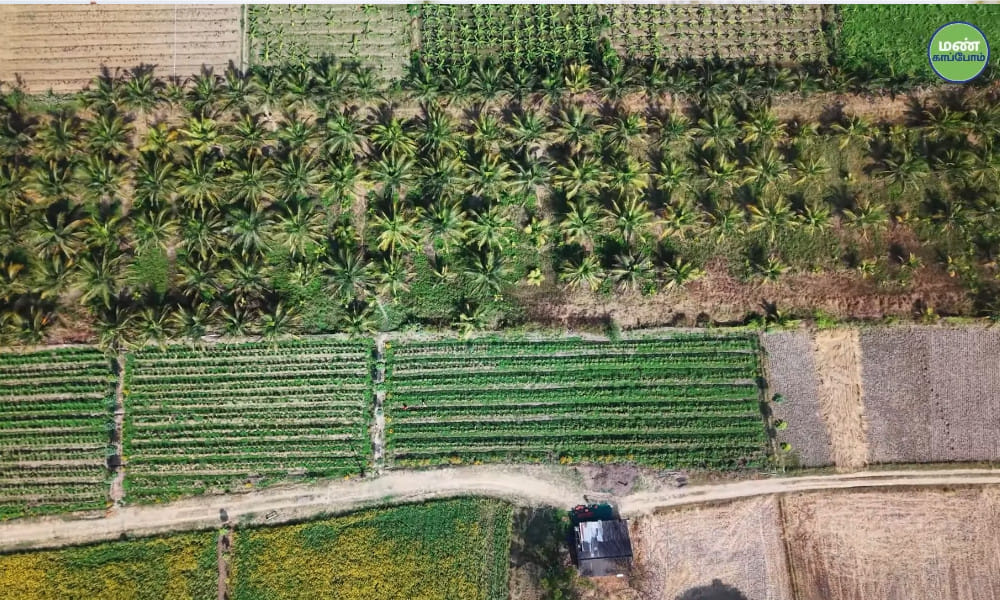
At the Isha Semmedu farm, part of Isha’s Save Soil Movement, we are demonstrating how natural farming can produce exceptional results even with improved crop varieties. On a one-acre plot, we have cultivated the 'Madan' tomato variety, which is an improved type often thought to require heavy chemical inputs. However, we have successfully reached the 73rd day of cultivation using purely natural methods, with the first harvest beginning as early as the 65th day.
Systematic Soil Preparation and Nutrition
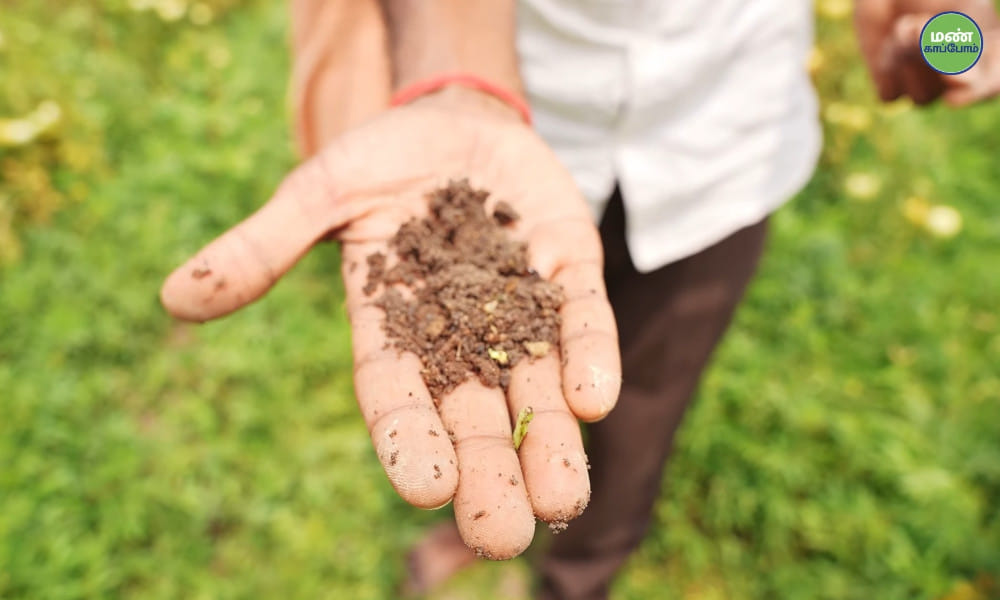
The secret to this successful harvest lies in the soil. Before preparing the raised beds, we sowed multi-crops and grains. After 45 to 50 days of growth, these were plowed back into the earth to enrich the soil with green manure. This foundational nutrition is now fueling the tomato plants. To maintain this vitality, we provide Jeevamrutham, prepared from indigenous cow dung and urine, every 10 days. On the 45th day, we applied a potent mixture of groundnut, neem, and pungam oil cakes at the base of each plant.
Harvest Data
From our first harvest alone, we collected 1,000 kilograms of tomatoes. With harvests scheduled every three to four days, we anticipate a total of 10 to 12 rounds of picking. While we planted 7,000 seedlings, approximately 6,000 have matured into healthy plants. Even by conservative estimates of 2 kilograms per plant, we expect a minimum yield of 10 to 12 tons. If conditions remain optimal, reaching 18 tons based on a 3-kilogram-per-plant yield is entirely possible.
Natural Growth Promoters and Pest Control
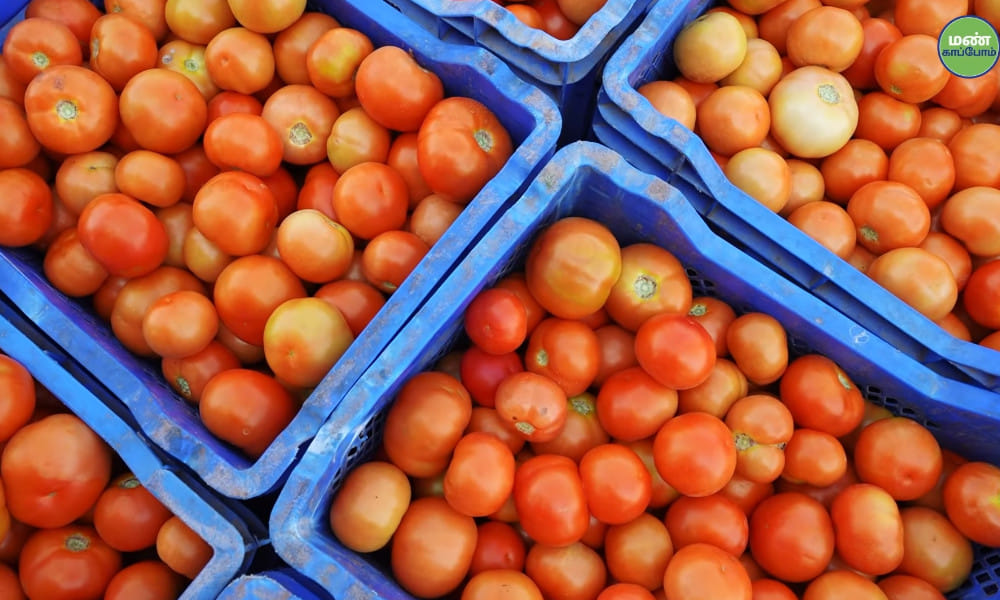
To ensure high-quality fruit and prevent flower drop, we utilize a weekly spray of sour buttermilk solution. This simple natural input encourages the plant to hold its flowers and results in exceptionally plump fruits. Many of our tomatoes weigh between 110 and 120 grams, with some reaching nearly 240 grams. Remarkably, the harvest is nearly free of pest damage, with less than two percent of fruits showing any signs of infestation, a common problem in chemical-based farming.
The Power of Live Mulching
We have utilized horse gram (Kollu) and Naripayaru as 'live mulching' across the field. This serves several critical purposes. First, these plants act as a natural nitrogen-fixer, taking nitrogen from the air and depositing it into the soil, eliminating the need for synthetic urea. Secondly, the mulch provides essential shade for soil microbes to thrive. This cover also significantly reduces water evaporation; while typical farms irrigate every three days, we only need to provide water via drip irrigation once every seven to ten days. Finally, this live mulch suppresses weeds, saving approximately 15,000 to 20,000 rupees in labor costs.
Intercropping for Continuous Revenue
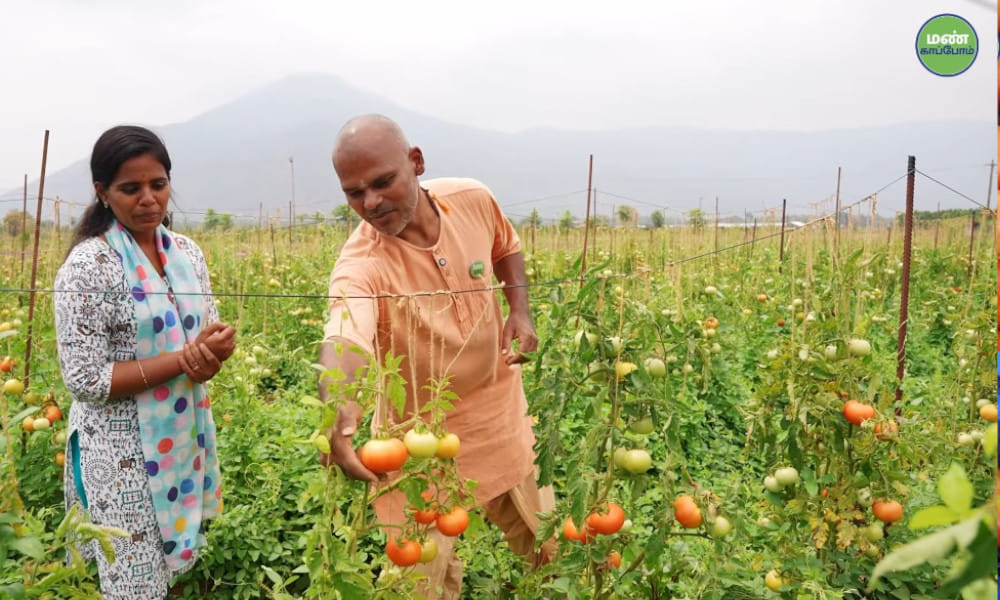
A key strategy in Isha’s Save Soil Movement is diversifying crops to ensure steady income. Alongside the tomatoes, we planted radish, coriander, and beetroot. By the 35th day, we harvested 900 kilograms of coriander, and by the 45th day, we gathered two and a quarter tons of radish. The revenue from these intercrops effectively covered the initial costs of seedlings, labor, and inputs, making the main tomato harvest pure profit for the farmer.
Quality and Durability
The difference in quality is evident in the physical health of the plants. The stems are thick and robust, unlike the weak, vine-like stems often found in chemical farming. The tomatoes themselves have an incredible shelf life. While chemically grown produce may rot within a few days, these naturally grown tomatoes can last up to 25 days. They may eventually shrivel, but they do not rot or lose their nutritional integrity. This demonstrates that with enriched soil and natural care, farmers can achieve sustainable, high-yield, and high-quality results.
Keep In Touch
Get the latest updates on blog and happenings at Save Soil Regenerative Revolution and on the rest of Isha's social work — delivered to your inbox.