
>
Save Soil Regenerative Revolution>
Blogs>
Human Impact Stories>
High-Yield Ridge Gourd Cultivation: Nagalingam’s Success with High-Density Natural Farming
Share
High-Yield Ridge Gourd Cultivation: Nagalingam’s Success with High-Density Natural Farming
Human Impact Stories

03 Jun 2026

04:18 am
From the American Army to the fields of India: Achieving 15 tons per acre with low input costs and disciplined management.
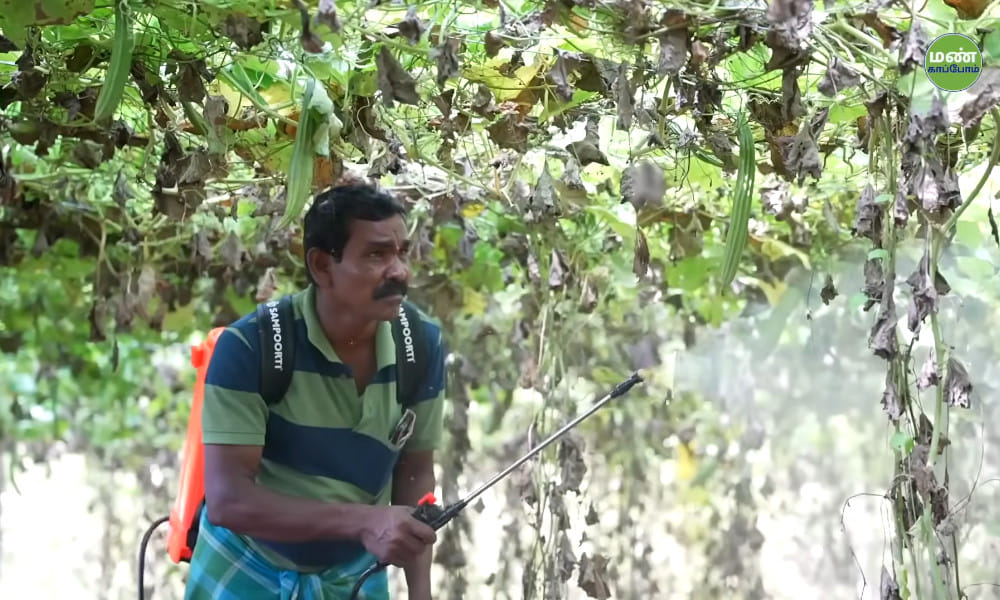
Introduction and Background
My name is Nagalingam. I came into agriculture in 2014 after making a significant shift in my life. For nearly ten years, I worked as a contractor for the American Army, earning over ₹1 lakh rupees a month. But over time, I lost my attraction to money. Living abroad, away from my family and children, began to feel meaningless.
I realized that earning even ₹10,000 rupees while living with my family was far more valuable than earning ₹1 lakh in isolation. So I resigned from my job and returned to my hometown to take up farming.
Yield Potential and High-Density Planting
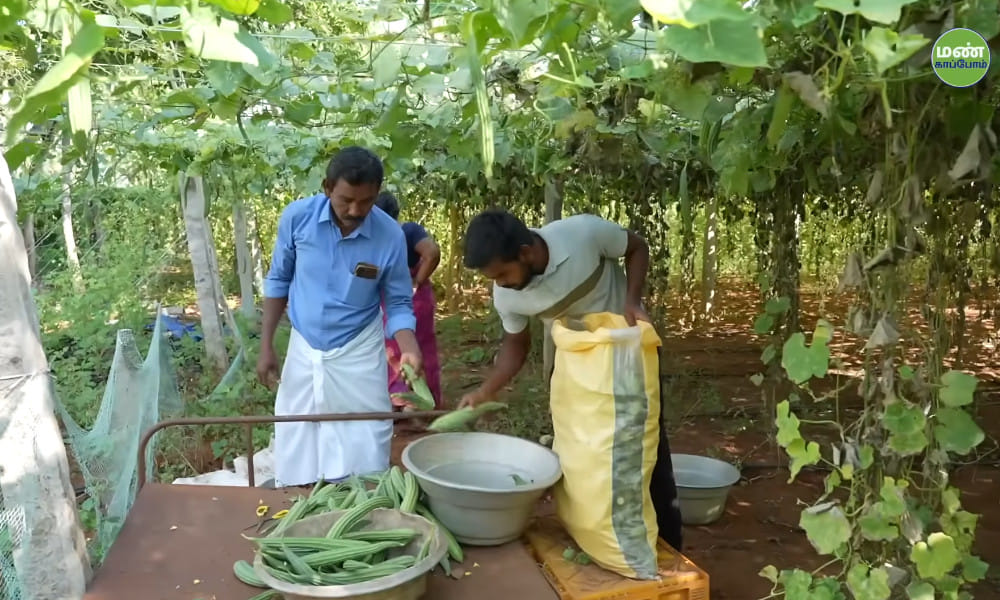
The success of my farm depends on a very clear calculation and a disciplined planting method. Rainfall certainly helps—one good shower around the 50th day can increase the yield by three tons—but I never depend on that. I plan everything based on conservative estimates using a high-density planting system.
While most farmers in my area follow a spacing of 6 × 8 feet, I plant rows four feet apart and keep two feet between plants within the row. At every dripper point, I sow two seeds. With this method, I accommodate nearly 10,000 plants in one acre.
My calculation is simple. If each plant gives just four ridge gourds, roughly one kilogram in total, the yield becomes 10 tons. At a market rate of ₹40 per kilo, this translates to ₹4 lakhs. In practice, I now harvest between 15 and 20 tons. The entire model depends on ensuring that each plant yields at least four vegetables.
Land Preparation and Sowing
I practice natural farming on red soil equipped with water facilities. My preparation involves applying 10 to 15 tractor loads of manure. I do not spread the manure across the entire field. Instead, I place it strictly along the line where the drip hose will lie. This ensures the application is concentrated and precise. After the manure is placed, I run a rotavator through the soil. Following this, I earth up the soil to form a raised bed and then level it. This structure provides the necessary foundation for the crops.
For the planting stage, I use the Saniya-4 seed variety. To cover one acre of land, I require approximately 26 to 28 containers of seeds. This variety typically contains approximately 360 seeds per 50 g packet.
Overcoming Germination Issues in Red Soil
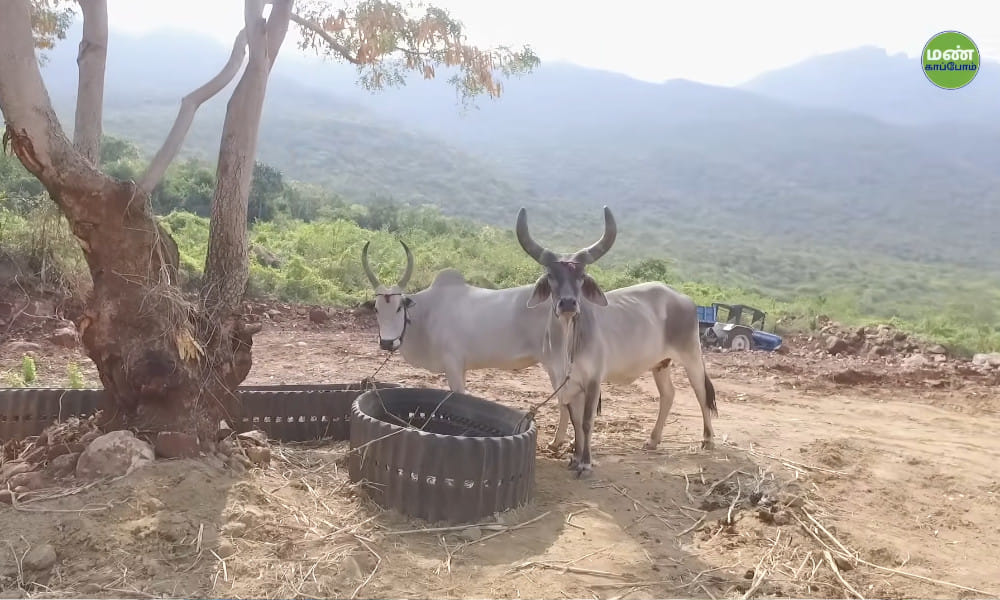
Red soil behaves very differently. In my first year, the intense morning heat would dry the soil by 10:00 AM, and many seeds failed to germinate.
I solved this with a simple method. On the day of replanting, I dissolve tank silt (Karambai) in water and spray this muddy mixture over the sown spots until the soil is thoroughly soaked. The silt forms a seal on the surface, locking in moisture and ensuring nearly 100% germination.
Red soil also drains exceptionally well. Even after 24 hours of rain, water clears within five minutes. This prevents stagnation, which usually causes yellowing in crops grown on black cotton soil.
Vine Maintenance and Critical Pruning
Vine management is crucial. By the 25th day, I use a single-strand jute twine to guide the vines toward the trellis wire above. Between the 15th and 25th days, every vine must catch this wire.
The most important task is pruning the side shoots (simbu) that grow at the base. These must be removed. I allow shoots to grow only after the vine reaches about five feet and touches the trellis. If side shoots are left at the base, vegetables form there and restrict the upward growth of the vine.
Pest and Disease Management Strategy
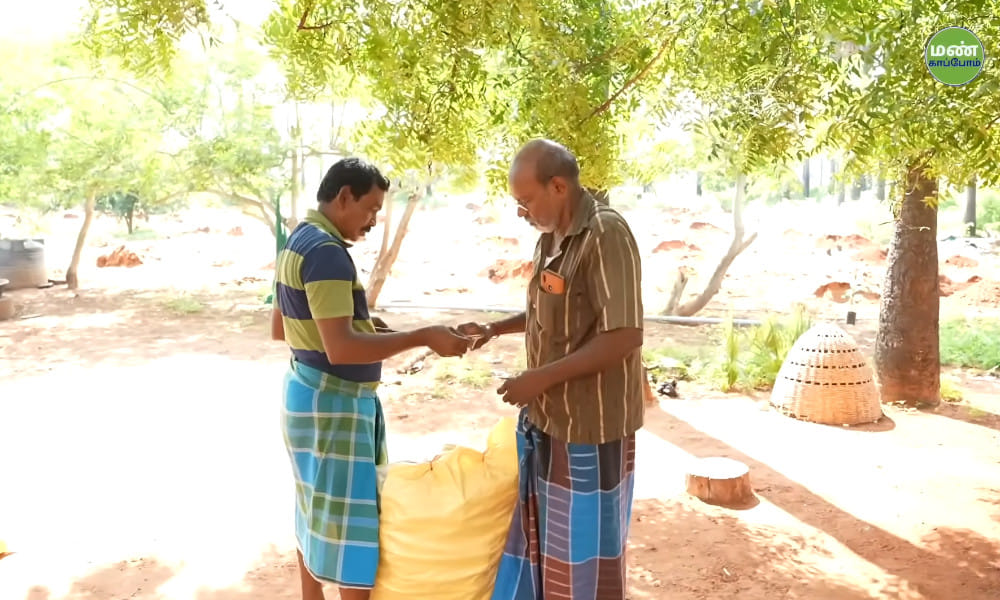
My pest control approach is based on prevention rather than chemicals. Every five days, I alternate between root nutrients and foliar sprays. This keeps changing the smell of the leaves, making pests hesitant to feed.
Fruit flies usually appear when harvesting starts around the 40th day, so I begin preventive steps 30 days earlier. Instead of expensive light traps costing ₹3,000, I use rechargeable headlamps costing ₹250. I tie four of these per acre above tubs of soapy water, which effectively traps pests at very low cost.
If leaves begin to yellow, I spray Vettisalaikani (100 ml in 10 liters), followed by Fish Amino Acid. To prevent leaf curl virus, I spray preventive solutions every four to five days. If the virus appears, I prepare a mixture of 1.5 kg virali manjal (finger turmeric) and 250 g milk asafoetida, grind, boil, filter, and spray it.
Fertilizer Management and Soil Health
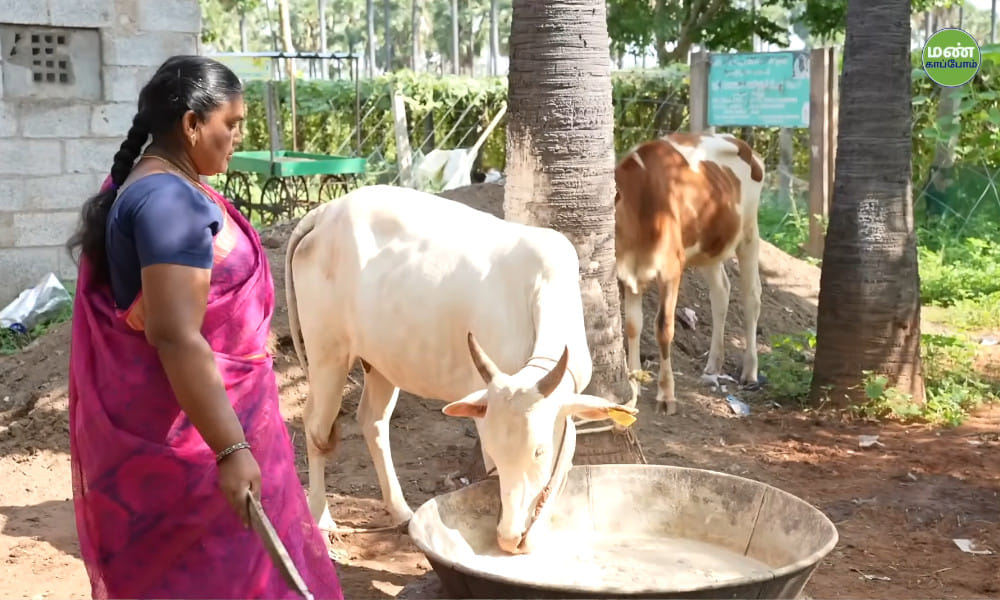
Every five days, I apply Jeevamrutham, alternating it with Fish Amino Acid, Waste Decomposer, and Effective Microorganisms (EM). I also add 5 kg of groundnut cake to each drum of Jeevamrutham. This makes the soil loose and friable.
It took me three years of consistent natural farming to build this level of soil health. Persistence is essential. One should not return to chemicals after initial difficulties.
Enhancing Flower and Fruit Quality
To ensure high market value, the vegetables must be straight. I spray a solution of Calotropis (erukkalai) leaves soaked for 10 days when small fruits appear. The boron content prevents bending.
To increase the number of female flowers (which produce the fruit), I use a fermented mixture of coconut milk and buttermilk. I mix 3 kg of coconut milk with 3 liters of sour buttermilk and bury the container in a manure heap for a week. Spraying this twice between the 40th and 50th days enhances pollination and fruit conversion.
Harvesting, Market Strategy, and Sustainability
Harvesting begins around the 40th day and lasts up to 100 days. I start harvesting at 4:00 AM to ensure the vegetables reach the market looking fresh and shiny by 8:30 AM. I chose ridge gourd because it has a steady daily demand. I do not rely on an "organic" label; the visual appeal and freshness of the produce fetch the price.
Financially, this model is highly sustainable. I buy only jaggery and a few bio-fertilizers. I prepare most of the inputs myself. Seed cost is around ₹15,000, manure costs ₹20,000 to ₹25,000, and the total expense does not exceed ₹50,000. With yields between 15 and 20 tons, the returns are far higher.
People initially ridiculed my methods, but persistence and low input costs have proven that this approach is both practical and profitable.
Keep In Touch
Get the latest updates on blog and happenings at Save Soil Regenerative Revolution and on the rest of Isha's social work — delivered to your inbox.