
>
Save Soil Regenerative Revolution>
Blogs>
Human Impact Stories>
Creating a Self-Sustaining Food Forest: A 45-Year Natural Farming Journey
Share
Creating a Self-Sustaining Food Forest: A 45-Year Natural Farming Journey
Human Impact Stories

19 May 2026

07:21 am
How adopting no-till, waterless, and weed-free principles on a three-acre integrated farm leads to sustainable profits and ecological balance.
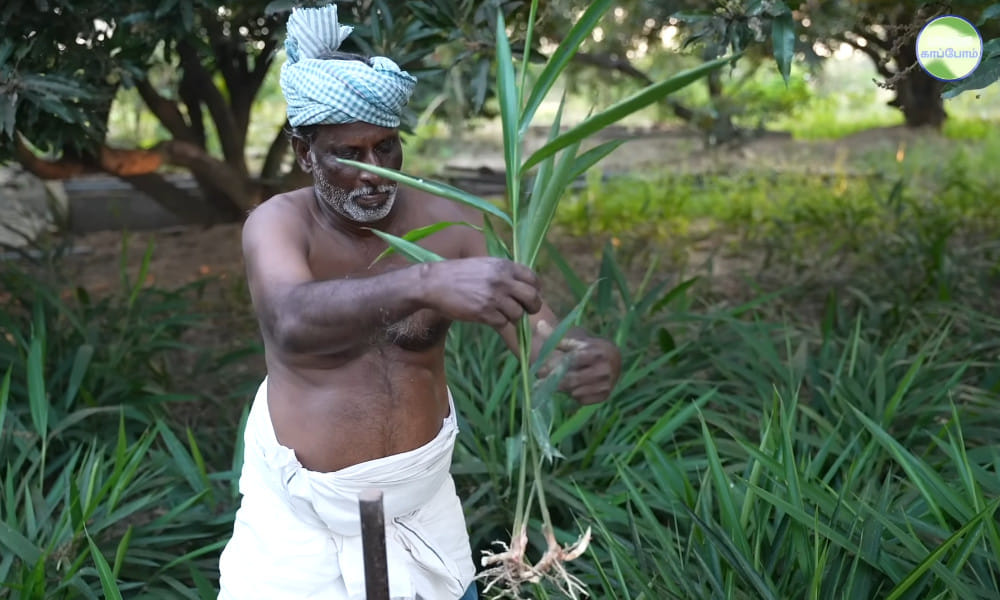
A Forty-Five Year Agricultural Journey
I am Manivannan from Saduperipalayam, Arani Taluk in the Thiruvannamalai District. My journey in agriculture spans forty-five years, having started when I was just fifteen. For the first twenty-five years, we practiced chemical farming. However, this approach resulted in very low profits and numerous operational problems. Consequently, we made the switch to natural farming. We initially established this as an integrated farm system, which proved to be very feasible and profitable. We produced quality goods and sold them for a good price, eventually deciding to manage sales directly from our own location.
The Philosophy of No-Till and Natural Farming
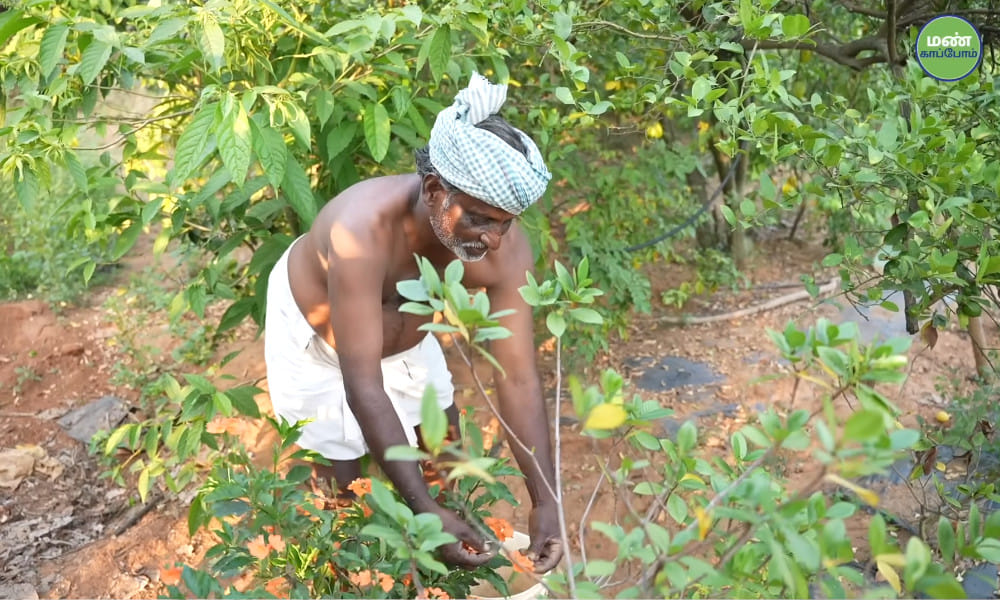
My fundamental aim is to practice no-till farming; that is my basic objective. Following that, while practicing no-till farming, I aim to practice waterless farming. Furthermore, while practicing waterless farming, I intend to practice weed-free farming. After implementing all of this, we should only harvest what the trees, flowers, and plants yield on their own, and only when they choose to give it.
I expect to reach a state of complete no-till farming in another six or seven years. When I observed how everything in the forest grows by itself and asked why crops do not grow like that for us, a situation arose where I had to select specific crop varieties to replicate that environment.
Diversity Through Integrated Farming
In this integrated farm, which spans three acres, we cultivate nearly sixty varieties. We have planted mango trees in one section, while other sections contain Amla (Gooseberry), Sweet Lime, Lemon, and Bananas. We grow flowers as a multi-crop and do not cultivate any crop as a standalone mono-crop. Everything is done as an intercrop.
For instance, while most people do not intercrop with mango trees, we cultivate herbs under them. Specifically, we grow Sitharathai (Thai Ginger/Galangal), a valuable herb that is compatible with mango trees and thrives there. It has a good market value of about 400 rupees per kilo.
The reason we prioritize intercropping is risk management. If one crop fails due to marketing issues, climate change, or technological reasons, another crop will provide profit. It extends a balanced level of income for us. Therefore, we mostly practice intercropping.
Maximizing Space with Intercropping and Fencing
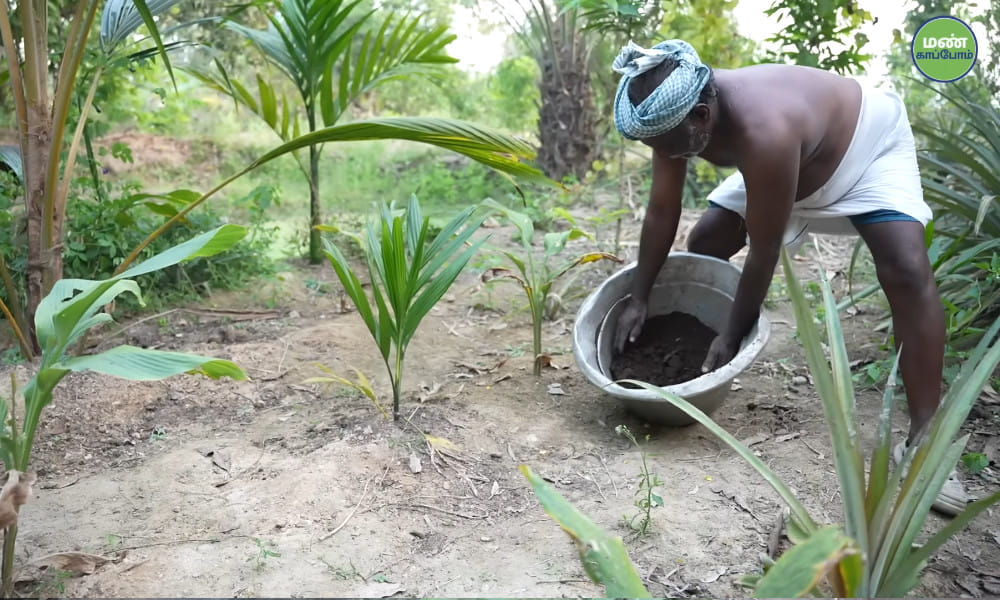
We utilize our fences to grow herbs like Adathoda (Malabar Nut), Ranakalli (Bryophyllum), and Perarattai (Greater Galangal). We also grow Drumstick (Moringa) as a fence crop because it grows easily in that placement. Additionally, we cultivate Pirandai (Veld Grape), Muppirandai (Square-stalked vine), Betel leaves, and Sweet Flag (Vasambu) in the first plot. This interplay allows us to cultivate many items within a single plot so that if one yields less, the balancing remains correct.
In the next section, we are trialing Mookuthi plants, Sweet Lime, Water Apple, and about ten types of foreign fruit plants including Avocado and Star Fruit. The Star Fruit yields heavily even on small plants. We also cultivate Vetiver, herbs, pumpkins, and bottle gourds here. Around the fences of the next plot, we grow Manoranjitham (Climbing Ylang-Ylang) and Shenbagam (Champak). We also cultivate the Air Potato vine. The five-petaled Conch Flower (Butterfly Pea) grown on the fences is used for Blue Tea, garlands, temples, and Siddha medicine.
Cultivating High-Value and Rare Species
We cultivate "Curry Jackfruit" (Kari Pala), a variety from Kerala used for cooking. It yields well here, with one tree providing a value of about twenty-five thousand rupees in a year. We have about four trees and plan to develop this further as the rooting process has suited the local conditions perfectly. We also manage distinct water ecosystems. We have a White Lotus pond and a Red Lotus pond on ten cents of land. Apart from that, there are two ponds on two-cent plots where we cultivate Virali Lotuses. This is a rare variety belonging to the Sangam-era literary Lotus I mentioned earlier. While there is no income in the flower itself, we sell the plants for significant revenue. Since it is a rare variety with a market rate of five hundred to a thousand rupees, we sell it for two hundred and fifty rupees. We parcel the plants and ship them via bus to places like Coimbatore.
Our farm includes about fifty mango trees, forty of which are the high-quality Imam Pasand variety. We also have sheds for fancy chickens, pigeons, and cows. We use the three cows we have to prepare necessary natural fertilizers.
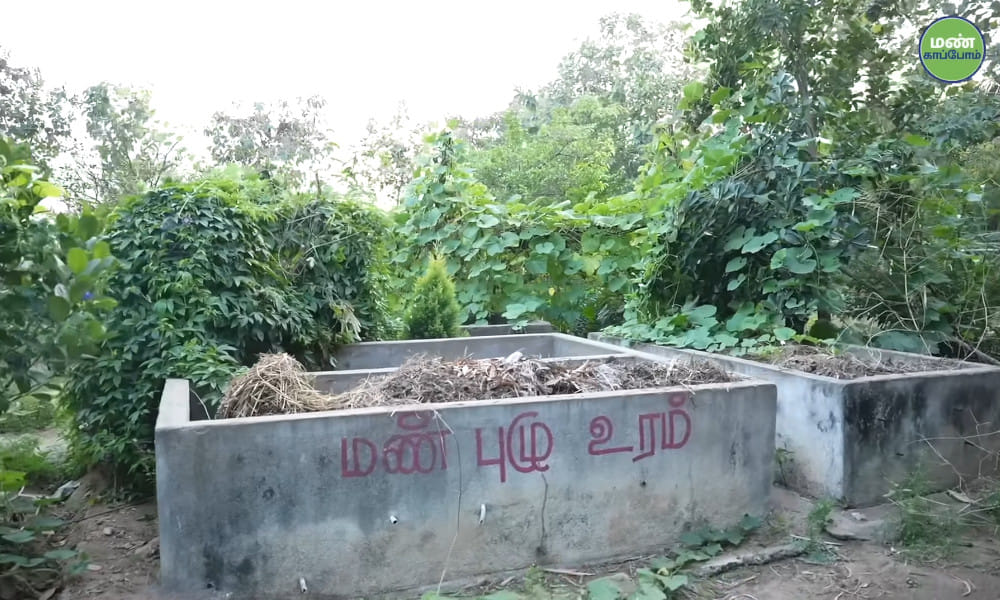
The On-Site Fertilizer Factory
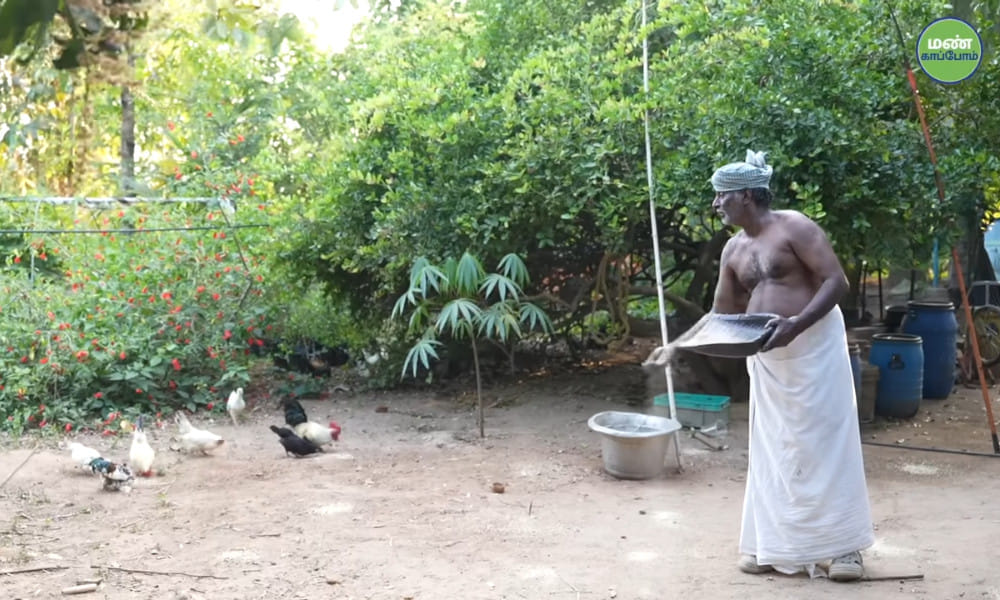
My farm is equipped with a dedicated "fertilizer factory" where I prepare all my organic inputs. For nutrition, I use Jeevamirtham. One application for an acre costs only 200 rupees, and I apply it four to five times per crop. I also use a groundnut cake solution which serves as a growth enhancer. This costs about 500 rupees per acre per application and is applied two to three times per crop.
To provide essential potassium to specific crops like cauliflower, I use a fruit solution made simply from bananas and jaggery. For general health and growth, I prepare Panchagavyam from a mixture of native cow dung, urine, milk, curd, sugar, and tender coconut water. Pala Iyam (Old Iron) and Fish Amino Acid are also utilized as growth promoters.
For crop protection, particularly during the rainy season to prevent root rot, stem rot, and flower rot, I mix coconut water with a sour buttermilk solution known as Themor Karisal. My primary pest repellent is Agni Astram, which is prepared by boiling it in an earthen pot.
Cost-Effective Input Management
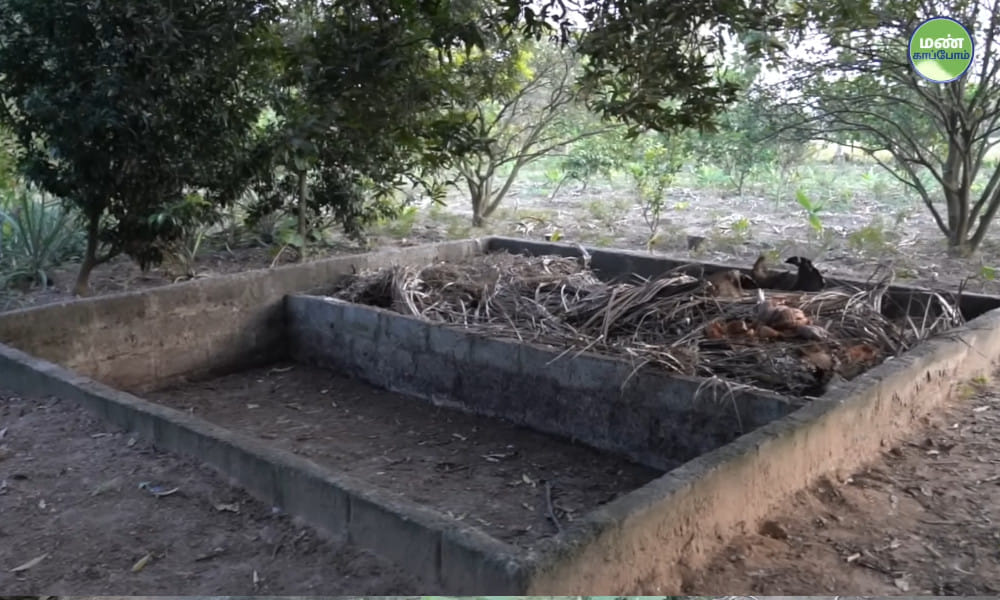
We have set up two nurseries on five cents each for a mist chamber to manage twenty types of fruit trees, herbs, and ornamental plants. We give importance to what can be done without expense. When we prune trees every year, we dig a pit, decompose the waste branches, and turn them into powder. We convert this into manure, release earthworms into it, and create vermicompost. We then add Pseudomonas to multiply it and apply this mixture to the tree roots. This prevents nematodes and root rot without spending a single paisa.
We do not worry much about weed control because we convert weeds into beneficial biomass. Regarding irrigation, we have systems to suit every water situation, from flooding to furrow to drip irrigation. Our water management ensures that rainwater leaves our land only if it rains continuously for thirty days.
Economic Success through Direct Marketing
When we combine vegetables, flowers, fruits, and tubers, we earn an average of three thousand to four thousand rupees a day with just our family members' labor. Initially, I struggled to sell my naturally grown fruits, selling them for only ten or fifteen rupees a kilo. After being featured in Pasumai Vikatan magazine and visited by Krishi Vigyan Kendra (KVK) officials, an organic company offered to buy my produce for fifty rupees. I supplied them for two and a half years.
Eventually, I learned to sell locally. I created a rotation system where customers coming for chickens would buy fruit, eggs, and vegetables. I also found customers in nearby institutions like Anna University, Thachur College, banks, and high schools. By selling directly to the consumer, I realized I could achieve higher profits while offering quality products at reduced prices with extra weight. This direct connection to the consumer is the reason for my success.
Future Goals and Ecological Preservation
I actively research and cultivate rare varieties like Krishna Kamal, Brahma Kamal, and Vishnu Kamal. I experiment by planting a species in three different spots such as shade, sun, and moderate environments to see where it grows best. My target is to cultivate one hundred varieties, including ten types each of fruits, vegetables, plants, creepers, tubers, and timber value crops.
For example, I have been cultivating the Air Potato vine for five years. The yield increased from half a kilo in the first year to five kilos, then fifty-five kilos, and I aim for five hundred and fifty kilos next year. By implementing this list of ten tuber varieties and other crops, I aim to earn between five thousand and ten thousand rupees a day without risk.
We are also preserving traditional trees like the Kadamba tree. While there is a high demand for the flower, the species is disappearing. The tree requires no water or fertilizer and grows by itself. We simply harvest the flowers in season. Similarly, the Shenbagam tree produces a minimum of five hundred flowers, each selling for two to five rupees. My ultimate long-term desire is to create a forest that grows by itself, ensuring a sustainable and profitable future.
Keep In Touch
Get the latest updates on blog and happenings at Save Soil Regenerative Revolution and on the rest of Isha's social work — delivered to your inbox.