
>
Save Soil Regenerative Revolution>
Blogs>
Human Impact Stories>
Transforming Agriculture through Value Addition: A Success Story from Moolakkadu
Share
Transforming Agriculture through Value Addition: A Success Story from Moolakkadu
Human Impact Stories

06 Oct 2026

05:02 am

In the village of Moolakkadu, situated near the scenic Mettur Dam in Salem, a quiet revolution in sustainable agriculture is taking place. Here, Muthukumar from Isha’s Save Soil Movement met with Shyamala Gunasekaran, a pioneering farmer who has successfully bridged the gap between cultivation and commerce. Through her enterprise, the "Bhairavi Natural Shop," Shyamala has demonstrated how farmers can significantly increase their income by embracing natural farming and value addition.
From Roadside Baskets to a Dedicated Storefront
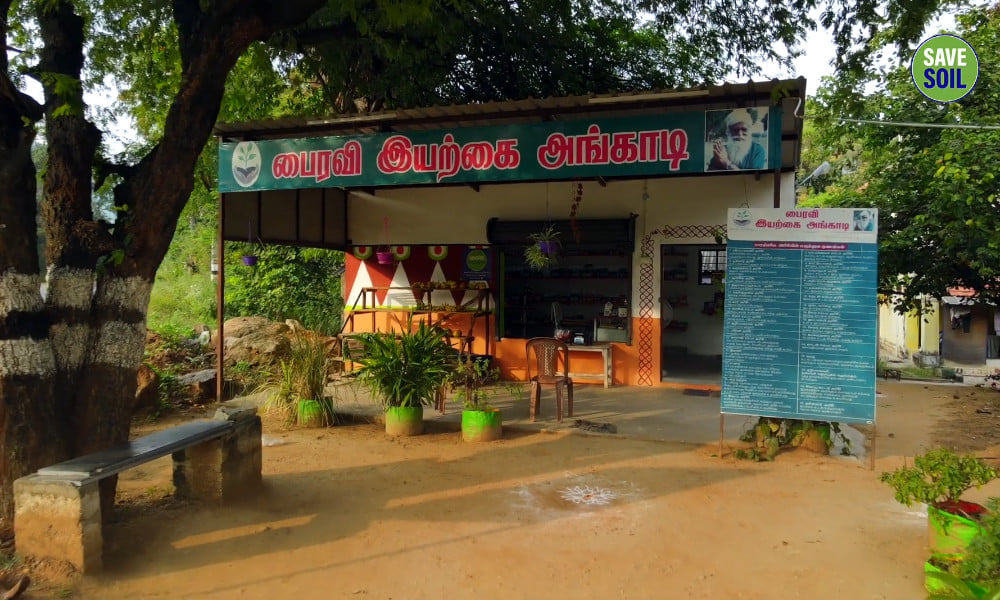
Shyamala’s journey into retail began humbly. Before establishing her permanent shop two years ago, she sold the fruits and vegetables harvested from her garden in baskets along the roadside. Consumers would come directly to the farm to purchase fresh produce. Recognizing the demand and the need to offer a wider range of goods, she expanded her operations into a formal shop, allowing her to stock more products and serve her growing customer base more effectively.
A Commitment to Poison-Free Living
The driving force behind Bhairavi Natural Shop is a deep commitment to providing "poison-free" food. Shyamala observes that many consumers are unaware that the food they eat is laden with toxins derived from fertilizers, urea, weedicides, and pesticides applied to the soil.
She cites the profound influence of Nammalvar, a celebrated proponent of ecological farming, who taught that applying a weedicide just once requires sixty years of effort to restore the soil’s health. This realization compelled her to transition to natural farming. She began by detoxifying her own garden soil to produce safe food for her family. After experiencing the health benefits personally, she felt a responsibility to share these poison-free products with the public.
The Economics of Value Addition
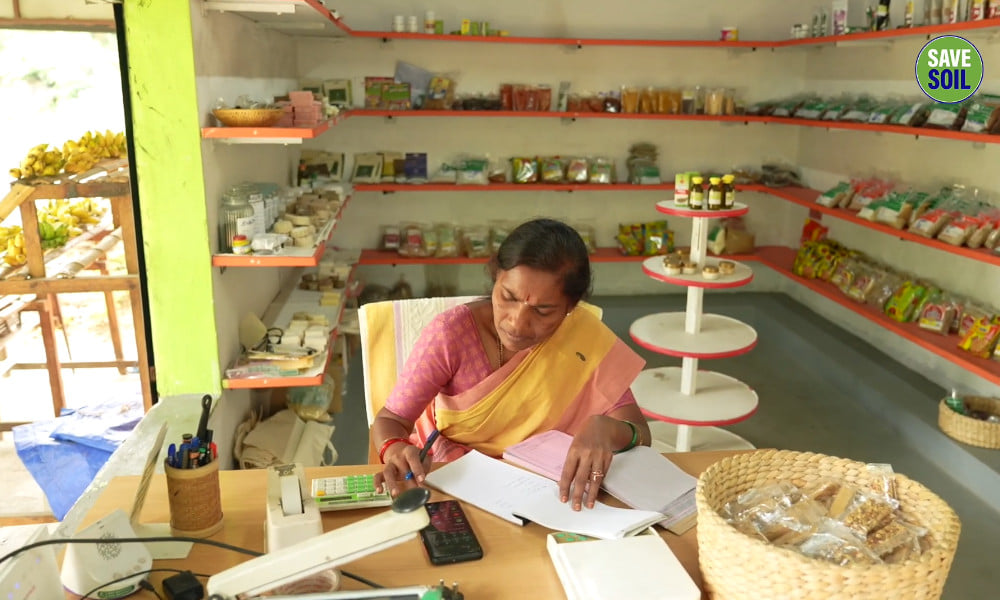
One of the most compelling aspects of Shyamala’s success is her business model, which focuses heavily on value addition rather than selling raw produce. She explains the economics simply: selling a raw coconut fetches twenty rupees. However, processing that coconut into oil increases the value to 300 rupees per liter. If that oil is further processed into hair oil, the value doubles, and if converted into soap, it doubles again. Today, her farm produces between 12 and 14 varieties of soap using coconut oil as a base.
This principle applies across her harvest. Selling raw turmeric yields minimal profit, but grinding it into fresh turmeric paste (Pasumanjal) preserves the curcumin content and commands a better price. By converting her produce into finished goods, Shyamala has turned farming into a highly profitable profession, earning a monthly income of nearly 80,000 rupees.
Preserving Tradition and Offering Freshness
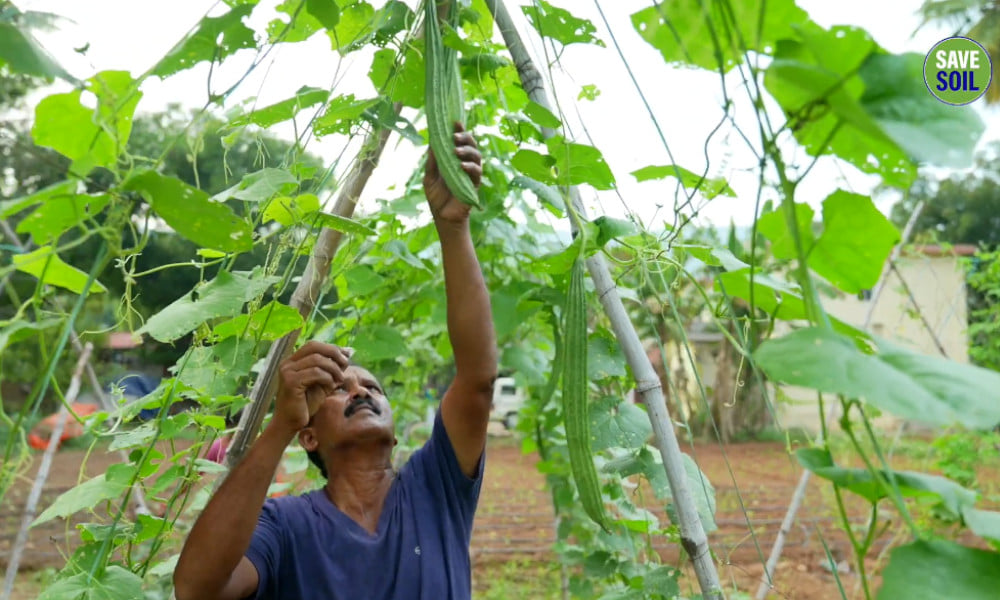
The farm cultivates six to seven varieties of traditional paddy annually, including Karuppu Kavuni, Mappillai Samba, Kattuyanam, Poongar, Karungkuruvai, Thooyamalli Samba, and Thanga Samba. This paddy is hand-pounded and sold as rice or processed into nutritious health mixes.
Beyond staples, the shop serves as a cafe for health-conscious travelers on the Mysore Highway. A highlight is the "Great Purple Tea," made from the Butterfly Pea flower, known for treating urinary infections and purifying the blood. The menu features 20 types of herbal teas, including Licorice and Hibiscus, and 12 varieties of soup.
Shyamala ensures that all juices are made fresh from farm produce, refusing to buy fruit from outside. Customers can enjoy banana milkshakes, Aloe Vera juice, and banana stem buttermilk. They even prepare their own Nannari essence from roots for fresh juice. This dedication to freshness and taste has secured a loyal base of approximately 500 permanent customers, including locals and parcel service clients.
Empowering Women through Agriculture
Shyamala is a strong advocate for women in agriculture. She advises women to prioritize their family's health by growing and consuming their own natural produce. She believes that when a family is visibly healthy and hospital-free, it builds trust within the community, naturally attracting customers. She encourages women not to sell their harvest raw but to process it-turning mango ginger into pickles or lemon grass into tea-to maximize their financial independence.
Training and Future Growth
Shyamala credits her expertise to the training provided by Isha’s Save Soil Movement. Her journey began with "Initial Input Preparation Training," which gave her the confidence to start. She later attended advanced sessions on vegetable cultivation, the Nagarathna Naidu method for single seedling paddy cultivation, and pepper farming. An eight-day "Model Farming" course by Subhash Palekar, facilitated by Isha at SRM University, helped her design her farm and master marketing strategies.
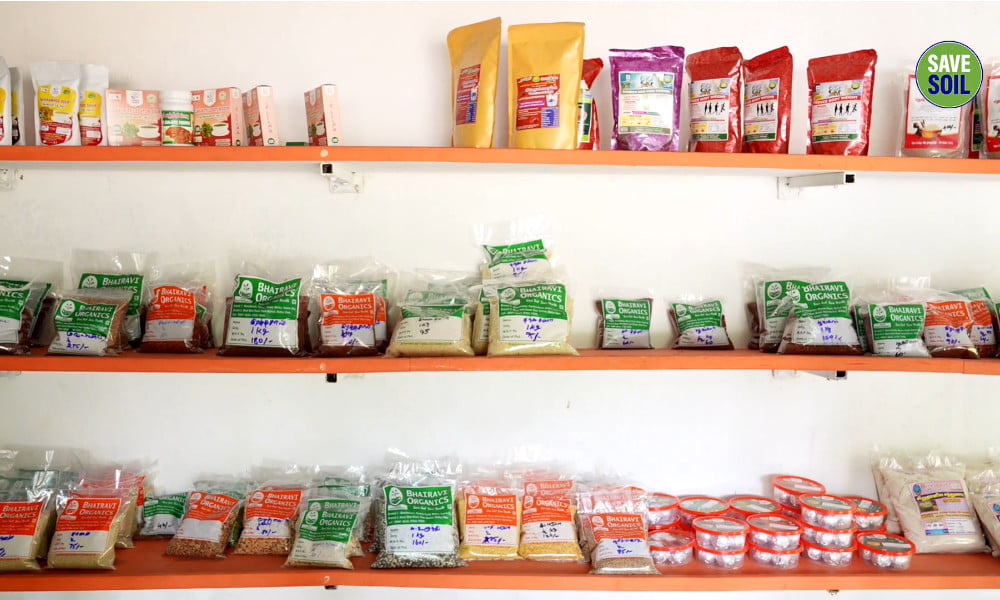
With over 60 value-added products now on her shelves, Shyamala Gunasekaran stands as a testament to the potential of natural farming when combined with smart business practices.
Keep In Touch
Get the latest updates on blog and happenings at Save Soil Regenerative Revolution and on the rest of Isha's social work — delivered to your inbox.