



Interview with Liz Zorab
Mar 26, 2026
Healing Soil, Healing Ourselves: Liz Zorab on Growing Food and Learning from the Land
When Liz Zorab began rebuilding the soil in her garden, she wasn’t just trying to grow food. She was rebuilding something deeper.
After her health collapsed in 2015, leaving her largely bedbound, Liz and her partner moved to a new home with the hope of creating a small garden to grow fruit and vegetables. What they found instead was land exhausted by decades of industrial food production - compacted, depleted and scattered with glass from former commercial greenhouses.
With limited physical strength and little certainty about returning to conventional work, Liz made a decision: she would use the energy she had to grow as much of their food as possible.
The process was slow. Raised beds were filled with whatever organic material she could gather: compost, manure, wood chips and brewery grains. Over time, the soil began to recover.
And something else happened alongside it.
As the land healed, so did Liz.
Today, her work inspires thousands of people to reconnect with food growing, soil care and the rhythms of nature. Through her videos and writing, Liz shows that growing food does not require perfection or ideal conditions - only attention, patience and a willingness to learn from the land.
In this conversation for Save Soil News, Liz reflects on what working closely with soil has taught her about resilience, uncertainty, failure, and how small actions can reconnect us with the living ground beneath our feet.


The Beginning
For those discovering your work, can you share a little about your journey into homesteading and growing your own food?
I’ve always been a keen gardener. I started with ornamental plants and gradually began growing some of the more commonly home-grown vegetables.
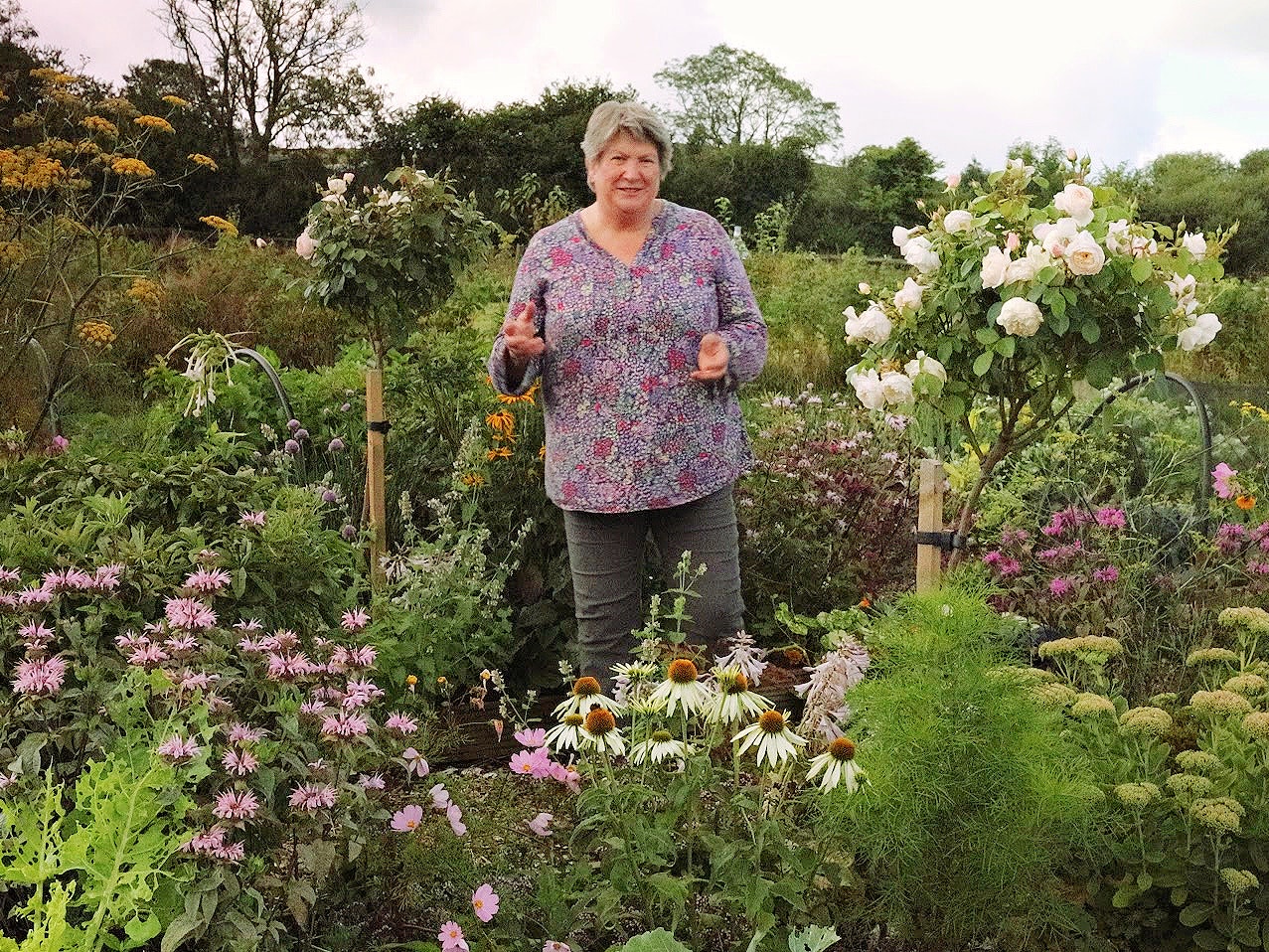
In 2014 my physical health began to decline, and by the middle of 2015 I was mostly bedbound. At the same time we were searching for a new home. I imagined a small house with a large garden where I could grow fruit and vegetables. A cottage covered in roses with beds of flowers and food. At the time I hadn’t really thought about the work needed to create or maintain that garden.
By the time we found the right home, I realised I needed to make the most of the situation and use the skills and physical strength I still had. The stubborn side of me decided that whatever it took, I was going to do it.
Knowing I was unlikely to return to a conventional nine-to-five job, I suggested that I stay home and grow as much of our food as possible as my contribution to the household income.
When I began the garden I was using walking sticks, so everything progressed slowly. In hindsight that was a good thing because it gave me time to watch, listen and get to know the land.
The soil had been subjected to decades of industrial food production and was in very poor condition - practically lifeless. There was also a lot of glass in the ground from huge greenhouses that once stood on the site. When the previous owners dug foundations for an extension, the subsoil had been spread across what would become the garden, and ponies and alpacas had grazed it, compacting the soil further.
Because of this I decided to create raised beds and focus on building healthy soil within them. I used whatever I could find: topsoil, well-rotted horse manure, wood chips from a local tree surgeon and spent grains from a nearby microbrewery. I built compost heaps as quickly as possible and used bedding from the stable along with manure from our chickens and ducks.
By the third year in that garden we were eating seasonally and most of our food came from the land.
At the same time I noticed that I began to feel better too. Some of that was undoubtedly the right medication, but much of it came from slowing down, stepping away from the high-pressure stress of my previous work and spending time outside in the garden and with the animals.
It seemed that as the land healed, so did I.
My relationship with the soil, the animals and the weather remains central to my physical and mental wellbeing.


Learning the Rhythm of the Land
Your work feels deeply attentive to nature’s rhythms. What has living and working closely with the land taught you that you didn’t expect?
Without the pressure of working at a fixed time every day, I quickly fell into a rhythm of doing things when I felt able and when the light allowed it. I also became very good at resting when I was tired or when there wasn’t enough warmth, light or energy to continue.
I have long known that the lack of sunlight during autumn and winter affects me, and now I make no apologies for slowing down almost to a halt during the depths of winter so I can rest and recuperate.
One of the things I learned that I didn’t expect is that it’s okay to work with my own natural rhythms and cycles. Not everything needs to be done immediately.
Giving ourselves permission to take our time can be a valuable gift.
Of course, it isn’t always easy when people have nine-to-five jobs or family commitments that require them to be active at certain times. But whenever we can, giving ourselves some time - particularly outdoors - to be still, present and aware of the world around us is precious.
It is grounding and uplifting.
Letting the Soil Lead
You work directly with soil every day. How has that changed the way you think about growing food?
Much of what I do in the garden I don’t really consider work. In fact I try to avoid the word because it suggests constant activity and tasks that must be completed.
A large part of what I do is actually choosing not to intervene - not to disturb or disrupt what is happening. I allow annual weeds to grow until I’m ready to plant vegetables or fruit in that space. I don’t worry too much when perennial weeds appear because they can be removed gradually when I want to use the space.
When I was filling the raised beds in our previous garden I became very aware of how much the quality and condition of the soil affected what would grow and how well.
Here in our current home, which has very different climatic conditions, I am still guided by the soil in deciding what can grow where and when. Different parts of the garden offer different growing conditions, which gives me the opportunity to grow a wider range of plants.
Over time my thinking has changed. I no longer focus on feeding plants. Instead I focus on supporting soil health and maintaining its natural balance.
There is less emphasis on intervention and more attention to using the soil appropriately and choosing carefully what I grow where.
The more I have learned about soil, the more my sense of respect and wonder has grown.


Making It Possible
Many people follow your work because it makes food growing feel possible. What helps people reconnect with land where they are?
Celebrate achievements and don’t try to do everything at once.
A good friend once told me to garden with my back to most of the garden and only look at the small area immediately in front of me. That way you don’t become overwhelmed by the enormity of what needs to be done.
It was wise advice. None of us can be everywhere in our gardens at once, and breaking the work down into small, manageable tasks allows us to feel a sense of achievement more often.
While instant gratification may not always support long-term thinking, it can motivate us to continue when a task feels daunting.
Having a bigger picture or long-term plan allows us to implement the small steps that gradually build toward it.
When I accepted that doing something - however small - or even choosing not to do something is part of the process, I gave myself permission to enjoy each step. There is great joy in many small celebrations.
Our gardens, like us, are living systems. Spending time with them is both a joy and a privilege because we are part of that same natural world.
Reading Nature in Uncertain Times
What has soil and land taught you about adapting when conditions become unpredictable?
Growing much of our food over the last decade has been something of a rollercoaster: from Arctic blasts to unprecedented heat, from the driest summer on record to the wettest, from dull grey winters to flooding.
The seasons no longer feel predictable, and that uncertainty can be unsettling.
When it comes to growing food, I increasingly rely on nature’s indicators.
For example, I allow at least one parsnip plant to grow into its second year and produce seed. I collect some of that seed for the following year and scatter some on the ground. When those seedlings begin to grow in spring, I know the soil is warm enough to start sowing seeds.
Nature itself gives the signal.
I have also learned to change my expectations. I no longer assume that we will have particular crops every year. I attempt to grow them and preserve any surplus, but sometimes our diet becomes repetitive depending on what grows well.
Creative cooking helps prevent it from becoming boring.


When Gardens Fail
How has working closely with soil and natural systems changed how you deal with setbacks?
Social media and television often show perfect gardens with manicured lawns and immaculate beds.
Once you realise how many of those gardens are staged, chemically managed or maintained by teams of gardeners, it becomes easier to accept the imperfections in your own.
In my videos I deliberately show the failures, the weedy areas and the unfinished tasks where I ran out of energy. Many viewers say it gives them permission to be imperfect in their own gardens.
Alongside celebrating small achievements, I have become more accepting of setbacks. For example, last year our fava beans failed completely. It was disappointing, but it didn’t mean we would starve.
Instead I learned from it. I noticed that plants growing near the forget-me-nots suffered more slug damage, so this year I will change how I plant them. In the garden every failure is an opportunity to improve the chances of success next time.
Rethinking Abundance
How has growing your own food influenced how you think about abundance and “enough”?
Growing food has changed how I think about consumption and resources.
We eat a mixture of seasonal produce, preserved foods and food purchased from shops.
Growing food myself makes me look twice at supermarket produce, especially when I see fruit and vegetables out of season. At the same time I’m realistic about what we can grow. If I want bananas or pineapples, I know they have to be purchased.
Over time I’ve also learned which foods we enjoy preserved and which we prefer fresh.
For us, abundance comes from having a succession of crops through the seasons and growing a diversity of food so we are not dependent on one crop.
When we have more food than we can eat or preserve, we share it with neighbours or through a local food larder. If it cannot be shared, it returns to the soil through compost, animals or mulch. It took several years for me to understand what “enough” looks like for us.
In the early days I froze far more food than we could realistically use, only to return it to the compost years later. That isn’t abundance. It’s poor management of resources.
Sometimes we have to make mistakes before we understand what “enough” really means.
Remembering Our Place
If you could leave people with one reminder about our relationship with land and soil, what would it be?
There is a saying about building from the ground up, and it feels more relevant today than ever.
As industrial farming and other systems continue to strip the world of resources, it is easy to feel helpless. But small actions matter.
Protecting and caring for the spaces around us - our gardens, allotments and community spaces - becomes increasingly important.
By becoming aware of how we treat the soil and adopting soil-kind practices, we can make meaningful changes.
Nature is not separate from us. We are part of it. Why would we harm the very systems that sustain our own lives?


चला, हे घडवून आणूया!