


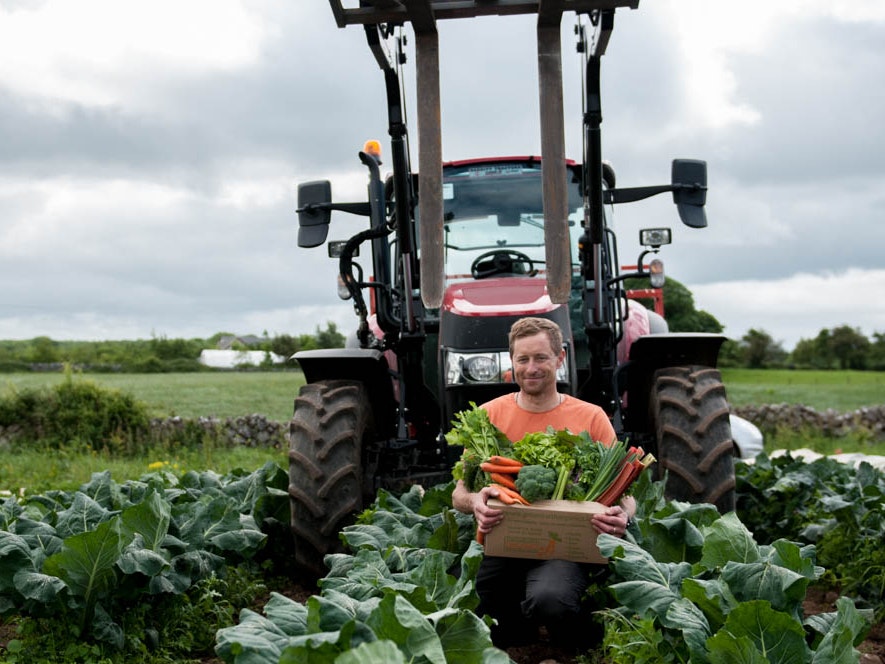


Interview with Kenneth Keavey
Dec 1, 2025
Green Earth Organics: A Conversation with Kenneth on Soil, Resilience, and Real Food
Soil is often dismissed as “just dirt” - yet those who work closely with it know it’s anything but. It breathes, remembers, and feeds life. And when it’s cared for, you can taste the difference in the food it grows.
For Kenneth Keavey, founder of Green Earth Organics in Galway, soil isn’t dirt - it’s alive. It’s the reason food tastes the way it does, nourishes the body (or doesn’t), and why some fields survive floods while others collapse into mud.
In this interview, Kenneth shares how a childhood concern for the planet became a family-run organic farm - now Ireland’s largest home delivery service for organic produce. He speaks about soil in a way that feels real and tangible: how it smells, how it crumbles in your hand, and how it makes a carrot taste like a carrot again.
So, why does healthy soil matter to the food on our plate?
From a very young age, I was drawn to the environment. In the Ireland of the 80s, nobody spoke about recycling or biodiversity, but when the first bottle bank arrived in Galway, I begged my parents to use it. I joined Greenpeace and Friends of the Earth when that was very unusual—and that’s really where Green Earth Organics was born, out of a concern for the planet.
Even though this is a third-generation family farm, I actually spent my summers working with another farmer because my dad wanted me to understand agriculture—but also get an education. So I went on to study, earned a PhD in organic chemistry, and ended up working in pharmaceuticals and biotech in the UK, even designing agrochemicals.
Years later, when my dad was deciding whether to keep the family farm, my wife and I had no financial ties in the UK. We made the decision to return to Ireland and start something here that would help the planet. That was the beginning of Green Earth Organics—20 years ago next year.
Since then, it has grown organically into what is now Ireland’s largest home-delivery business for organic vegetables, fresh produce and groceries—all still based on our family farm. Growing is in our roots too—my grandfather was head gardener at Craig Castle back when English landlords were still here. So maybe it really was in the genes.
When I was choosing a name, I spent a long time trying to find one that expressed what we wanted to do. It was never just about growing local food—the core mission was always to help the planet. And growing food, for us, is the way to do that.
When you think of “healthy soil,” what does that really mean to you? If you had to explain it in 30 seconds to someone who’s never thought about soil, how would you put it?
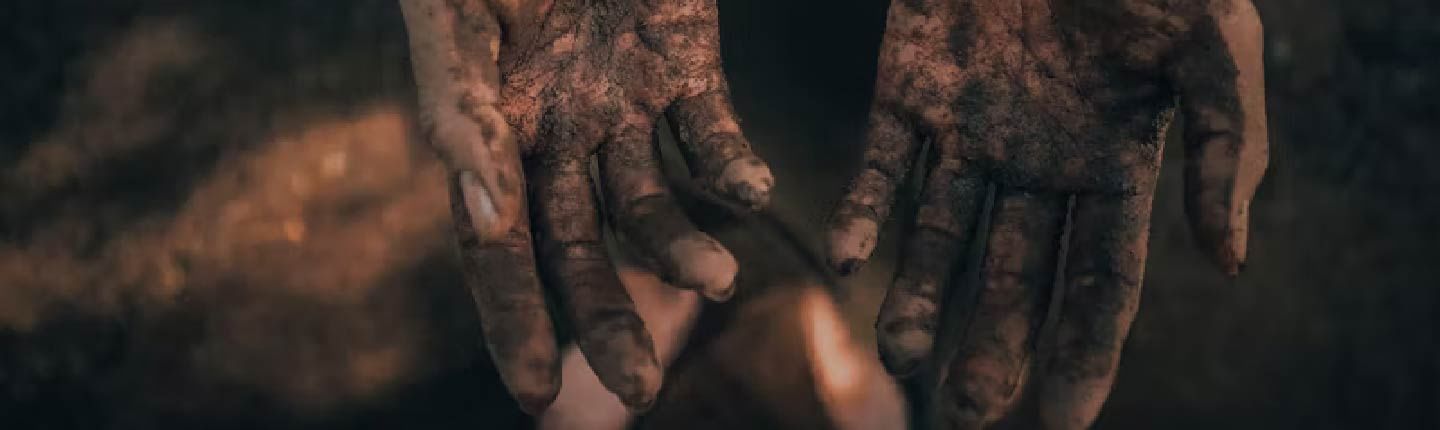
People often call soil “dirt,” but it’s not dirt at all. When I worked with a farmer years ago, he used to say “good clean dirt”—meaning soil on your hands is a good thing. And funnily enough, there’s research now showing that working with soil actually boosts your mood and releases positive hormones.
But physically, the difference between dead soil and living soil is huge. I’ve seen both—dead, compacted soil in intensive farms, and the living soil we try to build here. Healthy soil is crumbly, aerated, rich, and full of life. It’s not just a dead mass of muck.
To me, soil is a living entity. In one teaspoon of healthy soil, there are more organisms than there are people on Earth. All of that life affects everything—how our food grows, how it tastes, how nutritious it is, and ultimately the health of our planet. That’s healthy soil.


On your farm, what practices have really helped regenerate the soil over time—things like rotations, compost, cover crops? Are there results that made you think: yes, this is working?
“Patience” is the key word when it comes to soil. You can’t rush nature. For years we tried to force soil into behaving a certain way—especially with my chemistry background, where you reduce everything to NPK (nitrogen, phosphorus, potassium). But soil is far more than a chemical formula. If you just treat it as a medium you feed with inputs, it becomes a dead structure.
Organic farming naturally forces you to work with the land. Crop rotation is one of the basics—we move crops each season so their different root depths open up different parts of the soil. That alone helps the structure.
But the biggest, most visible change comes from cover crops. Every year we sow two to three acres of clover, wildflowers and phacelia. If they survive the frost and grow into a second year—even better. When we go back to that field and plough it, the difference is incredible. You only really appreciate it if you've seen the opposite—soil that’s been intensively used year after year. That soil becomes like compacted cement. After cover crops, the soil is broken up, aerated, rich, full of life. You can see it.
And we don’t use synthetic fertilizers or chemicals. They interfere with soil biology—and without microbiology, you don’t have living soil. And without living soil, you don’t get real flavour. Customers often tell us, “These carrots taste like they used to.” That’s because they’re grown in living soil, not in depleted ground or hydroponic systems. This year our carrots were the sweetest we’ve ever grown—and that starts with the soil.
Healthy soil is at the centre of everything: taste, nutrition, resilience. And when you see it come back to life—you know it’s worth it.
Galway weather can be unpredictable. What are the biggest challenges your soils face—storms, wet springs, frosts? And what helps keep them resilient?
In Ireland, the biggest challenge isn’t drought—it’s rain. With climate change, we’re getting extreme downpours rather than steady rainfall. Last year was the wettest summer on record, and it had a massive impact on crop production, especially in horticulture. The seasons are blurring, winters aren’t cold enough to stop diseases, and pathogenic fungi keep spreading.
What really affects soil is how fast the water comes. When you get huge amounts of rain in a short time, the ground floods, machinery can’t move, and soil gets compacted. Dead or depleted soil compacts easily—like cement—and once it’s compacted, it floods even faster.
Healthy soil gives you some insulation. Because it’s alive, rich in organic matter and structure, it holds more water without becoming waterlogged, it drains better, and it recovers faster. It’s also crucial for carbon sequestration—the bacteria and fungi in soil store enormous amounts of carbon. Without healthy soil, we simply won’t be able to grow food.
The other side of the story is conventional dairy farming. Ireland spreads a lot of slurry—liquid manure—which is highly acidic and rich in nitrogen. Combined with synthetic fertilizers, it can wipe out soil biology. Once that dies, soil structure collapses, water can’t soak in, and you get erosion—soil literally washing into rivers and lakes.
So yes—weather is a challenge. But how alive the soil is determines whether it survives or gives way.

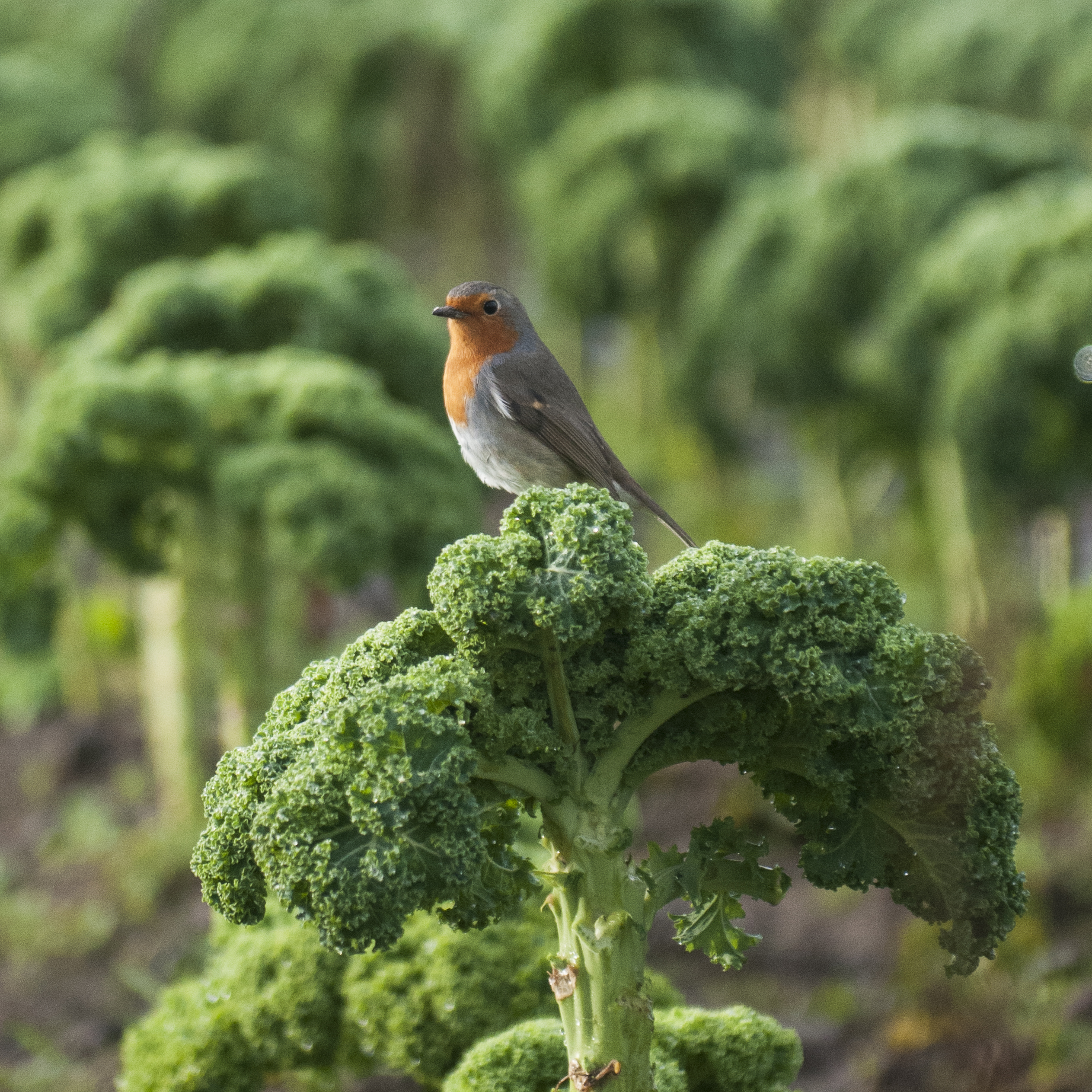
You deliver directly to people’s homes all over Ireland. How do you see the connection between the soil you care for and the food people put on their plates?
For me, the connection is simple: taste. Take a tomato grown hydroponically—it has no flavour. Then compare it to something grown in living soil. The sweetness, the depth, the nutrients—it's all coming from the soil.
I honestly believe you can taste how soil has been treated. Food grown in dead soil tastes flat. Food grown in healthy, living soil—full of clover, natural manures, seaweed from the year before—tastes like something. People might not know why, but they feel the difference.
So yes, soil shows up on the plate. You can taste it.
Through your farm tours and blog, what story or fact about soil always surprises people—or even changes how they shop or cook?
One of the first things that surprises people is that organic food has to be grown in soil. Many don’t realise that a lot of tomatoes, for example, are grown hydroponically—never touching soil at all. So the idea that real organic food comes from the ground is already a revelation.
The second thing is the life beneath our feet—the relationship between fungi, mycorrhizae, and bacteria. Everything is connected and communicating down there. If you’ve seen Avatar, it gives you a good picture of what’s actually happening in the soil.
People are shocked to realise how alive soil is. It’s not just chemistry—it’s biology. And once you see that, you understand soil has an impact on everything: our food, our health, even climate change.


You talk about circular systems and minimising waste. What does circularity look like in everyday farm life—nutrients, materials, energy—and how does it connect back to soil?
At its core, soil is the ultimate circular system. Without it, there’s no Green Earth Organics, no food—nothing. You put organic matter on the soil, earthworms pull it down, bacteria and fungi break it apart, releasing nutrients and building humus. That feeds the soil, which feeds the plants. It’s a perfect natural loop.
We try to mirror that in everything we do. On the soil level, we use green manures and mulch plant matter back into the ground to feed the microorganisms. That keeps the soil alive and fertile.
On the farm level, circularity means using resources again and again. We reuse our delivery boxes—customers send them back, we repair them and send them out again. We don’t use plastic; just compostable bags that can go straight onto someone’s compost heap and back into the soil.
Energy-wise, we have 30 kW of solar panels powering our cold rooms and operations, and we collect rainwater to irrigate our polytunnels.
Food isn’t wasted here either. If produce doesn’t sell, it goes into our “class two” or “rescue boxes.” If it still isn’t bought, staff take it home. If it isn’t eaten, it goes to our pigs or into compost—which then goes back to the soil and grows next year’s tomatoes.
So nothing is wasted. Everything goes back into the cycle—especially the soil, which is where it begins and ends.
For farmers curious about organic practices but nervous about the risks — what’s one small step you’d recommend to start rebuilding soil without jeopardizing income?
It really depends on the kind of farm. In the west of Ireland, not many people grow vegetables at scale — it takes a lot of specialised machinery and knowledge. But if you’re a dairy farmer, introducing white clover into grassland is a no-brainer. There’s no real risk in that, and it reduces the need for synthetic fertiliser.
For anyone thinking about going organic, I’d say: don’t convert everything at once. Put part of your land into transition. That way, you can learn how the soil reacts without chemicals, slurry and synthetic fertilisers. The ground needs time to readjust, and natural systems don’t respond instantly — patience is essential.
Yes, change comes with risk, but many farmers who transition — whether from dairy, cereals or vegetables — never go back. They see healthier soils, fewer pests, no fertiliser or chemical bills. They might produce slightly less, but often the profitability balances out — or even improves.
Even some of the bigger conventional vegetable growers here are now trialling organics. Partly because supermarkets demand it, but also because they see a future there. A partial transition is the safest way to start.
But I think the deeper issue is how little value we place on food. Food must also have its rightful place as something truly valued. Supermarkets have devalued fresh produce so much that people don’t think it’s worth paying for. And that makes it nearly impossible for farmers to grow good, healthy food and survive.
It’s a difficult conversation — especially with the cost of living rising — but if we don’t protect our food systems and soils now, eventually there will be no food. So the challenge is: how do we communicate this in a way that inspires rather than turns people away?
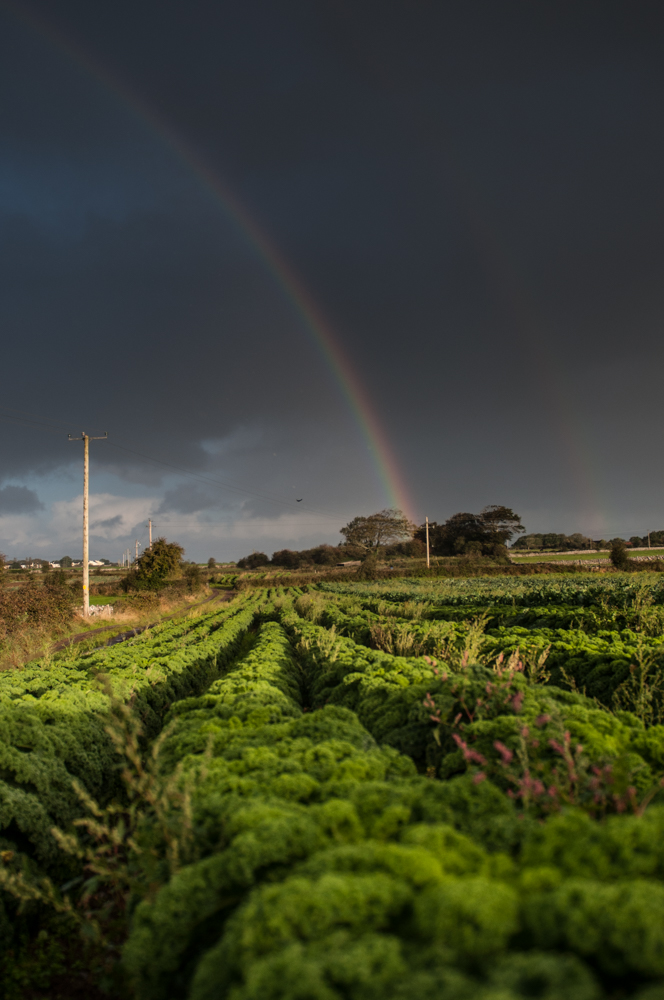
If every household in Ireland — or even worldwide — made just one small change to support healthy soils, what would you recommend?
Stop putting chemicals on your lawns. Just stop. People are obsessed with perfect, green, golf-course lawns — but they’re biodiversity deserts. All those chemicals and fertilisers go straight into the soil, and if you think of every lawn and garden in the world, that’s a huge amount of land being damaged for the sake of looks.
If we stopped tomorrow, we’d save money and allow nature to come back. It might not look as “perfect,” but there’s a natural beauty in dandelions and wildflowers — and that’s a sign of healthy soil.
And if you have a vegetable garden, the same applies: no chemicals, no artificial fertilisers. Use natural inputs instead — compost, seaweed, manure. All of that feeds the soil rather than harms it. It’s simple, and it’s within reach for anyone who has even a small patch of land.
What gives you optimism about soils in Ireland and Europe? And what’s your vision for Green Earth Organics over the next decade?
Soils in Ireland are still relatively healthy. Farming has only intensified here in recent decades, and the encouraging thing is — if you give soil a chance, it can recover quickly. When we took over this farm, it had been intensively farmed and was in poor condition. But within two or three years of organic practices, it was back to good health. It took work — it was in a critical state — but that shows how resilient soil can be.
Ireland has a lot of small, less-intensive farms, which gives the land a better chance to regenerate. And in the EU, chemicals like pesticides are more tightly regulated than in some other places, which helps too. There’s still a long way to go — glyphosate, for example, really needs to be phased out. Big businesses talk about regenerative farming but often rely on no-till systems that still use huge amounts of glyphosate. No-till can be good, but glyphosate isn’t.
As for the future, our vision is simple: we’d love to see our fresh produce in every home in Ireland — for people, especially children, to taste food as it should taste. We’re also developing a network of other farms that we support through our business, and we want to strengthen that — to give farmers an outlet for truly sustainable produce, which in turn takes care of the land and the soil.
There is a lot of hope. Even if it doesn’t always feel like it, awareness has grown massively. Twenty years ago people bought organic for different reasons. Today, many buy it because they care about biodiversity and the planet. And that can only be a good thing.
As we wrapped up, Kenneth didn’t speak about growth or success — he spoke about care. For soil. For farmers. And for the simple act of choosing food that honours both.
“We’re always competing with supermarkets. They’re big and have all the power. So when people support farms like ours, it genuinely keeps us going — we wouldn’t be here without it.”
He also reminded us of something easily overlooked: one-third of all food grown is wasted. Along with it — the soil, water, and land that made it possible.
Waste less. Support those who grow with care. Let more soil remain undisturbed — in forests, in fields, alive.
Because in the end, this isn’t just about farming.
It’s about how we choose to live on the ground that feeds us.
ДАВАЙТЕ ВОПЛОТИМ ЭТО В ЖИЗНЬ!