



Fresh Tomatoes and Soil Art: Our Day at Zerodig
Nov 3, 2026
In early August, a band of Save Soil volunteers rolled up at a farm outside Stroud, UK, in the scorching summer heat. Our drive over was memorable, for troubling reasons – there was faint smoke in the air the whole journey, blowing down from a wildfire in the neighbouring county. The effects of drought, heatwaves and dry land were right in front of us.
It made our plan for the day all the more poignant. Our hosts at Zerodig had invited us to see how they bring worn-out soil back to life, and to make art for their project 'I Am Soil'.
I Am Soil, part of Cultivating Connections, a project funded by the European Union through SoilTribes and led by Zerodig with Stroud Valleys Artspace and Curriculum for Life, brings farming, art and young people together. It invites anyone, anywhere, to share a creative piece of art inspired by soil - be it a photo, painting, or piece of music - so that soil becomes something we value and protect rather than overlook.
We were a mix of soil enthusiasts and creatives from across the south-west of England: artists, growers, students and more. Some of us could tell our mycorrhiza from our microbes. Others were simply there to learn something new.
So what is Zerodig?
Zerodig is a not-for-profit social enterprise that restores soil while growing nutritious food. Its demonstration site is at Oakbrook Community Farm, 41 acres that local people bought together in 2015. Here, the team has proved the model can pay its way.
Zerodig shares the farm with neighbours including Stroud Community Agriculture, the agroforestry project Oakbrook Orchard and Fox Lane Flowers. Between them, they grow veg, fruit, flowers and new farmers.
Our guide was Dr Mario Peters, who co-founded Zerodig with Christopher Upton. Mario started out as an Oxford space scientist, designing cooling systems for instruments on NASA missions. Now he's exploring a far less charted frontier: the ground beneath our feet. “While I’m still passionate about the cosmos, I realised there were more pressing matters closer to home!”


The farm that grew taller
Mario began by asking his colleague Isaak to stand on a Zerodig growing patch. Suddenly, Isaak was towering about eight inches over Mario. Every one of those inches was built by the team: before they arrived, this was poor, stony ground. "Mostly brash and stone, and we know that because we've dug it!" said Mario.
Rather than trying to coax life out of the stoney ground, the team built new beds over them: grass flipped upside down onto cardboard so it can't grow back, paths filled with wood chip, and compost to finish. "There's a lot of digging in building the system," Mario explained, "but once it's done, there's no digging at all. It took a couple of weeks to complete our first forty 10-metre long beds, with the help of a small digger and an army of volunteers. We now have over 200 beds growing over 50 different crops, including fresh green leaf salads, a range of herbs, beets and brassicas. Heirloom salad and cherry tomatoes are a favourite for many.”
Bacteria, fungi and deodorant
So why go to all that trouble? Because Zerodig is copying a forest floor. Nobody ploughs a forest, yet it stays fertile year after year. The big difference between a forest floor and a ploughed field, Mario told us, comes down to "one simple thing: it's bacteria versus fungi."
Healthy soil can contain several billion living organisms in a single handful. Ploughing kills a lot of these, and bacteria are the clean-up crew that feed on the dead stuff. To explain, Mario took us on an unexpected detour via the armpit. "That's why you need deodorant," he said. "Your fresh sweat is odourless; it's the bacteria that feed off it that cause the problems for your personal hygiene." Bacteria pile in wherever there's a meal, whether that's sweat on your skin or everything a plough has just killed.
Bacteria aren’t the baddies (a healthy living soil needs both), but the balance matters. In conventionally farmed land, Mario said, bacteria often outnumber fungi several hundred to one. Zerodig’s technique is to keep the soil alive with a diverse microbial community, and research shows this approach produces the healthiest, most nutritious food. The key is boosting the fungi back up to level pegging with the bacteria.
Why root for the fungi? Their threads act as a microscopic extension of the roots, multiplying the plant’s effective reach into the soil by 100 or even 1,000 times, in exchange for sugar. But those networks are fragile, and ploughing rips them apart. Hence Mario's two rules: "First of all, don't till, and second, encourage fungal activity." That's the wood chip's secret job. Fungi love woody material, so every path doubles as an all-you-can-eat buffet.
Fungi help lock carbon away in the soil, too. Zerodig points out that farm soils once held 8–10% organic matter, against 2–3% today. Putting it back, through better farming and better policy, is what Save Soil is all about.


Lunch, art and muddy hands
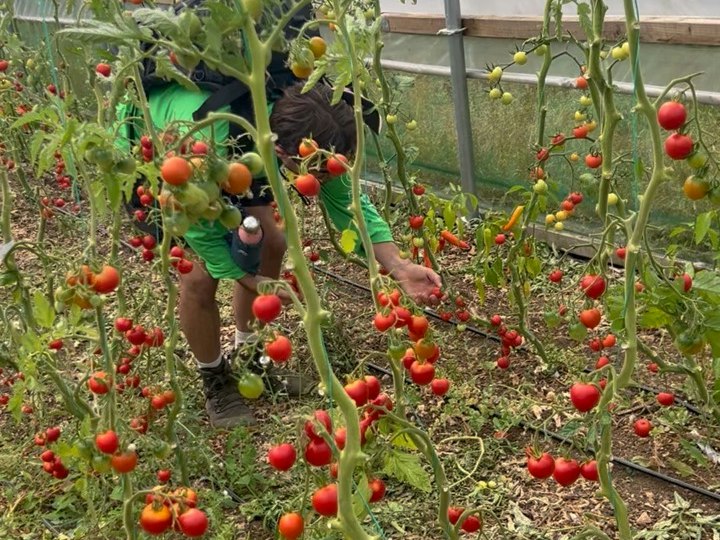
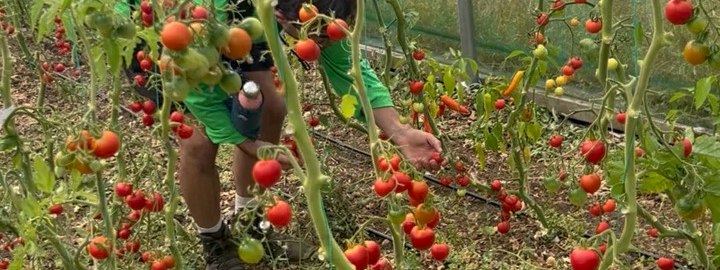
The tour also took in Oakbrook’s Fox Lane Flowers, the UK’s only dedicated biodynamic-certified flower grower, also based at Oakbrook Community Farm and run by Kate Colwell using the Zerodig growing method, as well as Zerodig’s large polytunnel bursting with tomatoes growing alongside basil. Growers love pairing the two, and so, it turned out, did we: they were lunch. Living, varied soil grows more nutrient-dense food, so we're calling it research.
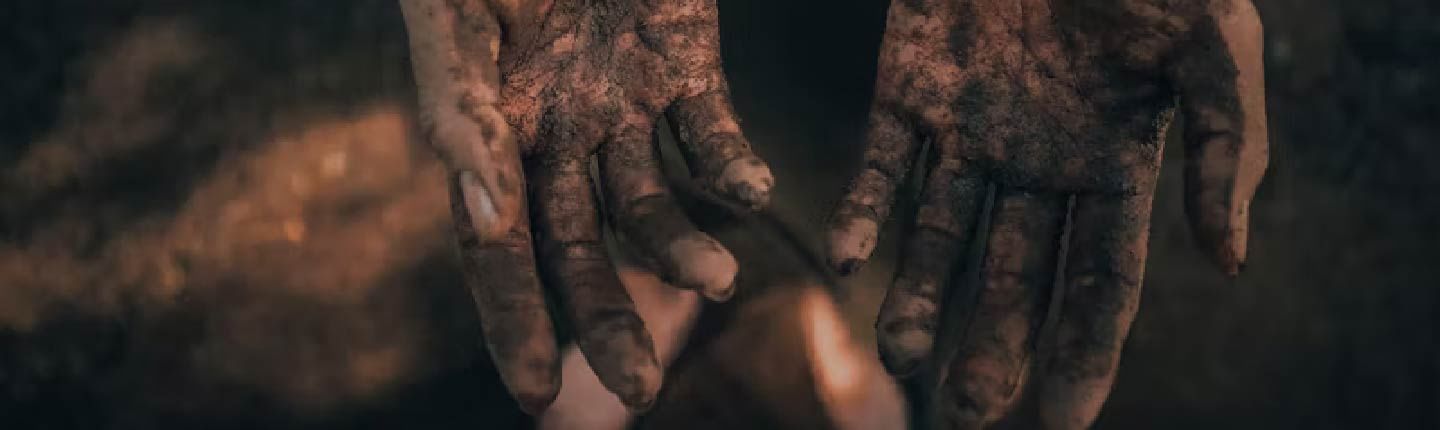
After lunch, out came the art materials. Paper, soil, leaves - natural materials turned into the build blocks of an artwork. Somewhere along the way, everyone ended up with their hands in the soil taking photos for I Am Soil's Soil Hands gallery, and nobody was in a hurry to wash them.

What we took home
We left with muddy knees, new friends, and an answer to our big question. Soil mostly needs us to stop ploughing it, keep it covered, keep living roots in it and look after its fungi. Nature does the rest.
Looking after soil is a team sport. Oakbrook runs on growers, volunteers and neighbours swapping ideas, exactly the spirit the Save Soil movement runs on, too. “Anyone with access to a few square metres of land can start a Zerodig plot.” Mario explained. “All of the knowledge we have acquired over the past 6 years of R&D is available as an open-source resource for anyone wanting to begin their journey in regenerating soil health and growing super nutritious and healthy food. We have a number of guides and courses that can help you get started, all free of charge.”
Want to get your hands dirty? Join I Am Soil, a global arts movement, in about a minute: step outside, hold a handful of earth and share a photo at iamsoil.org. Any patch counts, even a crack in the pavement. Want to go further? You can also share artwork, writing or a song. And if you're near Stroud, Zerodig runs events and courses at zerodig.earth.
We went to a farm called Zerodig and spent all day talking about digging. We came home with soil under our fingernails, a new respect for fungi and zero regrets.
Cultivating Connections is funded by the European Union through SoilTribes, contributing to the EU Mission “A Soil Deal for Europe.” @soiltribes


HÃY CÙNG BIẾN NÓ THÀNH HIỆN THỰC