



What Growing Food Taught founder of Earthling Plants About Life And Soil - An Interview with Ben McNeilly
May 16, 2026
He went looking for better food and found something he didn’t expect
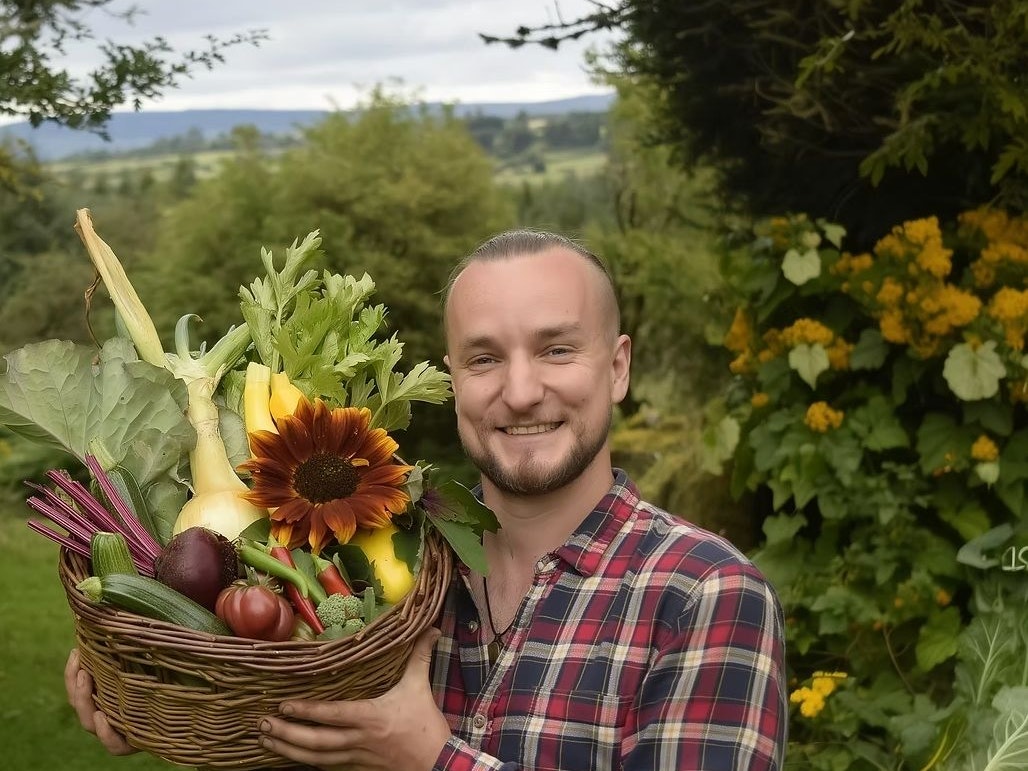
Ben McNeilly, founder of Earthling Plants, grows and shares a regenerative, nature-led approach to working with soil.
After more than a decade working as a chef, Ben began to notice something he couldn’t ignore: the food in front of him was losing its flavour, its quality, and its ability to truly nourish.
He followed that question to the ground it comes from.
What he found wasn’t just about food. It changed what he started paying attention to.
In this conversation, he shares what he began to see.
How did your shift from cooking food to growing it happen and what did it open up for you?
I worked in kitchens professionally for over 10 years. During that time, I noticed a steady decrease in the quality of the ingredients we had access to - primarily in terms of flavour.
A lot of food from supermarkets and large-scale suppliers doesn’t really taste like anything anymore. You eat a tomato and it isn’t sweet or juicy. It doesn’t even really have tomato flavour. It’s just there. So, as chefs, we have to get inventive and creative to push flavour into it.
That was the primary drive: noticing what was happening with our food and asking why it was deteriorating so rapidly.
I also read that our grandparents only had to eat one orange to get the same amount of vitamin C that we would now need from six oranges. So the same decline is happening in terms of nutrient density and nutritional content.
Then I started noticing people around me getting sick. Human health seemed to be declining rapidly, and I decided that wasn’t random. There had to be a link.
So I decided to take action and try to take charge of my own health and my family’s health by growing our own food. It seemed like the only option was to produce it ourselves. I started gardening out of necessity and I got hooked immediately.
The first carrot I pulled out of the ground blew my mind. The flavour, the sweetness, the juiciness. It was the same with homegrown tomatoes. There is no contest. You can’t compare them with store-bought produce.
The taste and quality of the food was a huge part of it. As a chef, it meant I could cook food without relying so heavily on spices or clever techniques. I could let the ingredients speak for themselves.
It also restored my enjoyment of food. Instead of food being something I did to make money, or something I ate just to fill my stomach, it became something I enjoyed again.
When I sat down to a plate of food, particularly food I had grown myself, there was so much more pride and satisfaction in it. Growing food also pulled me outside every day - to the vegetable patch, the polytunnel, watering, weeding, observing. It re-established my connection with the natural world.
As you spent more time growing your own food, what began to change in how you relate to the land?
Initially, my focus was really on getting a harvest. That was why I started: to produce my own food.
But as I grew more and began to understand the process better, my attitude changed. I became less focused on the carrot itself and more aware of the vegetable patch as a whole: the soil, the animals, the wildlife, and everything interacting with me while I was in the garden.
A whole new mindset started to fall into place. It was unexpected. It wasn’t my aim at the beginning. I just wanted some vegetables.
But I began to appreciate all the smaller aspects of the natural world around us that we often pass by without noticing.
When you see how much work goes into producing food, you appreciate it more. I stopped taking things for granted. I became more present and mindful with my food and my meals.
It wasn’t just mindlessly eating something to fill my stomach while watching Netflix. I would sit down and feel joy, excitement and pride at the bowl of food in front of me. I had confidence that I was actually feeding and nourishing my body, not just filling my belly.
We are so disconnected from where our food comes from now. A lot of people don’t even understand what a carrot looks like before it ends up on the shelf. Food is just there, and we take it for granted.
It was a wonderful process to slowly reconnect with that cycle.
One of the most fundamental aspects of being human is where we find our sustenance. It is bizarre how rapidly and drastically we have become disconnected from that.


Working with plants day to day, what do you find yourself noticing now that you might not have seen in the beginning?
When I started, my focus was purely on obtaining a yield. All I cared about was making harvests. So I focused on the plants themselves.
As the years went by, I began to understand that it’s not so much about plants. It’s more about the soil and the ecosystem as a whole.
If your ecosystem is healthy, and your soil is full of biological life, then the plants are automatically healthier. They kind of look after themselves.
I also started to notice that everything is connected.
At first, I saw things as separate: these are the carrots, those are the tomatoes, these are the herbs. I think that’s a very human way of looking at things. We categorize everything because it helps us make sense of the world.
But I don’t think that’s how the natural world is. Everything is connected.
There are birds, worms, slugs and carrot plants. They are not isolated things. They are all interacting with one another and feeding the system as a whole.
Once that understanding started to come in, things began to move much faster. When I focused more on fertility and ecosystem support instead of simply trying to grow individual plants, my success went through the roof - and I got so much more joy from the process.
It wasn’t just putting in labour and getting a yield. It became a lifestyle shift.
My relationship with the world I live in started to change. That was unexpected, but absolutely magical.
What did that shift ask from you - moving from control toward seeing the garden as a living system?
I had to learn how to let go and surrender control.
When I started, I was so fixated on my crops that anything that threatened them was the enemy. I was trying to control every aspect of the space where I was growing food, choosing which life forms were permitted and which were not.
That’s the conventional method of growing today: monoculture systems, clean rows, individual species.
It was very difficult to let go of that and trust that nature knows better than we think it does. We should give it more credit.
It was scary to let go and take more of a backseat approach. To observe and allow natural cycles to unfold more slowly. Instead of forcing my will, I began gently tweaking or working with things in my favour.
One of my most successful reels was a little walking tour of my wild vegetable patch, and I was amazed by how many people connected with that.
I think people are beginning to resonate with the idea of shifting perspective: moving away from needing order, neatness and tidiness, and allowing a little messiness and wildness.
It’s scary. It’s uncomfortable. It’s an awkward shift to allow in yourself.
But that was the big turning point for me: surrendering control. After that, things started to slot into place.
When things don’t go as expected, there can be an impulse to step in and fix. How did you learn to question that impulse?
That whole process shifted into a kind of spiritual awakening for me, because it was related to ego.
As gardeners, we often think: I am the gardener, this is my garden, this is my space, I’m in control, I’m responsible.
But if you try to see the garden from the garden’s perspective, that’s not really the case at all.
The garden is there. The soil is not going anywhere. It will be there long after we’re gone. We are just visitors. We are stewards. We are here to nurture it for the tiny period of time that we are here.
Starting to accept that it is not “my space” and that I am not in control was difficult, painful and scary. But it was also wonderful.
That shift has carried into other parts of my life too. It’s not just about growing food now. It became a shift within me. It is definitely easier said than done, but it is incredibly rewarding.
If I were to give advice to anyone, I would say: start slowly. Don’t try to let everything go all at once. Make gradual changes.
If a weed pops up, instead of immediately ripping it out to keep everything orderly, ask: is this weed in my way? Is it harming the vegetables? Or might it actually be benefiting them somehow? Maybe it’s a flowering weed that brings in pollinators.
If a vegetable plant finishes its main crop and starts to flower or produce seed, most people would rip it out to make space for the next plant. But if you don’t need the space, you can allow it to flower and do its thing.
It’s incredible how many bees, butterflies and other insects visit flowers that we would typically deny them access to.
Little by little, those decisions accumulate. They snowball. It doesn’t all have to happen in one go.
What helps someone move from simply enjoying nature to actually entering into a relationship with it?
I think that process has to start in the mind. It’s a mindset shift.
Something I find interesting is that in English we have a word for “nature,” which inherently implies separation. When we talk about nature, it becomes this other thing that we observe or try to interact with.
But in other languages, Japanese for example, there is no word for nature in quite the same way. There is no disconnection, because we are nature. Nature is us. It is all life on this planet, and it is interconnected.
We have it in our heads that nature is outside and that we must go and visit it. But really, we are remembering that we are already nature, and returning ourselves to it.
That mindset shift is the first step.
It is much easier to interact with something when you don’t view it as far away, distant or separate.
After that, I think the small steps matter. Growing your own food is one of the best places to begin, because through that process you have no choice but to interact with soil, bugs, other plants, weeds and life.
Even growing a potted herb on a windowsill can be enough to get the ball rolling.
A lot of people feel growing food is something distant, something only people in the countryside or on farms can do. But that isn’t true.
If someone lives in an apartment and has a balcony, patio or space for a pot or two, they can grow something. They could also put out a bird feeder or water bath. They might be amazed by how much life begins to visit them - and how that sense of connection starts to return.
When you spend time working with soil and growing food, what does it begin to show you about how life actually works?
It brings me back to how everything is connected.
We often identify things separately, but once I started focusing on soil rather than plants, I realized something: the more I learned, the more I realized I knew nothing.
At first, I thought I had things figured out. Plants need nitrogen to grow leafy greens, phosphorus for roots, and so on. But I realized that was short-term thinking. I was just giving the plant what it needed today.
When you focus on soil - on the billions of life forms within it, on making it alive, functioning, healthy and diverse - suddenly everything gets better. Not just the vegetable plant, but everything in the surrounding area begins to improve and enhance.
That surprised me at the time.
A lot of people see soil as just a resource. Dirt. Something we use to extract something from.
But it is much more than that. It is an ecosystem. It is the centre, or basis, of all life. Everything starts from and comes from the soil.
That realization of connectivity blew my mind. That is where the obsession started for me.
It was also the point where I began learning more about forests and food forests. A vegetable garden still felt like a human-made ecosystem, like I was imposing my will on a space in order to get what I wanted.
I wanted to move toward a space of symbiosis and synergy, where everything is functioning and helping one another.
Then I started learning about fungi and mycelium, and how plants can tap into mycelium under the soil and share nutrients with one another through chemical signals. They can even send water to one another.
There is this huge web under the soil. It was amazing and fascinating.
And that was just the tip of the iceberg. Once I started learning about that, I realized how much more connectivity exists out there, and how much we have only scratched the surface.
Has growing food changed how you move through life more broadly?
Absolutely. I am a very different person now from who I was when I started this process.
A huge part of that is the surrendering of control and slowing down. That is an internal shift in me as a person, not just a change in how I behave or interact with the world.
I am more of an observer now. I am less focused on pushing and making things happen.
I have more of a sense of awe and wonder for the world I live in, and for all the natural cycles and activity happening around me. That started from observing the activity in my garden, and then I realized the same thing is true everywhere. Whether we are in a city, a forest, or a vegetable patch.
I used to be much more caught up in my head, thinking about what I had to do today and tomorrow. It was all inward thinking: me, I, what am I doing?
That shift helped me look up and look around more, to observe what is happening around me.
That is at the core of what I am doing with Earthling Plants. I want to share the feeling and the journey I’ve gone on with the rest of the world.
I feel it is at least part of the solution to many of the problems the world faces today.
If I can spread that message and enhance other people’s lives even a tiny bit, as my own life has been enhanced, then I think I’m doing something right.

Many people find slowing down or letting go of control difficult. What helped you cross that first threshold?
It is a scary process. There’s no way around that.
At least initially, it isn’t always comfortable or enjoyable. It can feel overwhelming and anxiety-inducing. But it leads to pretty magical things.
Trust is a big part of it. In order to surrender control and sit back a little, you have to trust something: the universe, yourself, or simply trust that somehow things are going to be okay.
That small shift into a more positive mindset might sound tiny, but it is actually quite impactful. It builds on itself over time.
For me personally, what helped was learning. I became quite obsessive about these subjects. Once I gained interest, I started researching, reading books, watching blogs and documentaries. I did a whole deep dive.
Before that, I had the mindset that this was simply how life is. We go to work, spend money in shops, go home, pay rent, and continue in that loop.
But as I learned more about regenerative practices, their origins, different cultures and Indigenous farming techniques from centuries and millennia ago, something changed in my head.
I started questioning things.
Surely there has to be a better way than how we are doing things today. Just because something has worked for 100 or 200 years does not mean it is the only way or the best way.
Knowing that alternative methods exist, and that other people have achieved what I was searching for, gave me hope and inspiration.
That is one of the reasons I started sharing on social media: to be a bit of that hope and to lead by example. If I can do it, I’m nothing special. I only started this process five or six years ago. I’m still quite new to gardening, all things considered.
So that is part of the driving force: to show that this is absolutely possible.
If someone begins to reconnect with soil, food and nature, what becomes possible?
I’m still finding out what is on the other side.
I don’t think we fully know the potential yet. I think we have lost touch with some ancient wisdoms, including the wisdom of Indigenous peoples who lived more or less in harmony with the world around them.
Not just in terms of how they produced food, but in how they interacted with the world - and likely with one another.
Harmony is not a word I see much of today.
But we are starting to reconnect with those ancient wisdoms, while also having access to modern technology and information.
I really think this is just the tip of the iceberg. We haven’t begun to see the full potential of what can come from this kind of shift: within ourselves, our cultures and our societies.
If this shift begins to spread - and I have full confidence that it will - I think it is going to be huge.
From my own experience so far, almost every aspect of what I am doing has been enhanced by this process. It gives me hope.
We are at a dangerous point in human history. We have been so focused on expansion and progress that we have neglected other aspects of life and what it means to be human.
If we continue in that direction, I don’t think anyone today would argue that it is going to go well. We can see it all around us: pollution, global food collapse, and the extinction of so many species.
There has to be a turning point.
I feel this is the opportunity to reinvent ourselves and build something better. A better future for ourselves on this planet.
I have an enormous sense of hope and purpose that it is possible. We just need to get the message out there.
Is there one final message you would like to share?
I would encourage people to have faith and belief in themselves.
What they want for themselves, or for the world, is not as far out of reach as we are led to believe.
We are told that it is not that simple. But I think it can be that simple. Have faith. Think positively. Keep making small improvements.
It is amazing how quickly things can begin to change.
We really do have the power in our own hands. It’s not out of reach, even if it seems like it is. It starts with a mindset shift - a shift in perspective.
—
Find out more about Ben’s work 🌱
Instagram: https://www.instagram.com/earthlingplants/
Website: https://www.earthlingplants.com/
让我们实现它!