



How Soil Can Save the Paris Agreement and More
Nov 11, 2026
by Rau, R.; Lemaître-Curri, E.; Sharma, A. and Sridhar, P.
Executive Summary
How Soil Can Save the Paris Agreement and More: Soil Restoration for Climate, Food Security and Farmer Livelihoods
As governments gather at COP31 in Antalya, the climate gap remains wide. The newest round of NDCs cuts projected 2035 emissions by only 17% against 2019 levels, COP30 closed without a binding fossil-fuel roadmap, and the remaining 1.5°C budget of roughly 170 GtCO₂ equals about four years of current emissions. Soil restoration cannot replace fossil-fuel phase-down, but it is one of the few mitigation levers that is technologically mature, low-cost and deployable on existing farmland within a growing season. Yet soil health rarely appears in national climate plans as an explicit, measurable target.
Key Findings
Soil is a large carbon store that can act as a sink or a source. Soil can sequester large amounts of carbon and therefore effectively mitigate climate change. The top metre of the world’s soils holds about 2,822 GtC and if current degradation continues, soils could release up to 4.81 GtCO₂ a year, roughly 96 GtCO₂ over 20 years, or more than half of the remaining 1.5°C budget.
Protection and restoration are complementary. Roughly 40% of soil’s mitigation potential lies in protecting existing carbon and 60% in rebuilding depleted stocks. Regenerative practices also cut emissions directly, through less tillage and reduced reliance on synthetic nitrogen, whose supply chain accounts for about 2.1% of global greenhouse gas emissions.
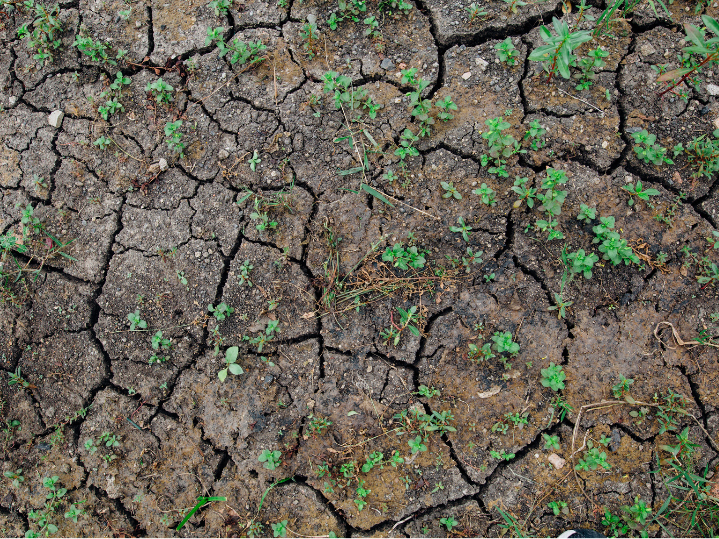
Healthy soils are a living sponge against drought. Each 1% increase in soil organic matter can allow a hectare to store an additional 250,000 litres of water, depending on soil conditions. Heatwaves and drought already contributed to significant falls in yields worldwide, showing how closely harvests depend on soil moisture and thus soil quality. A very strong El Niño expected in 2026-27 will challenge farmers, the land they are working with and global food security again.
The benefits extend beyond climate. Restoration is projected to raise yields by 5-10% in most developing countries by 2050, with returns of US$7-30 per dollar invested. Evidence from around the world shows regenerative farmers can achieve comparable or higher yields, lower input costs and stronger margins.
The policy gap and recommended action
Soil features in national plans mainly through individual practices, seldom as a soil organic carbon target with its own finance line, and less than 2% of climate finance reaches agriculture. The building blocks for change are emerging, including the Belém Adaptation Indicators, the EU Soil Monitoring Law, the Article 6.4 carbonmarket rules and national programmes such as the USDA’s regenerative pilot. The paper proposes a package of key actions:
Integrate soil organic carbon and soil-health targets explicitly into updated NDCs, NAPs, long-term low emission development approaches with clear accounting that credits both climate mitigation/adaptation co-benefits (UNFCCC), NBSAPs (CBD) and national Land Degradation Neutrality strategies (UNCCD).
Mainstream a global soil security legal framework, building on existing large scale frameworks like the EU Soil Monitoring Law and the 2025 IUCN resolution 007 on global soil security.
Finance: Quantify the financing gaps, then build blended-finance funds and risk buffers, and eventually redirect subsidies and private capital toward verified soilhealth outcomes.
Soil Data: Develop regionally tailored Minimum Viable Soil Datasets (MVSD), build soil data infrastructure to monitor these MVSD (Minimum Viable Soil Dataset) and national public-private partnership programmes that use MVSDs to create soilhealth indices, guide investment and target incentives to farmers.
Nutrition: Establish the scientific link between soil health and nutrient density, use it for labelling regenerative produce, and build supply-chain linkages so farmers keep the premium.
Farmers: Cataloguefarmers’ priorities, organise them into constituencies across the Rio Conventions,and build consensus on 3-4 key demands for global forums. Treating soil healthas a core pillar of climate action, with measurable targets, reliable data andfinance matched to the multi-year cycles over which soil regenerates, wouldgive countries a practical lever that cuts emissions, builds drought resilienceand secures food and farmer livelihoods alongside the phasedown of fossilfuels
The full report can be viewed and downloaded here.

நாம் இதனை நிகழச்செய்வோம்!